Launch Your Side Hustle
Identify Skills and Passions
Start With What You Know
The best side hustles aren't built on brand-new skills you have to learn from scratch. They're built on the talents you already have. Before you start looking for ideas, look inward. What are you already good at? What do people constantly ask for your help with?
The foundation of a successful side gig lies in aligning your venture with your passions and skills.
Take a moment to do a simple self-assessment. Grab a piece of paper or open a new document and create three columns: Work Skills, Hobbies, and Life Skills.
Under Work Skills, list the abilities you use in your professional life. This could be anything from writing code and managing spreadsheets to public speaking and customer service.
Next, under Hobbies, write down the things you do for fun. Think about activities like photography, gardening, playing an instrument, or fixing things around the house.
Finally, for Life Skills, consider the practical abilities you've picked up over the years. Are you a great cook, a budget wizard, or an expert trip planner? These all count.
Many abilities are also transferable skills. These are talents that are useful across different types of work. Things like clear communication, time management, and problem-solving are valuable no matter what you're doing. Recognizing these helps you see how your experience at a desk job could easily apply to running a small online shop or a freelance service.
Follow Your Curiosity
Skills are only half of the equation. A side hustle you enjoy is one you'll stick with, even when it gets challenging. Passion provides the fuel. This is where your interests and hobbies come into play.
What do you do in your free time? The answer could be your next source of income.
Think about the topics you love reading about, the podcasts you listen to, or the activities that make you lose track of time. What are you naturally curious about? Brainstorm a list of these passions, no matter how unrelated to work they may seem.
Sometimes the best ideas come from combining interests. For example, if you love fitness and are skilled at writing, you could start a blog about home workouts. If you enjoy animals and are good at photography, you could offer pet portrait sessions.
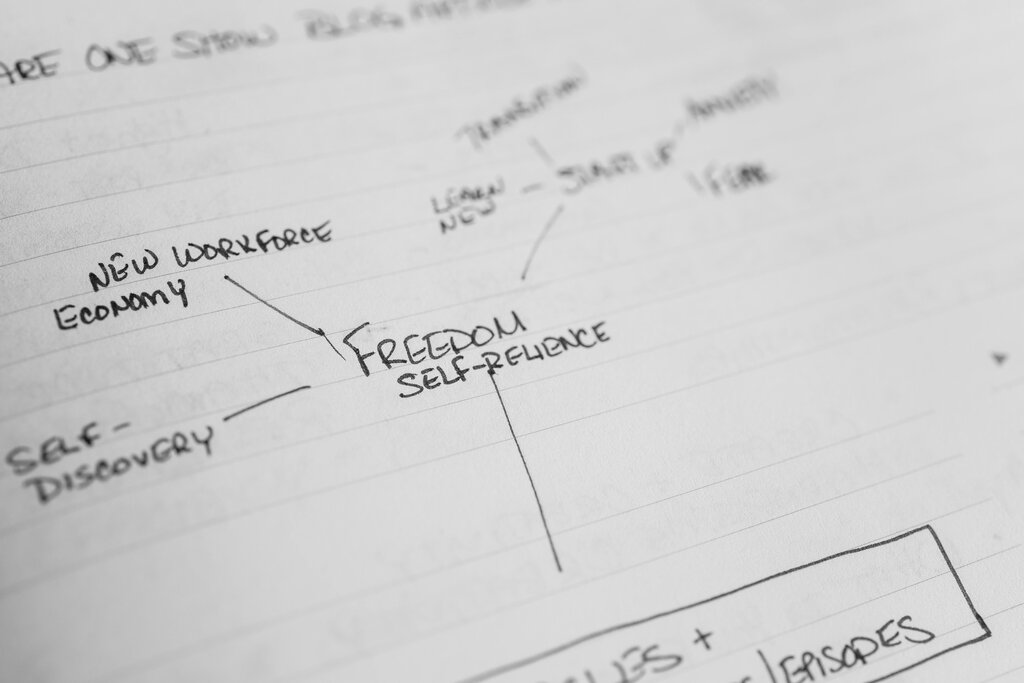
Don't filter yourself at this stage. The goal is to generate a wide range of possibilities based on what genuinely excites you. You can narrow them down later.
Find the Overlap
The sweet spot for a great side hustle is where your skills, your passions, and a real market need all intersect. A skill isn't a business unless someone is willing to pay for it. A passion isn't a business unless you can deliver something of value.
| Category | What you're GOOD at (Skills) | What you LOVE (Passions) | What PEOPLE NEED (Market) |
|---|---|---|---|
| Example 1 | Graphic Design | Vintage Movie Posters | Small businesses needing logos |
| Example 2 | Baking | Creative Desserts | Local events needing catering |
| Example 3 | Organization | Minimalist Living | People who want to declutter |
| Your Idea | (Your Skill) | (Your Passion) | (A Problem You Can Solve) |
Look at your lists of skills and passions. Where do they overlap? Start connecting them to problems people face. For every skill you have, ask yourself: who would find this useful? Who has a problem that I can solve with this ability?
If you're a skilled writer who is passionate about travel, you could offer to write content for travel blogs or help people plan their itineraries. If you're a talented musician who loves teaching, you could give lessons to beginners in your area.
This is not about finding a perfect, ready-made idea right away. It's about exploring the possibilities at the intersection of what you can do, what you love to do, and what others will pay you to do.
Now that you have some ideas brewing, you're ready to start thinking about which ones have real potential. This self-reflection is the foundation for everything that comes next.