Launch Your Online Business
Idea Generation
Find Your Starting Point
Every successful business begins with an idea, but great ideas rarely appear out of thin air. They usually grow from something you already know or care about. The best place to start looking for a business concept is within yourself. What are you passionate about? What skills have you developed at work or through hobbies?
Think about the problems you face in your own life. Chances are, other people have the same problems. A solution you build for yourself could become a product or service for many. Make a list of your interests, from cooking to coding, and another list of your skills, like writing, graphic design, or project management. The intersection of these lists is a fertile ground for business ideas.

For example, if you love fitness (interest) and you're a great writer (skill), you could start a blog with workout plans. If you're a skilled woodworker (skill) who's passionate about sustainable living (interest), you could create and sell handcrafted furniture from reclaimed wood.
When you align your business idea with your skills and passions, you're more likely to stay motivated and succeed.
Look for Early Signals
Once you have a few ideas, you need to find out if anyone else is interested. This is where preliminary market research comes in. You're not writing a detailed report; you're just looking for signs of life. The goal is to see if there's an existing conversation or demand around your idea.
Start with simple tools. Use Google Trends to see if people are searching for terms related to your idea. Are searches increasing, decreasing, or stable? Browse online communities like Reddit or Facebook Groups where your potential customers hang out. What are they talking about? What problems are they trying to solve? Pay attention to the language they use and the questions they ask. This initial research helps you gauge interest before you invest too much time.
For instance, if your idea is to sell custom mechanical keyboards, you might find a thriving subreddit full of enthusiasts discussing specific switches, keycaps, and layouts. That's a strong signal that a dedicated market already exists.
Understand the Landscape
A good idea needs room to grow. After confirming there's general interest, you need to understand the competitive landscape. Who is already serving this market? What are they offering, and how are they doing it?
Identify your direct competitors (those selling a similar product) and indirect competitors (those solving the same problem with a different solution). If you want to sell meal prep kits, other kit companies are direct competitors. Restaurants and grocery stores are indirect competitors.
Don't be discouraged by competition. It proves there's a market. The key is to find a way to stand out.
Analyze what your competitors do well and where they fall short. Read customer reviews to find common complaints. Is their pricing too high? Is their customer service lacking? Is their product missing a key feature? These gaps are your opportunities. Your goal is to find a unique angle, or niche, that allows you to offer something different and better.
Check for Profit Potential
Passion is important, but a business needs to be financially viable. You need to assess your idea's profitability potential. This doesn't require a complex financial model, just some back-of-the-napkin math.
First, think about how you would make money. This is your revenue stream. Would you sell a physical product, offer a subscription service, charge for your time, or earn money through advertising? Look at what competitors charge to get a rough idea of what the market will bear.
Next, estimate your major costs. What will it cost to produce your product or deliver your service? Think about materials, software, shipping, and any other big expenses. By comparing your potential revenue with your estimated costs, you can get a sense of whether your idea can actually be profitable.
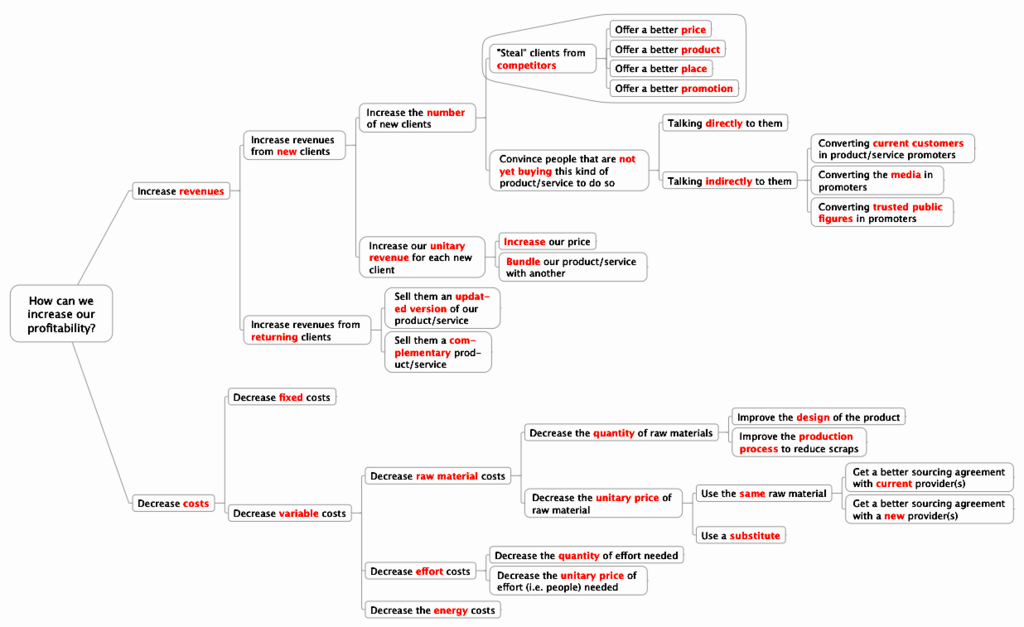
For example, if you plan to sell handmade leather wallets for $50, but the leather and tools cost $40 per wallet, your profit margin is thin. You might need to find cheaper suppliers or price your product higher to build a sustainable business.
Now's a good time to review what we've covered.
According to the text, what is the best starting point for brainstorming a business idea?
What is the primary goal of preliminary market research, such as using Google Trends or browsing Reddit?
This process of brainstorming, researching, and evaluating helps you move from a vague interest to a concrete, viable business concept. It filters out ideas that are unlikely to succeed, saving you time and money, and points you toward the ones with real potential.