Launch Your Design Business
Business Foundations
Building Your Business Foundation
Before you can focus on creative work and landing clients, you need to build a solid legal and financial foundation. Getting these details right from the start protects you, simplifies your taxes, and sets your business up for long-term success. Think of it as building the frame of a house; you can't hang pictures on the walls until the structure is sound.
Choose Your Business Structure
How you legally structure your business is one of the first big decisions you'll make. This choice affects how you pay taxes, your personal liability, and the amount of paperwork you'll need to file. For most freelance designers, the choice comes down to two common options: a sole proprietorship or a limited liability company (LLC).
A sole proprietorship is the default. If you start doing business without formally creating a company, you're automatically a sole proprietor. An LLC requires you to file paperwork and register with the state, creating a separate legal entity.
The main difference is liability. As a sole proprietor, you and your business are legally the same. If a client sues you or the business racks up debt, your personal assets—like your car or home—could be at risk. An LLC creates a legal barrier between you and your business. This separation protects your personal assets from business liabilities.
| Feature | Sole Proprietorship | Limited Liability Company (LLC) |
|---|---|---|
| Liability | Unlimited personal liability | Limited liability (protects personal assets) |
| Setup | No formal action needed | Must register with the state |
| Cost | Free to start | Filing fees required |
| Taxes | Pass-through to personal return | Pass-through to personal return (default) |
While an LLC costs more to set up and maintain, the liability protection is often worth the investment, especially as your business grows.
Make It Official
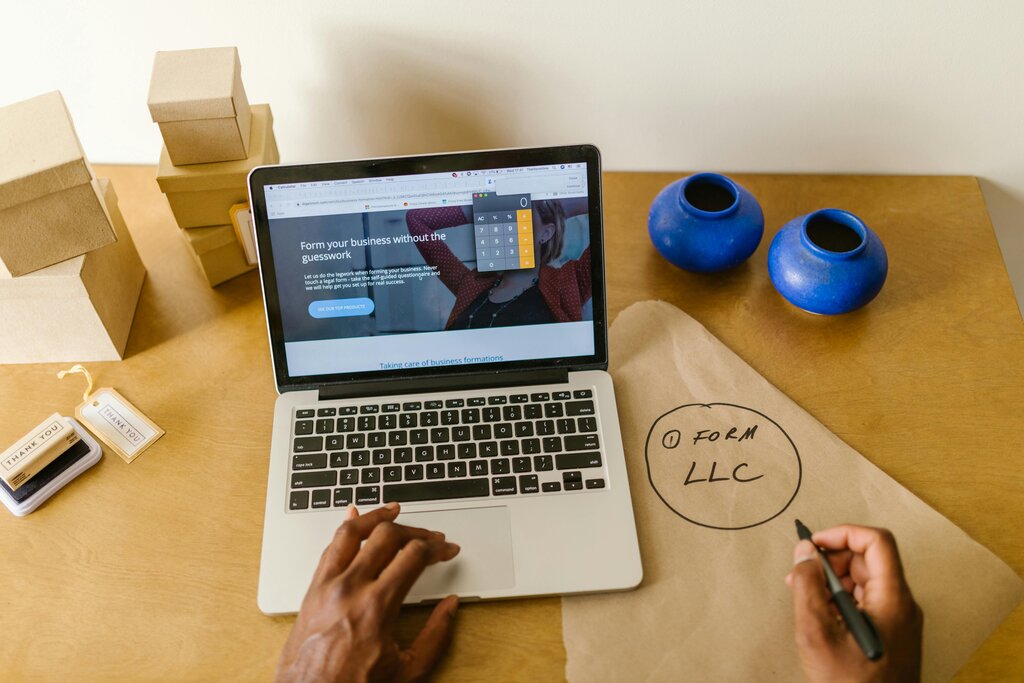
Once you've chosen a structure, it's time to register your business. If you form an LLC, the registration process creates your business. If you operate as a sole proprietor under a name that isn't your own legal name, you'll likely need to file for a "Doing Business As" (DBA) name.
You may also need business licenses or permits to operate legally. These requirements vary widely based on your city, county, and state. Check the website for your local government or the U.S. Small Business Administration (SBA) to find out exactly what you need. Common requirements include a general business operating license or a home occupation permit if you work from home.
Separate Your Finances
Mixing personal and business finances is a common mistake that can cause major headaches. Opening a dedicated business bank account is essential, regardless of your business structure. For an LLC, it's a requirement to maintain your liability protection. For a sole proprietor, it makes bookkeeping and tax preparation infinitely simpler.
Legally separating business and personal finances is a foundational step for any startup, absolutely crucial for legal protection, accurate financial tracking, and building business credibility.
Once your business bank account is open, run all your business income and expenses through it. A business credit card can also help keep expenses separate and organized while allowing you to start building business credit.
Finally, get comfortable with record-keeping. Keep all receipts, invoices, and bank statements organized. Your tax obligations will depend on your business structure and income. As a business owner, you'll likely need to pay self-employment taxes (for Social Security and Medicare) and make estimated tax payments throughout the year. Good records make this process manageable.
What is the primary advantage of forming an LLC over operating as a sole proprietorship?
If you are a sole proprietor and operate your business under a name different from your own legal name, you will likely need to file for a ____.
With these foundational pieces in place, you're ready to operate your business legally and with financial clarity.