Launch Your AI Consulting Business
Introduction to AI
What Is Artificial Intelligence?
Artificial intelligence, or AI, is about creating computer systems that can perform tasks that normally require human intelligence. This includes things like learning from experience, understanding language, recognizing objects in images, and making decisions. At its core, AI isn't about creating a thinking, feeling machine like in the movies. It's about building tools that can process information and find patterns in ways that are incredibly powerful and often much faster than a human could.
Think of AI as a system's ability to interpret data, learn from it, and use those learnings to achieve specific goals through flexible adaptation.
A Brief History
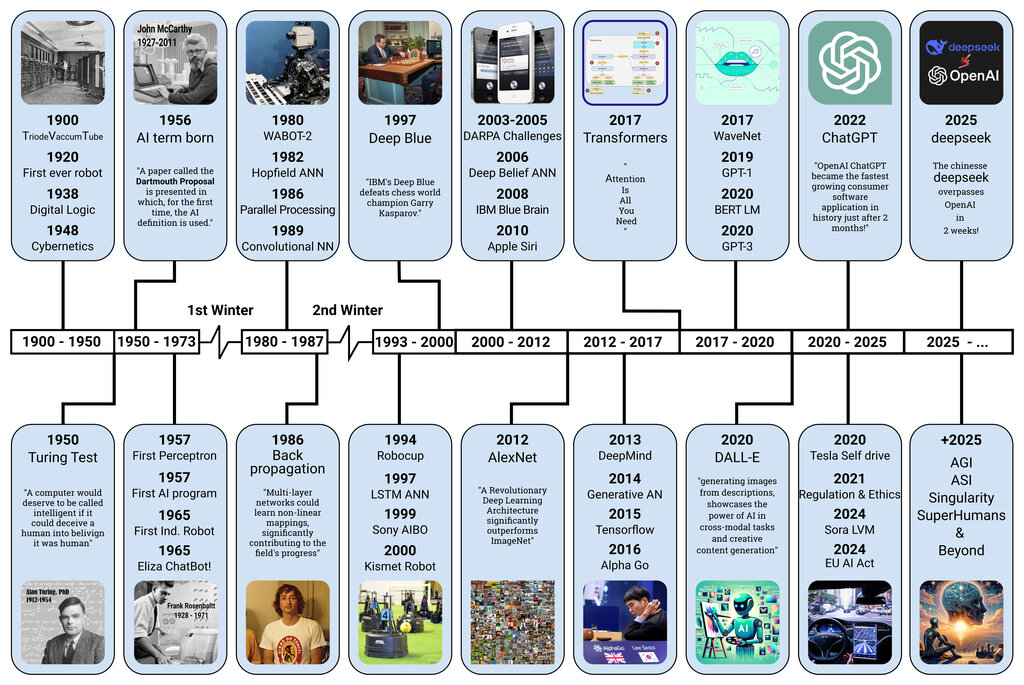
The dream of intelligent machines has been around for centuries, but the actual field of AI research began in the 1950s. Early pioneers believed they were on the verge of creating human-level intelligence. Progress was slower than expected, leading to periods of reduced funding and interest known as "AI winters."
However, breakthroughs in the last couple of decades have changed everything. The rise of big data (massive amounts of information) and huge increases in computing power have allowed AI techniques to flourish. Today, AI is no longer a futuristic concept; it's a technology embedded in many of the services we use daily.
Types of AI
When people talk about AI, they are usually referring to one of two broad categories. Understanding the difference is key to cutting through the hype.
Artificial Narrow Intelligence (ANI)
noun
Also known as Weak AI, this is a type of AI that is designed and trained for one specific task. It operates within a limited, pre-defined range.
Virtually all the AI we use today is ANI. Your spam filter, a chess-playing computer, a language translation app—these are all examples of narrow AI. They can be incredibly effective at their single task, sometimes performing better than humans. However, you can't ask your spam filter to play chess, and a chess bot can't translate Spanish for you. They are specialists, not generalists.
Artificial General Intelligence (AGI)
noun
Also known as Strong AI, this is a theoretical type of AI that possesses the ability to understand, learn, and apply its intelligence to solve any problem, much like a human being.
AGI is the kind of AI you see in science fiction—a machine with the consciousness and problem-solving abilities of a human. It could learn to be a doctor, then a plumber, then a poet, all using the same underlying intelligence. It's important to remember that AGI is still purely theoretical. We are not close to creating it.
The Building Blocks of AI
AI is a vast field, but it's built on a few core subfields. Think of these as the main toolkits that AI developers use to build intelligent systems.
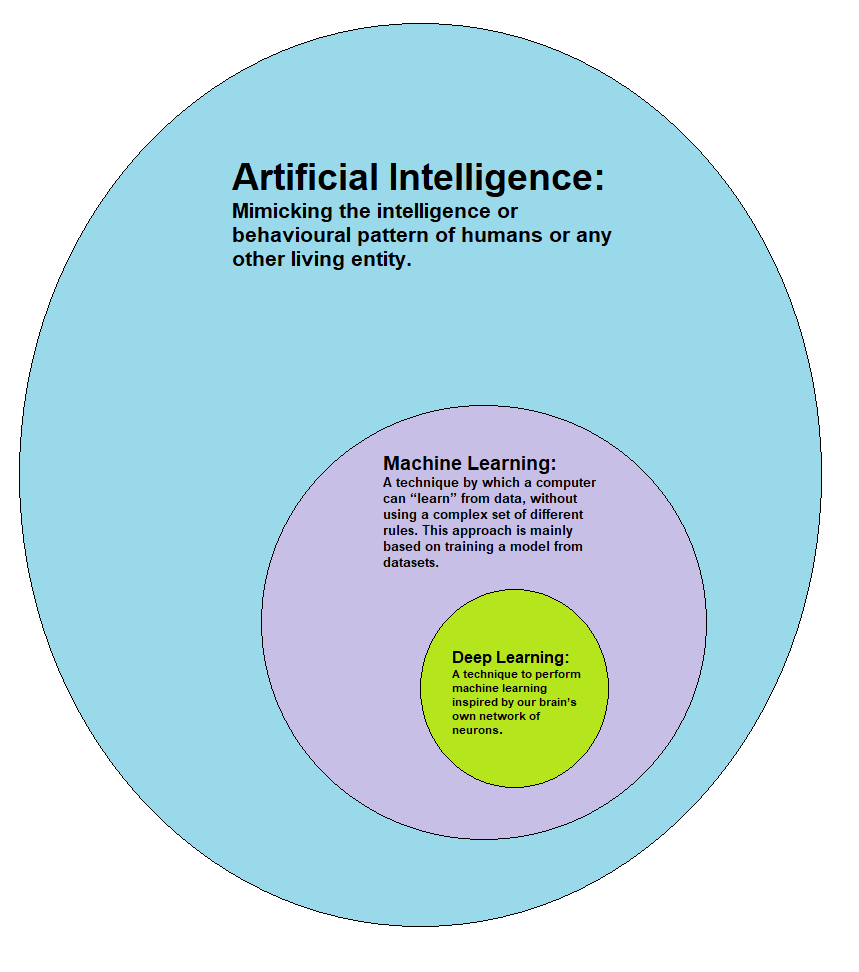
Machine Learning (ML) is the most common approach to AI today. Instead of programming a computer with explicit rules for a task, you give it a model and a huge amount of data. The model then "learns" the patterns in the data on its own. For example, to build an email spam filter, you would feed a machine learning model thousands of examples of spam and non-spam emails. It would then learn to identify the characteristics of spam without being told specific rules.
Natural Language Processing (NLP) focuses on enabling computers to understand, interpret, and generate human language. It's the technology behind digital assistants like Siri and Alexa, translation services like Google Translate, and chatbots that answer customer service questions. NLP is what allows you to talk to your phone and get a useful response.
Computer Vision gives computers the ability to "see" and interpret the visual world. This involves processing images and videos to identify objects, people, and places. Computer vision powers features like facial recognition for unlocking your phone, systems that allow self-driving cars to navigate roads, and medical tools that can help doctors spot diseases in scans.
AI's Strengths and Weaknesses
AI is a powerful tool, but it's not magic. It has distinct capabilities and very real limitations.
Its greatest strength is finding patterns in massive datasets, far beyond what any human could analyze. This makes it excellent for tasks like identifying fraudulent transactions, predicting stock market trends, or personalizing online content. It can operate 24/7 without fatigue and perform repetitive tasks with incredible speed and accuracy.
However, AI lacks true understanding or common sense. It can tell you a cat is in a picture, but it doesn't know what a cat is—what it feels like, how it behaves, or its place in the world. AI systems are also only as good as the data they are trained on. If the data is biased, the AI's decisions will also be biased. This can lead to unfair or discriminatory outcomes. Finally, AI struggles with creativity and tasks that require emotional intelligence or complex ethical reasoning.
AI and Society
As AI becomes more integrated into our lives, it raises important ethical questions. How do we ensure fairness when an AI is making decisions about loan applications or criminal sentencing? Who is responsible when a self-driving car has an accident? How do we protect people's privacy when AI systems are constantly collecting data?
There are also major societal impacts to consider. AI will undoubtedly change the job market, automating some roles while creating new ones. It has the potential to solve some of humanity's biggest challenges, from climate change to disease, but it also presents risks if not developed and deployed responsibly. These conversations are happening now in governments, companies, and universities around the world.

Thinking through these issues is just as important as building the technology itself. A responsible approach to AI involves considering its impact on people and society from the very beginning.
Ready to check your understanding? Let's see what you've learned about the fundamentals of AI.
What is the primary goal of Artificial Intelligence, as described in the text?
An app that identifies different species of plants from a photo is an example of which type of AI?