Launch Your AI Business for Mechanics
Understanding AI Basics
What Is AI Anyway?
Artificial intelligence isn't about robots taking over the world. At its core, AI is about creating computer systems that can perform tasks that normally require human intelligence. Think of it like a highly specialized apprentice. You can't ask it to do everything, but you can train it to become an expert at a specific job, like recognizing patterns, making predictions, or understanding language.
This "training" happens by feeding the AI vast amounts of data. Just as a mechanic learns by seeing hundreds of different engine problems, an AI learns to identify issues by analyzing thousands of data points from sensors, repair logs, and images. It doesn't "think" like a human, but it excels at finding connections in data that a person might miss.
Artificial Intelligence
noun
The theory and development of computer systems able to perform tasks that normally require human intelligence, such as visual perception, speech recognition, decision-making, and translation between languages.
The Three Levels of AI
Not all AI is created equal. It's helpful to think of AI in three categories, based on its capabilities. Right now, we're living firmly in the first stage.
Artificial Narrow Intelligence (ANI): This is the AI we use every day. It's designed for one specific task. The AI that recommends movies, a chatbot that answers customer questions, or software that recognizes your face to unlock your phone are all examples of ANI. It can be incredibly powerful at its one job, but it can't do anything else.
Artificial General Intelligence (AGI): This is the stuff of science fiction, for now. AGI refers to an AI with the ability to understand, learn, and apply knowledge in a wide range of tasks at a human level. It could write a poem, diagnose a complex engine problem, and learn a new language all on its own. We are not there yet.
Artificial Superintelligence (ASI): This is the next theoretical step. ASI would be an AI that surpasses human intelligence in virtually every field, from scientific creativity to general wisdom. It's a fascinating but distant concept.
Putting AI to Work in Mechanics
Understanding the types of AI is great, but how does it apply to a real-world business like a mechanics shop? Since we're dealing with ANI, we need to think about specific tasks that AI could do better or faster than a human.
Imagine you could know a part was going to fail before it actually broke. That's predictive maintenance.
AI systems can analyze data from sensors on a vehicle, like temperature, vibration, and fluid levels. By comparing this real-time data to historical data from thousands of other vehicles, the AI can spot subtle patterns that signal an impending failure. Instead of waiting for a breakdown, you can proactively tell a customer their water pump is likely to fail in the next 500 miles.
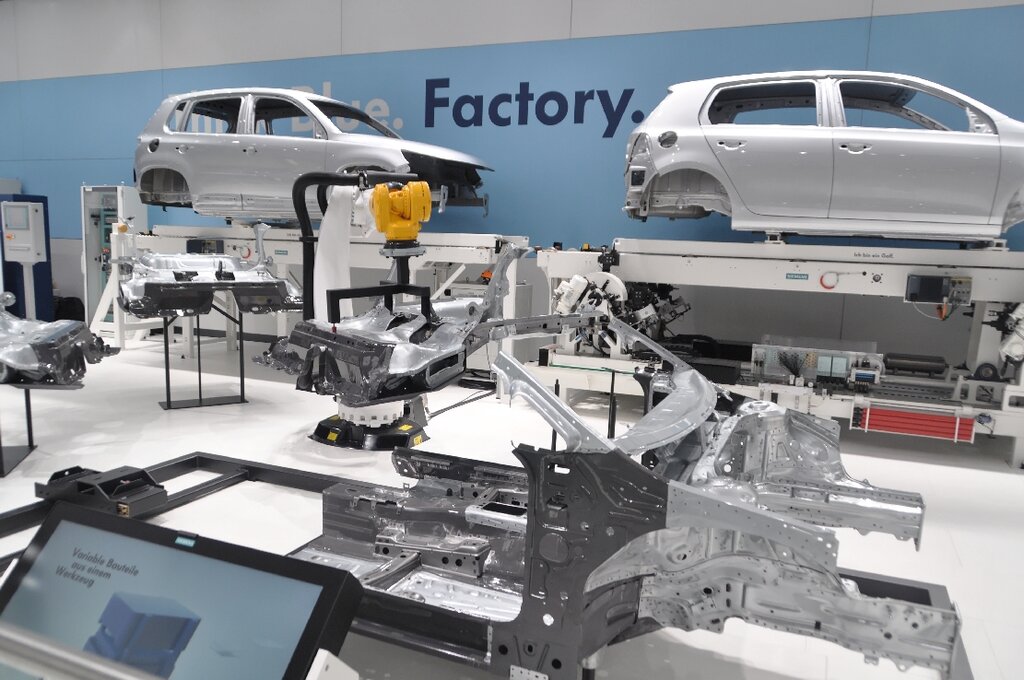
This same principle applies to diagnostics and inventory. An AI could listen to the sound of an engine and, by comparing it to a library of sound files, identify the likely source of a problem. It could also analyze your shop's repair history and local vehicle data to predict which parts you'll need most, ensuring you have the right inventory on hand without tying up cash in slow-moving parts.
In each case, the AI isn't replacing the mechanic. It's providing them with better information to make smarter decisions, faster. It acts as a powerful tool, augmenting their skills and expertise.
What is the primary goal of Artificial Intelligence as described in the text?
How does an AI system typically “learn” to perform a task like diagnosing an engine problem?
By focusing on specific, data-rich problems, you can leverage today's AI to build a more efficient and predictive business.