LASIK Surgery Explained
Introduction to LASIK
What Is LASIK?
LASIK stands for Laser-Assisted In Situ Keratomileusis. It's a type of refractive surgery designed to correct common vision problems, reducing or eliminating the need for glasses or contact lenses. The procedure works by permanently changing the shape of the cornea, the clear, dome-shaped front part of your eye.
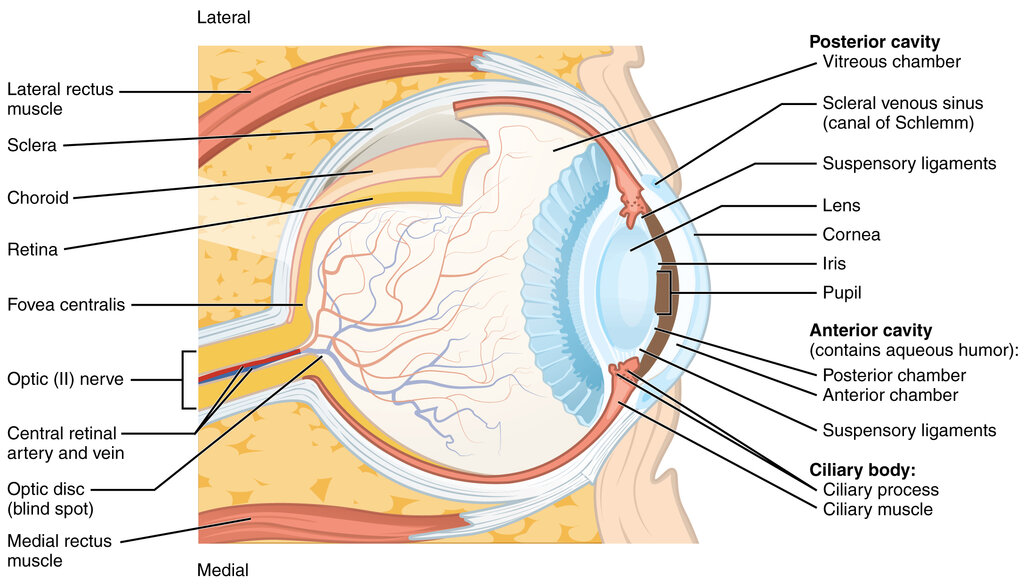
Think of your cornea as the eye's primary lens. It's responsible for bending, or refracting, incoming light so that it focuses precisely on the retina at the back of the eye. When light focuses correctly, you see a clear, sharp image. A refractive error occurs when the shape of the cornea (or the length of the eye) prevents this from happening perfectly.
Cornea
noun
The transparent front part of the eye that covers the iris, pupil, and anterior chamber. It refracts light, accounting for approximately two-thirds of the eye's total optical power.
By precisely reshaping the cornea, LASIK adjusts how light rays enter the eye, ensuring they converge at the correct point on the retina. This targeted correction is what allows for clear vision without corrective lenses.
One of the most common treatments performed is Laser Vision Correction (LASIK and SMILE) — a minimally invasive surgery that reshapes the cornea to improve refractive errors like myopia, hypermetropia, and astigmatism.
From Scalpel to Laser
The journey to modern LASIK began long before lasers were involved. In the 1950s, Spanish ophthalmologist José Barraquer developed a procedure called keratomileusis, which translates to "corneal sculpting." He used a microkeratome, a precise surgical blade, to remove, freeze, reshape, and then reattach a piece of corneal tissue. While groundbreaking, it was a complex manual procedure.
The next major leap came with the invention of the excimer laser in the 1970s. This type of ultraviolet laser could remove microscopic amounts of tissue with extreme precision and without generating heat, preventing damage to surrounding cells. Its potential for corneal surgery was recognized in the 1980s.
LASIK as we know it emerged in the early 1990s, combining Barraquer's flap-creation technique with the precision of the excimer laser. Instead of removing and freezing tissue, surgeons could create a thin flap on the cornea's surface, lift it, use the laser to reshape the underlying tissue, and then reposition the flap.
Correcting Common Vision Problems
LASIK is effective for the three most common types of refractive errors. The correction strategy depends entirely on the specific vision problem.
The fundamental goal is always the same: adjust the cornea's shape so that it focuses light directly onto the retina. The specifics of the laser ablation pattern are customized for each individual's unique refractive error.
| Refractive Error | What it is | How LASIK Corrects It |
|---|---|---|
| Myopia (Nearsightedness) | The cornea is too steep or the eye is too long, causing light to focus in front of the retina. Distant objects appear blurry. | The laser flattens the central part of the cornea, decreasing its focusing power. |
| Hyperopia (Farsightedness) | The cornea is too flat or the eye is too short, causing light to focus behind the retina. Near objects appear blurry. | The laser is applied to the peripheral cornea, making the central part steeper and increasing its focusing power. |
| Astigmatism | The cornea is shaped more like a football than a sphere, causing light to focus on multiple points. Vision is distorted at all distances. | The laser smooths the irregular shape, making the cornea more spherical and creating a single focal point. |
By understanding these principles, you can see how LASIK isn't a one-size-fits-all procedure. It's a highly personalized surgery that reshapes one of the most important optical surfaces in the human body.
Ready to check your understanding?
What is the primary goal of the LASIK procedure?
What part of the eye is directly reshaped by the laser during LASIK?
While the technology is advanced, the concept behind LASIK is a straightforward application of optical physics—precisely altering a lens to achieve a perfect focus.