Laser Synchronization for Optimization
Introduction to Optimization Problems
Finding the Best Path
Life is full of choices. Should you take the highway or the back roads to avoid traffic? Which ingredients should you use to make the best possible dinner with what's in your fridge? How can a company ship packages to thousands of customers using the least amount of fuel? All of these are optimization problems.
At its core, an optimization problem is about finding the best possible solution from all available options. We're not just looking for a good answer; we're looking for the very best one, based on some criteria.
Think of it as trying to get the highest score in a game with a specific set of rules.
Every optimization problem has three key ingredients:
-
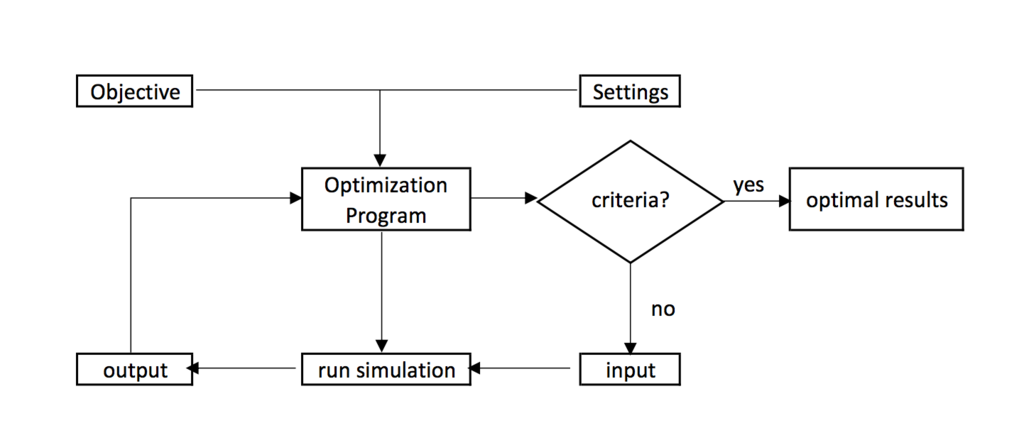
Objective Function: This is what you're trying to maximize or minimize. It's your goal. It could be minimizing travel time, maximizing profit, or minimizing waste.
-
Variables: These are the things you can change or the decisions you can make. Which route to take? What price to set? Which tasks to do in what order?
-
Constraints: These are the rules you have to follow. You have a limited budget, your delivery truck can only hold so much, or you only have 24 hours in a day. Constraints define the boundaries of your possible solutions.
When Choices Explode
Some of the most interesting—and difficult—optimization problems are called combinatorial optimization problems. The name comes from the word "combination." These problems involve finding the best arrangement or selection of items from a finite set.
A classic example is the Traveling Salesperson Problem. Imagine a salesperson needs to visit ten cities. They want to find the absolute shortest route that visits each city exactly once and returns to the starting point. How hard could that be?
For a few cities, you could list every possible route and compare their lengths. But the number of options grows astonishingly fast. For 10 cities, there are over 180,000 possible round trips. For 20 cities, that number explodes to over 121 quadrillion. Checking every single one, even with the world's fastest supercomputer, would take thousands of years.
This rapid growth in complexity is called a "combinatorial explosion," and it's the main challenge in solving these types of problems.
Many real-world challenges are combinatorial optimization problems in disguise:
- An airline scheduling its planes and crews to cover all flights with minimal cost.
- A logistics company figuring out how to pack items of different sizes and values into a shipping container to maximize its value.
- A computer chip designer arranging millions of transistors to minimize delays and heat.
Why They Are Hard to Solve
The combinatorial explosion isn't the only hurdle. Many optimization problems also have complex relationships between variables. Changing one decision can have ripple effects across the entire system, making it hard to predict the outcome.
Imagine trying to create a weekly work schedule for a hospital. You have to balance the skills of each nurse, their requested days off, union rules about overtime, and the needs of each department. Giving an extra shift to one nurse might solve one problem but create a new one somewhere else.
Because finding the perfect solution is often impossible, we use clever algorithms to find solutions that are "good enough." These methods are designed to intelligently search through the vast space of possible answers to find a high-quality solution in a reasonable amount of time. It's a trade-off between perfection and practicality.
What is the primary goal of solving an optimization problem?
An airline wants to create a flight schedule that uses the least amount of fuel. The decision of which flight path each plane should take represents the problem's __________.
Tackling these complex puzzles is a huge field of study, driving innovation in everything from finance to medicine.