Large Language Model Training Mechanics
Data Curation Pipeline
From Raw Data to Refined Corpus
The principle of 'Garbage In, Garbage Out' takes on terrifying new dimensions when dealing with the terabyte-scale datasets used to pre-train large language models. Raw data scraped from the web is a chaotic mix of brilliant prose, toxic comments, machine-translated gibberish, and endless boilerplate. Turning this raw digital sludge into a high-quality pre-training corpus is a massive engineering challenge that goes far beyond simple collection.
A model's capabilities are not just a function of its size, but of the quality and diversity of the data it learns from. The data curation pipeline is where the foundation for a powerful and reliable LLM is laid.
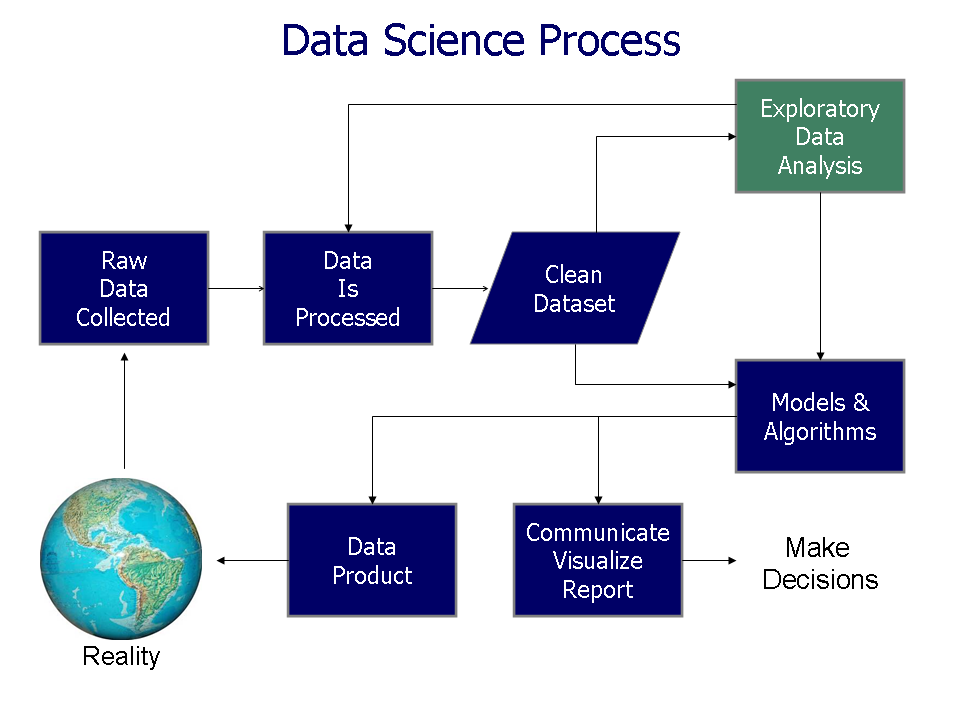
This pipeline is a multi-stage process designed to methodically filter, clean, and structure data. Each stage tackles a different kind of noise, from removing nonsensical text to eliminating harmful content and duplicate information. The goal is to produce a final dataset that is clean, diverse, and representative of the complex patterns of human language the model needs to learn.
First-Pass Cleaning: Filters and Rules
The first step in taming the raw data firehose is applying a set of heuristics. These are simple, rule-based filters designed to quickly discard a large volume of low-quality documents. Common heuristic filters include:
- Length-based filtering: Documents that are too short (e.g., under 200 characters) or excessively long are often not useful. Short texts lack context, while extremely long ones can be data dumps or corrupted files.
- Repetition filters: These detect and remove documents with highly repetitive content, such as long lists of repeated words or phrases. This helps avoid training on text that looks like "Error. Error. Error..."
- Character-ratio filters: A document composed mostly of numbers or symbols instead of alphabetic characters is unlikely to be useful linguistic data and can be safely discarded.
Alongside quality filtering, is a non-negotiable step. This process involves using pattern matching and named-entity recognition (NER) models to find and remove personally identifiable information like names, phone numbers, email addresses, and social security numbers. Performing this accurately at petabyte scale is a significant computational task, essential for protecting privacy and ensuring ethical model development.
While heuristics catch the most obvious junk, more subtle forms of low-quality content require a smarter approach. This is where classifier-based filtering comes in. A separate, smaller model is trained specifically to classify documents. For instance, a model might be trained to predict the quality of a Wikipedia article based on its edit history and structure, or to identify toxic language. Documents that receive a low-quality or high-toxicity score from the classifier are then removed from the training set. Google's Celadon is an example of a model designed for filtering web documents based on quality.
The War on Redundancy
Web data is notoriously repetitive. The same news articles, press releases, and popular comments appear on thousands of different websites. If left unchecked, this redundancy would cause the model to over-train on common phrases and neglect rarer, more valuable information. Deduplication is the process of finding and removing this redundant data.
It operates on several levels:
- Exact Deduplication: The simplest form. It involves calculating a hash (a unique digital fingerprint) for each document and discarding any with identical hashes. It's fast but only catches perfect copies.
- Fuzzy Deduplication: This method catches near-duplicates. By using techniques like MinHash, it can identify documents that are substantially similar even with minor differences, like a corrected typo or a different timestamp in a footer.
- : The most advanced form. Instead of comparing text strings, it compares the meaning. This is done by converting documents into vector embeddings and then clustering them. If two documents produce very similar vectors, they are considered semantically equivalent—even if they use completely different wording—and one can be removed. This is computationally expensive but highly effective at creating a truly diverse dataset.
Mixing and Scheduling Data
After cleaning and deduplication, we are left with high-quality data from various sources: web text, books, scientific papers, and code. The final step is deciding how to feed this data to the model. This isn't as simple as just shuffling everything together. The mixture and order of data, known as data scheduling, can significantly influence model performance.
Think of it like a diet. An athlete's performance depends not just on the quality of their food, but on the right balance of proteins, carbs, and fats, and when they eat them. The same is true for training an LLM.
Data engineers experiment with different mixtures, or 'recipes', for the pre-training corpus. A common approach is to 'up-sample' high-quality sources like academic papers and books, meaning they are included more frequently in the mix relative to their original volume. Lower-quality web text might be 'down-sampled'.
The order also matters. Some research suggests that starting the training process with cleaner, more structured data (like Wikipedia) before introducing the full, noisier web crawl can lead to more stable training and better final performance. This curriculum-like approach helps the model learn foundational language patterns before tackling the complexity of the open web.
What is the primary goal of the multi-stage data processing pipeline for pre-training large language models?
A dataset for a large language model is found to contain many documents that are semantically similar but use different wording, such as numerous news articles reporting the same event. Which technique is specifically designed to identify and remove this type of redundancy?
This rigorous, multi-stage pipeline is what transforms the chaotic web into the fuel for modern AI. Each step is a critical defense against the 'Garbage In, Garbage Out' problem, ensuring the final model is built on a foundation of clean, diverse, and high-quality data.