Large Language Model Deep Dive
Introduction to Large Language Models
What Is a Large Language Model?
At its heart, a large language model (LLM) is an AI designed to understand and generate human language. Think of it as an extremely advanced autocomplete. It's trained on a massive library of text and data from the internet, books, and other sources. By analyzing all this information, it learns the patterns, grammar, context, and nuances of how we communicate.
The fundamental goal of an LLM is to predict the next word in a sequence. When you give it a prompt like "The best part of waking up is," it calculates the most probable word to come next. By repeating this process over and over, it can write entire sentences, paragraphs, and even articles.
This simple-sounding task, when performed by a model with billions of parameters—connections between artificial neurons—results in sophisticated abilities. LLMs aren't just guessing words; they're constructing meaningful responses based on the vast patterns they've learned.
How Did We Get Here?
The journey to today's LLMs is built on decades of research in artificial intelligence and natural language processing (NLP). Early NLP systems were rule-based and struggled with the ambiguity and complexity of human language. The real breakthrough came with machine learning, where models could learn from data instead of being explicitly programmed.
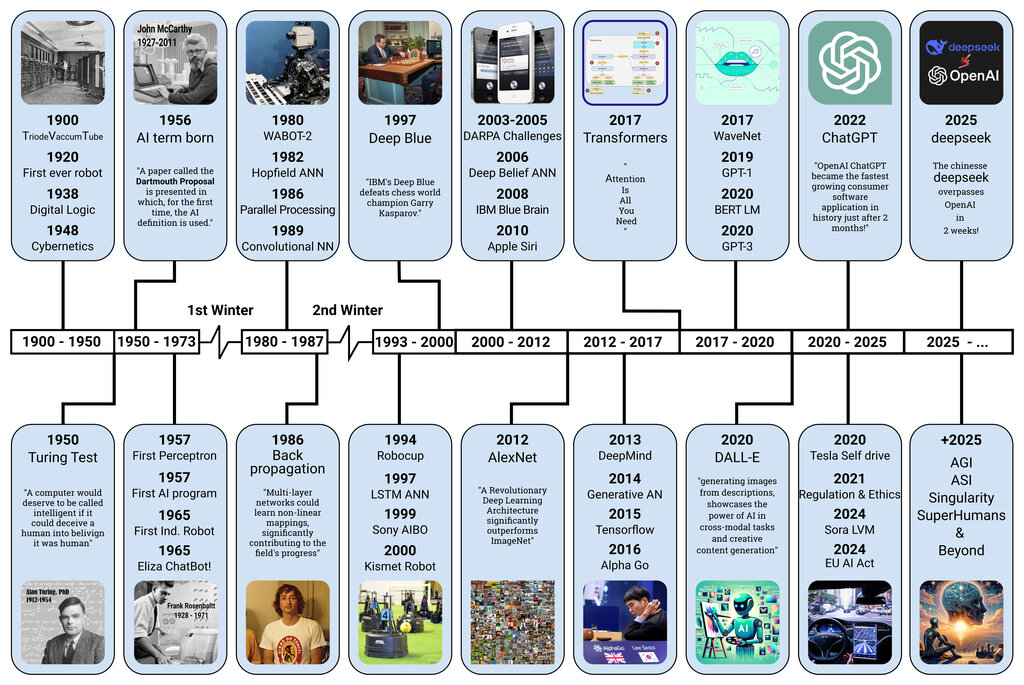
A pivotal moment was the invention of the transformer architecture in 2017. Before transformers, models processed text sequentially, like reading a sentence one word at a time. This made it difficult to keep track of long-range context. Transformers changed the game with a mechanism called "self-attention," allowing the model to weigh the importance of different words in the input text simultaneously. This ability to see the whole picture at once dramatically improved performance.
The transformer model, introduced in 2017 by Vaswani et al. in the groundbreaking paper “Attention Is All You Need”, revolutionized Natural Language Processing (NLP).
This innovation paved the way for models like BERT (Bidirectional Encoder Representations from Transformers) and the GPT (Generative Pre-trained Transformer) series. These models demonstrated that by increasing the size of the model and the training data, you could achieve unprecedented capabilities in language understanding and generation.
Applications and Ethical Hurdles
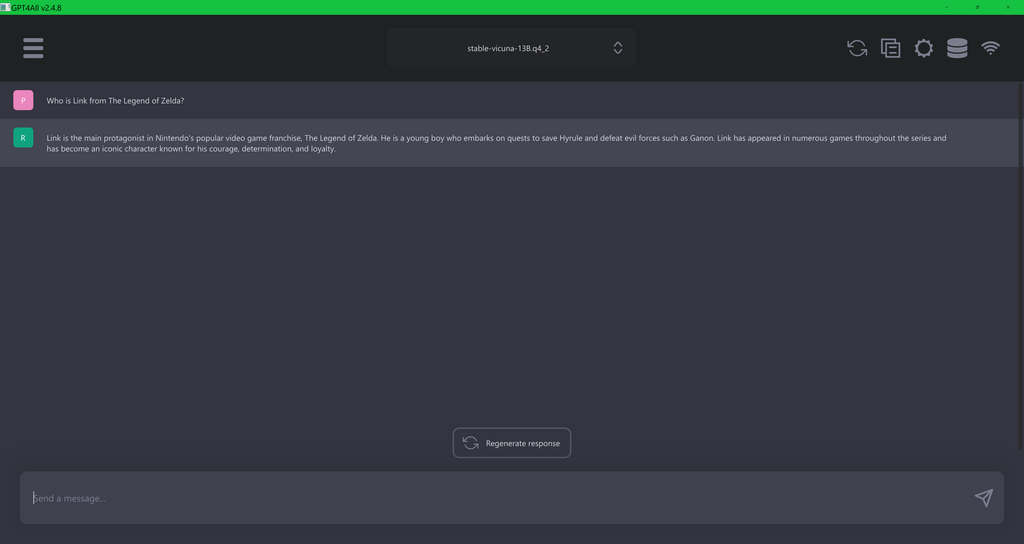
LLMs are now used in countless applications. They power chatbots and virtual assistants, enhance search engines with direct answers, help developers write code, and assist writers with drafting emails and articles. In science and medicine, they analyze research papers and help decipher complex biological data.
However, this power comes with significant responsibilities and ethical challenges. LLMs can inherit biases present in their training data, leading to unfair or prejudiced outputs. They can also generate convincing misinformation, or "hallucinate" facts that aren't true. Because they are trained on copyrighted material, questions of ownership and fair use are still being debated.
Ensuring these models are used safely and responsibly is a major focus for researchers and developers. This involves creating better methods for alignment—making the AI's goals match human values—and developing techniques to detect and mitigate harmful outputs.
Now, let's test your understanding of these foundational concepts.
What is the primary function of a large language model (LLM)?
What key innovation introduced by the transformer architecture dramatically improved the performance of language models?
As LLMs continue to evolve, they will become even more integrated into our daily lives. Understanding their core principles is the first step to harnessing their potential while navigating their complexities.