Language Translation Dynamics and AI
Introduction to Language Translation
The Bridge Between Worlds
At its heart, language translation is the process of converting written text from one language to another. But it's much more than simply swapping words. It's about rebuilding a message in a new form, making sure its original meaning, tone, and intent remain intact.
Think of it as a bridge. On one side, you have an idea expressed in a specific language, shaped by a particular culture. On the other, you have an audience that speaks a different language and lives in another culture. The translator's job is to build a sturdy bridge that allows the idea to travel across without getting lost.
Without translation, we would be living in provinces bordering on silence.
This bridge connects businesses to global markets, allows literature to be shared across borders, and enables people from different backgrounds to communicate and understand one another. Every act of translation starts with two key elements: the source and the target.
Source and Target
In any translation project, you'll always hear two terms: the source language and the target language. The concepts are straightforward but fundamental.
source language
noun
The language of the original text that is being translated.
This is your starting point. It’s the material you are working from.
target language
noun
The language into which the original text is being translated.
This is your destination. It's the language of the final, translated product.
Imagine a chef adapting a family recipe. The original recipe written in French is the source. The new version, with ingredients and instructions rewritten in English for an American kitchen, is the target. The goal isn't just to change the words, but to ensure the final dish tastes the same.
More Than Just Words
If language were just a code, translation would be easy. But it's not. Language is deeply intertwined with culture, and that’s where the real challenges begin.
First, there are linguistic hurdles. Idioms are a classic example. An English speaker might say "it's raining cats and dogs." A literal translation into Spanish—está lloviendo gatos y perros—would be nonsense. A Spanish speaker would instead say está lloviendo a cántaros, which means it's raining by the pitcher. The translator's job is to find the equivalent expression, not the literal words.
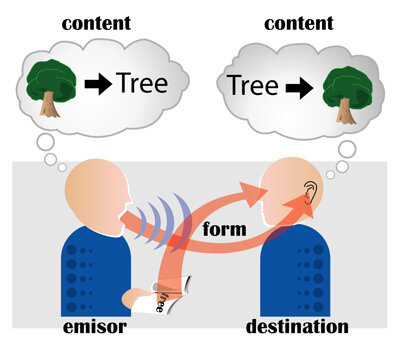
Then there are cultural nuances, which can be even trickier. A color, a gesture, or a concept can have dramatically different meanings depending on the culture. In many Western cultures, the color white symbolizes purity and is worn at weddings. In parts of Asia, however, white is associated with mourning and funerals.
A simple marketing slogan can easily get mangled if cultural context isn't considered. A phrase that sounds motivational and confident in one culture might come across as arrogant and aggressive in another. This is why a good translator is also a cultural interpreter.
Principles of Good Translation
To navigate these challenges, translators rely on a few core principles. While different situations call for different approaches, these three ideas are at the heart of any effective translation.
| Principle | Description |
|---|---|
| Accuracy | The translation must faithfully convey the meaning of the source text. |
| Clarity | The final text should be clear, coherent, and easily understood by the audience. |
| Naturalness | The translation should read smoothly and not sound like a translation. |
Balancing these principles is the art of translation. A text might be perfectly accurate but sound stiff and unnatural. Another might flow beautifully but stray too far from the original meaning. The best translations find the sweet spot, creating a text that is both faithful to the source and fluent in the target language.
A document is being translated from German into Japanese. In this scenario, what are the source and target languages?
Why is a literal, word-for-word translation of the English idiom 'it's raining cats and dogs' often ineffective?