Language Acquisition Frameworks
Language Strategy Analysis
Choosing Your Next Language
Selecting a language to learn is a strategic investment of your time and cognitive resources. Instead of picking a language based on a whim, a more analytical approach can align the choice with your goals and predict the learning path ahead. The core of this strategy lies in understanding 'linguistic distance'—the degree of difference between your native language and a target language.
Gauging the Distance
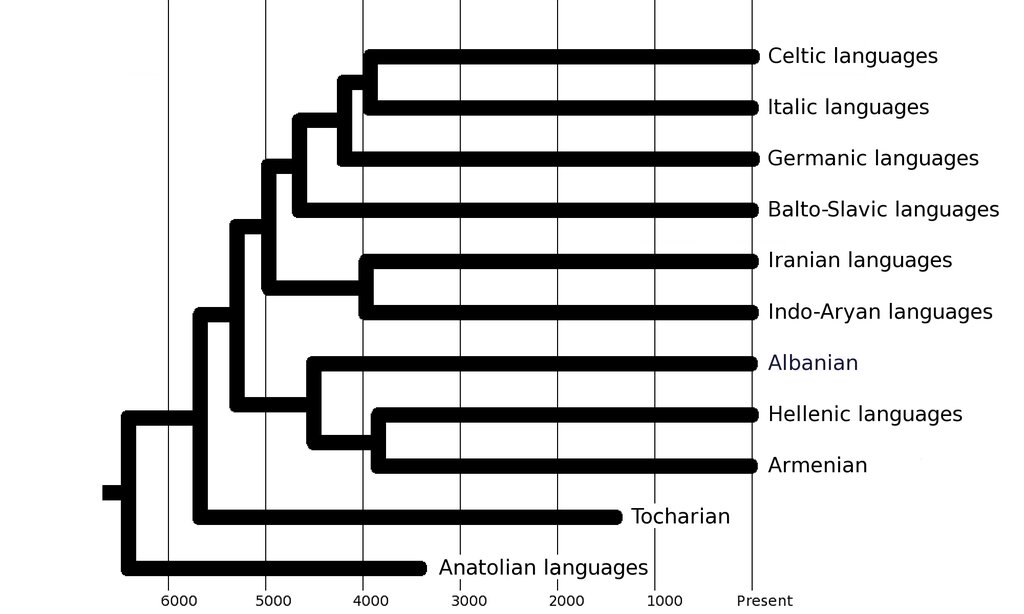
Linguistic distance isn't just about vocabulary. It's a measure of divergence in grammar, sentence structure, and sound systems. Languages within the same family, like the Indo-European family that includes English, German, Spanish, and Russian, share a common ancestor. This shared heritage often means you'll find cognates (words with a common origin) and similar grammatical concepts, shortening the learning curve.
For an English speaker, learning Dutch is less of a leap than learning Polish. Both are Indo-European, but Dutch shares a more recent common ancestor with English within the West Germanic branch, making its structure and vocabulary more familiar. Polish, while still related, belongs to the Slavic branch, presenting more significant structural differences.
To quantify this, we can look at data from the Foreign Service Institute (FSI), the U.S. government's primary training institution for diplomats. Based on decades of teaching English-speaking students, the FSI groups languages into categories based on the average time required to reach professional working proficiency.
| Category | Approx. Classroom Hours | Example Languages |
|---|---|---|
| I | 600–750 | Spanish, French, Dutch, Swedish |
| II | 900 | German, Indonesian |
| III | 1100 | Russian, Polish, Greek, Hindi |
| IV | 2200 | Arabic, Mandarin, Japanese, Korean |
These numbers are a useful starting point, but they don't tell the whole story. The hours reflect the total effort needed to overcome differences in phonology, morphology, and syntax.
Deconstructing Difficulty
Time-to-fluency is just one metric. A strategic learner also analyzes the type of difficulty they will encounter. This involves breaking a language down into its core components.
Phonology
noun
The system of contrastive sounds in a language.
Phonological difficulty arises when a language uses sounds that don't exist in your native tongue. English speakers learning French must master new vowel sounds and nasalization. For tonal languages like Mandarin or Vietnamese, pitch becomes as important as the consonant or vowel itself; the same syllable can have multiple meanings depending on its tone. Similarly, languages like Xhosa feature click consonants, a completely new category of sounds for most learners.
Morphology
noun
The study of the forms of words.
Morphology deals with how words are built. English morphology is relatively simple. We add -s for plurals or -ed for past tense. In contrast, highly inflected languages like Russian change word endings to show grammatical case (who did what to whom), number, and gender. Agglutinative languages like Turkish or Hungarian take this a step further, attaching long strings of prefixes and suffixes to a root word to convey complex meanings in a single word.
This means a learner must not only memorize vocabulary but also an entire system of word transformations.
Syntax
noun
The arrangement of words and phrases to create well-formed sentences in a language.
Syntax governs sentence structure. English uses a subject-verb-object (SVO) order, as in "The cat chased the mouse." Many other languages, like Japanese and Korean, use subject-object-verb (SOV): "The cat the mouse chased." This fundamental difference requires a complete rewiring of how you build sentences. German syntax is famously complex, using SVO in main clauses but moving the verb to the end in subordinate clauses, forcing you to hold the entire thought in your head before the action is revealed.
Aligning Language with Life
The final step is to overlay this linguistic analysis onto your own life. The 'best' language to learn is one where the utility outweighs the difficulty and fits your constraints.
Consider your professional goals. Are you in tech? German or Japanese might offer career advantages. Working in international relations? French, Arabic, or Russian are key languages. Your choice should provide a return on your investment.
Then, assess your lifestyle. How much time can you realistically dedicate each day? A Category IV language like Mandarin requires consistent, significant effort over several years. If you can only spare 30 minutes a day, a Category I language like Spanish will yield conversational ability much faster, providing the motivation that comes with tangible progress.
Ultimately, a strategic choice balances the objective difficulty of the language with the subjective realities of your life and ambitions. By analyzing the distance and deconstructing the difficulty, you can select a language not just to learn, but to master.
What is the primary factor determining 'linguistic distance' between two languages?
According to the FSI's classification system, a native English speaker would likely require the most time to become proficient in which of the following languages?