Land Your Dream Product Management Job
Understanding Product Management
What Is Product Management?
Product management is the art and science of guiding a product's journey, from a simple idea to a successful launch and beyond. Think of a product manager as the captain of a ship. They don't row the oars, hoist the sails, or build the engine, but they are responsible for setting the destination and ensuring the entire crew works together to get there safely and efficiently.
This role sits at the intersection of business, technology, and user experience. A product manager's core job is to figure out what customers need and what would be valuable to them, and then rally a team to build and deliver that value.
Product management is the process of guiding a product from concept to market success.
It's a strategic function focused on the long-term vision of a product. This involves everything from market research and competitive analysis to defining features, setting a timeline, and making sure the final product meets its goals.
Core Responsibilities
A product manager's day-to-day can vary, but their responsibilities generally fall into a few key areas.
Roadmap
noun
A high-level, strategic document that outlines the vision, direction, priorities, and progress of a product over time.
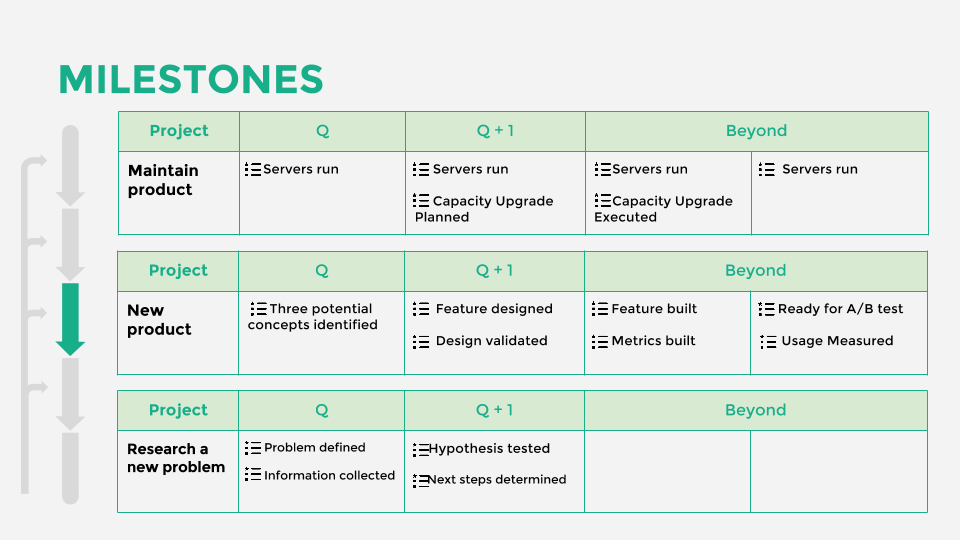
One of the most critical tasks is defining the product vision and strategy. This means answering the big questions: What problem are we solving? Who are we solving it for? How will our product succeed where others have failed? This strategy becomes the guiding light for the entire team, captured in a document called a product roadmap.
Another key responsibility is prioritizing what to build next. There are always more ideas than time or resources to build them. The product manager must weigh customer feedback, business goals, and technical constraints to decide which features will deliver the most impact. This involves creating a prioritized list of tasks, often called a backlog.
Finally, product managers are communicators. They work with engineers to explain what needs to be built, with designers to create a great user experience, and with marketing and sales to ensure the product's value is clearly communicated to the market. They are the central hub for all things related to the product.
Essential Skills
To succeed, product managers need a unique blend of skills. They aren't expected to be the top expert in any single area, but they need to be knowledgeable enough to lead a diverse team effectively.
| Skill | Why It's Important |
|---|---|
| Strategic Thinking | To connect user needs with business objectives and create a compelling product vision. |
| Communication | To align diverse teams and stakeholders, from engineers to executives. |
| Empathy | To deeply understand user problems and build solutions that truly help them. |
| Prioritization | To make tough decisions about what to build next with limited resources. |
| Technical Literacy | To have credible conversations with engineers and understand technical trade-offs. |
Strong communication is non-negotiable. Product managers spend much of their time listening to users, presenting to stakeholders, and collaborating with their team.
As a product manager, you need to communicate effectively with various stakeholders, such as customers, executives, developers, designers, and marketers.
While you don't need to be a software engineer, understanding the basics of how your product is built is crucial for making informed decisions.
The Organizational Glue
So why is product management so important? Without it, companies risk building products that nobody wants, that don't solve a real problem, or that fail to meet business goals. A strong product management function acts as the glue that holds the product development process together.
They ensure that the team is focused on the right priorities and that everyone is working toward a shared goal. By bridging the gap between different departments, they break down silos and foster collaboration.
Ultimately, effective product management leads to better products, happier customers, and a stronger business. It ensures that a company's most valuable resources—time, money, and talent—are invested in building things that truly matter.
Ready to test your knowledge? Let's see what you've learned about the fundamentals of product management.
What is the primary role of a product manager, according to the "captain of the ship" analogy?
A product manager must decide which new features to build from a long list of ideas. This key responsibility is known as:
Understanding these core concepts is the first step on the path to becoming a product manager. It's a challenging but incredibly rewarding role for those who love solving problems and building great things.