Kyokushin Mastery and Full Contact Strategy
Breathing and Power Dynamics
The Engine of Power
In Kyokushin karate, breathing is more than just a way to get oxygen. It's a weapon. How you breathe directly controls your ability to generate explosive power, absorb impact, and maintain composure under pressure. The two pillars of this internal work are Ibuki and Nogare breathing. Ibuki is hard, explosive, and designed for maximum tension at the moment of impact. Nogare is its opposite: a soft, flowing breath for recovery and maintaining calm.
Ibuki: Forging the Iron Core
Yō-Ibuki is the audible, external form of hard breathing. It’s a forceful, tension-based technique originating deep in the abdomen. The goal is to synchronize a full-body muscular contraction, known as , with the peak of your technique. This isn't a shallow chest breath; it's a deep contraction of the diaphragm and abdominal wall that generates immense internal pressure. This pressure starts in the , a point roughly two inches below your navel considered the body's center of gravity and energy.
To perform Yō-Ibuki, you inhale deeply and then exhale sharply through the mouth with a guttural, hissing sound. The exhalation is forced, using your abdominal muscles to squeeze the air out. The process culminates in a sharp, loud vocalization: "Ka!" This final sound helps to expel the last bit of air and achieve maximum abdominal contraction, creating a protective armor that can absorb powerful strikes.
This internal pressure isn't just for defense. It's the foundation of your stability. In a stance like Sanchin Dachi, Ibuki breathing is used to create an isometric contraction of the glutes and abdomen. This locks your pelvis into a stable position, rooting you to the floor. Without this connection between breath and posture, your stance is just a shape, not a source of power.
Nogare: The Breath of Recovery
If Ibuki is a clenched fist, Nogare is an open hand. Also known as In-Ibuki (internal breathing), this technique is soft, quiet, and controlled. It's performed with the mouth closed, breathing in and out through the nose. The focus is on smooth, continuous airflow without any tension in the upper body.
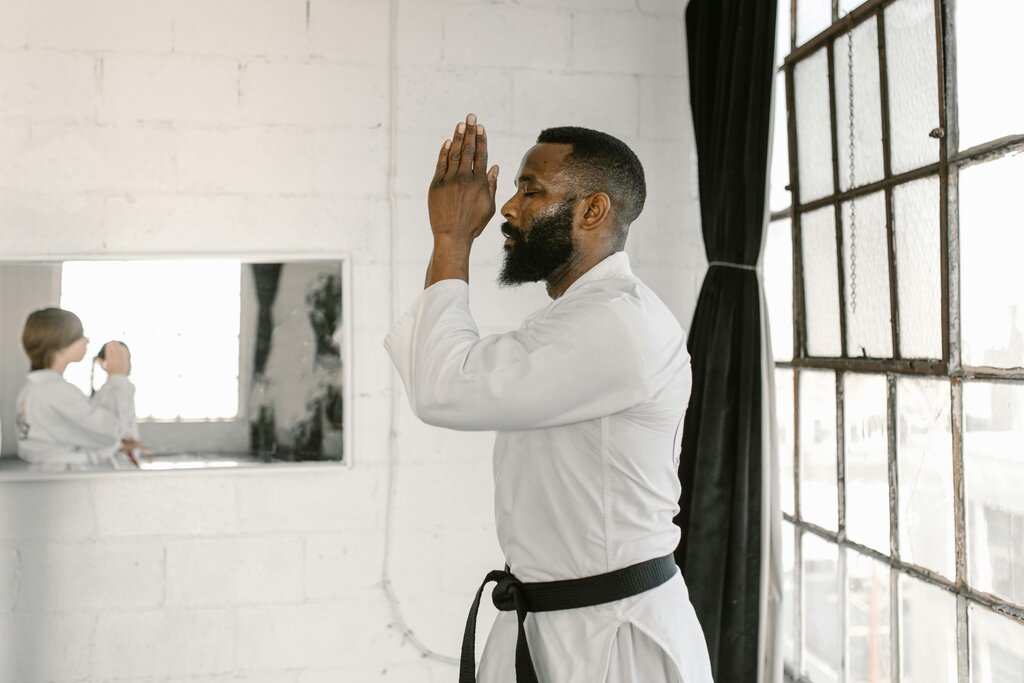
Nogare serves a critical purpose during the stress of kumite. After an explosive exchange using Ibuki, a fighter must quickly recover, lower their heart rate, and clear their mind. Nogare breathing facilitates this by calming the nervous system and ensuring efficient oxygen exchange without wasting energy on unnecessary muscle tension. Mastering the transition between the hard and soft aspects of breath is key to developing the stamina and composure needed for high-level fighting.
Time to check your understanding of these core concepts.
What is the primary purpose of Ibuki breathing in Kyokushin karate?
Which breathing technique is also known as In-Ibuki (internal breathing) and is used for recovery?
Understanding and practicing these breathing methods will fundamentally change your karate, transforming techniques from mere movements into expressions of focused, internal power.