Kubernetes Networking Essentials
Kubernetes Networking Model
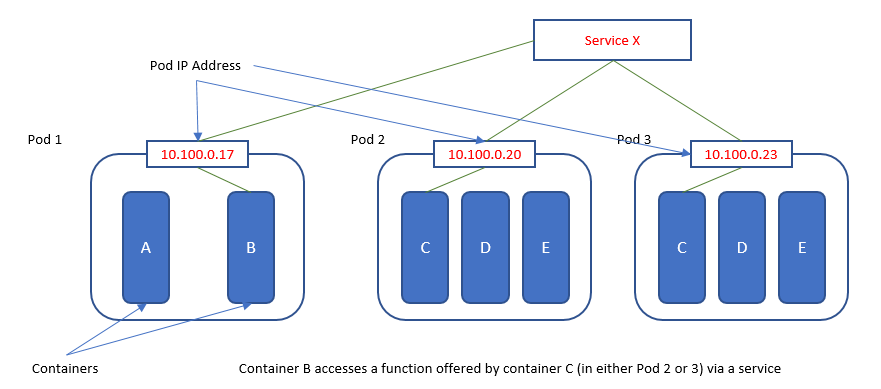
A Private IP for Every Pod
In a Kubernetes cluster, applications run inside containers, and one or more containers live inside a Pod. This raises a fundamental question: how do these isolated Pods talk to each other? Other systems often require complex port mapping and network address translation, but Kubernetes simplifies this with a core rule.
Every Pod gets its own unique IP address.
Think of it like every apartment in a building having its own street address instead of just a unit number. This IP address is shared by all containers running within that same Pod. Because each Pod has a distinct address, there are no port conflicts between Pods. An application running in one Pod can use port 80, and another application in a different Pod can also use port 80, without any issue.
The Flat Network Model
This leads to the second major principle of Kubernetes networking: the network is "flat." This doesn't mean it's simple in its implementation, but it is simple in its behavior. A flat network model means that all Pods can communicate with all other Pods without needing Network Address Translation (NAT).
A Pod on one node (a worker machine in the cluster) can communicate with a Pod on any other node just by using its IP address. The network ensures that the traffic gets routed correctly from the source Pod to the destination Pod, wherever it may be in the cluster.
No NAT Required
Network Address Translation, or NAT, is a method of remapping one IP address space into another. It's commonly used in home networks, where your router takes the private IP addresses of your devices (like 192.168.1.10) and translates them into your single public IP address to talk to the internet.
Because every Pod in Kubernetes has a cluster-unique IP address that is fully reachable by other Pods, there's no need for this kind of translation for internal communication. When Pod A wants to send a message to Pod B, it creates a network packet with Pod B's real IP as the destination. The network routes it directly. This greatly simplifies how applications are configured and how they discover and communicate with each other.
Pods can communicate with each other without the need for network address translation (NAT), ensuring direct and straightforward connectivity.
This foundational model—a unique IP per Pod on a flat network—is what allows more complex Kubernetes networking concepts, like Services and Ingress, to work effectively. It provides a clean, predictable environment for your applications to run in.
What is the fundamental principle of how Pods communicate with each other in a Kubernetes cluster?
An application in Pod 'A' is listening on port 80. Can another application in Pod 'B' also listen on port 80?