Kubernetes Fundamentals and Coding
Introduction to Kubernetes
What Is Kubernetes?
Imagine you're conducting a huge orchestra. Each musician has their part, and you need to make sure they all start on time, play in harmony, and handle their solos perfectly. If one violinist breaks a string, you need a replacement ready to step in immediately so the music doesn't stop. Kubernetes does this for software applications.
Kubernetes is an open source container orchestration platform that automates many of the manual processes involved in deploying, managing, and scaling containerized applications.
In modern software development, applications are often broken down into smaller, independent pieces called microservices. Each microservice is packaged into a container, which includes everything it needs to run. Running a few containers is easy, but managing hundreds or thousands of them across many machines is incredibly complex. That's where Kubernetes comes in.
It handles the heavy lifting of scheduling containers onto servers, keeping them running, connecting them to each other, and scaling them up or down as needed. The name "Kubernetes" comes from Greek, meaning helmsman or pilot. It's often abbreviated to "K8s" because there are eight letters between the 'K' and the 's'.
A Brief History
Kubernetes wasn't built from scratch. It's based on over a decade of Google's experience running massive production workloads. Internally, Google used a system called Borg to manage its vast infrastructure. Borg was the secret sauce that powered services like Gmail and Google Search.
In 2014, Google decided to release an open-source version of the concepts behind Borg, and they called it Kubernetes. They then donated the project to the newly formed Cloud Native Computing Foundation (CNCF) to ensure it would be a community-driven project, not controlled by a single company. This move helped Kubernetes become the industry standard for container orchestration.
Core Features and Benefits
So what does Kubernetes actually do? It provides a framework for running applications resiliently, handling failures gracefully, and scaling on demand. Here are some of its core features.
Automated Scaling: If your application suddenly gets a huge spike in traffic, Kubernetes can automatically create more copies of your containers to handle the load. When traffic dies down, it scales back down to save resources.
Self-Healing: If a container crashes or a server fails, Kubernetes automatically restarts the container or moves it to a healthy machine. It constantly monitors the state of your application to ensure it matches your desired state.
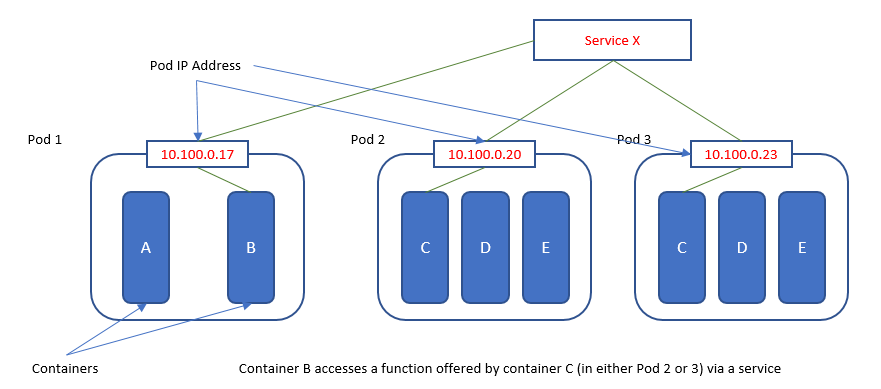
Service Discovery and Load Balancing: Kubernetes gives containers their own IP addresses and a single DNS name for a set of containers. It can then load-balance traffic across them, so you don't have to worry about how different parts of your application find and talk to each other.
Automated Rollouts and Rollbacks: Deploying a new version of your application is simple. Kubernetes can gradually roll out the update, monitoring its health along the way. If something goes wrong, it can automatically roll back to the previous stable version with zero downtime.
Real-World Examples
Many of the world's largest companies rely on Kubernetes to run their services. Its ability to manage complex applications at scale makes it a powerful tool.
- Spotify: The music streaming giant uses Kubernetes to manage its vast network of microservices. This allows their teams to develop and deploy new features independently and quickly.
- Pokémon GO: When the game launched, it faced an unprecedented, global surge in traffic. The developers credited Kubernetes's automatic scaling capabilities as a major reason the game's servers could handle the massive, unpredictable load.
- CERN: The European Organization for Nuclear Research uses Kubernetes to process petabytes of data from the Large Hadron Collider experiments, distributing the massive computational workload across thousands of servers.
Kubernetes provides you with a framework to run distributed systems resiliently.
These examples show how Kubernetes helps organizations focus on building features, not on managing infrastructure. It provides a reliable and scalable foundation for modern applications.
What is the primary function of Kubernetes?
Kubernetes is based on over a decade of Google's experience with an internal system. What was that system called?
From its origins at Google to its role as the industry standard, Kubernetes simplifies the management of complex, containerized applications. It automates the hard parts of running software at scale, making systems more resilient and easier to manage.