Kubernetes Cluster Architecture Explained
Kubernetes Basics
What Is Kubernetes?
To understand Kubernetes, we first need to talk about containers. A container is a lightweight, standalone package that includes everything needed to run a piece of software: the code, runtime, system tools, and libraries. This allows developers to build an application once and run it anywhere, from their laptop to a massive cloud server, without any changes.
As applications grow, managing hundreds or even thousands of these containers becomes a huge challenge. How do you deploy them, scale them up when traffic spikes, and handle failures if a container crashes? This is where Kubernetes comes in.
Kubernetes is an open-source platform that automates the deployment, scaling, and management of containerized applications. Think of it as an advanced autopilot for your software. It takes care of the complex logistics of running applications across many machines, ensuring they are healthy and available.
Kubernetes is a distributed orchestration platform that manages containerized applications across a cluster of control plane and worker nodes.
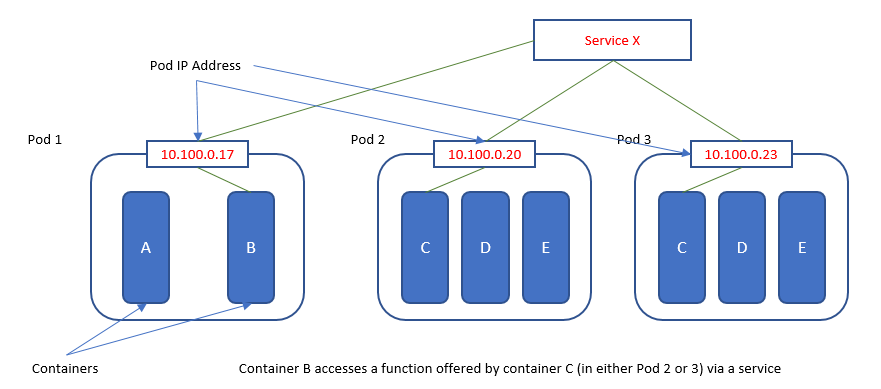
It groups containers into logical units, called pods, making them easier to manage and discover. Kubernetes handles everything from networking between containers to balancing traffic and automatically restarting failed containers.
Inside a Kubernetes Cluster
Kubernetes operates on a collection of machines, called a cluster. A cluster is the foundation of Kubernetes, providing a unified pool of computing resources. Every cluster consists of at least one control plane and one or more compute machines, known as worker nodes.
Let's break down these two roles.
Control Plane
noun
The collection of components that acts as the brain of the cluster. It makes global decisions about the cluster, such as scheduling application containers, as well as detecting and responding to cluster events. This is where all the management and orchestration happens.
You can think of the control plane as the management headquarters. It watches over the entire cluster, making sure everything runs smoothly. You, as the user, interact with the control plane to tell Kubernetes what you want your application to look like.
Worker Node
noun
A machine (which could be a virtual machine or a physical server) that runs the containerized applications. Each worker node is managed by the control plane and contains the necessary services to run containers.
Worker nodes are the workhorses of the cluster. They provide the actual computing power—CPU, memory, and storage—to run your applications. The control plane assigns work to them, telling them which containers to run and how to connect them.
In short: the control plane decides what needs to be done, and the worker nodes do it.
This separation of concerns makes Kubernetes powerful and resilient. If a worker node fails, the control plane can simply move the applications to another healthy node, often without any downtime for your users.
What is the primary purpose of a container in software development?
What major challenge that arises from using many containers does Kubernetes primarily solve?
This high-level architecture is the key to how Kubernetes automates complex tasks, making it a cornerstone of modern software development.