Korean Technological History
Ancient Korean Innovations
Defense and Devotion
Ancient Korea was a hub of remarkable ingenuity. Facing constant external threats and guided by deep cultural beliefs, its inventors and artisans created technologies that were centuries ahead of their time. Two of the most impressive examples are a devastating weapon of war and a monumental work of religious printing.
First, let's look at the hwacha. Developed in the 15th century, this was one of the world's earliest multiple rocket launchers. Imagine a two-wheeled cart, similar in size to a wheelbarrow, but loaded with a launchpad capable of firing up to 200 rocket-propelled arrows, called singijeon, at once. These weren't ordinary arrows; they were tipped with iron heads and sometimes packed with gunpowder to explode on impact.
The hwacha could unleash a fiery storm on enemy formations from hundreds of meters away, making it a terrifying and decisive weapon on the battlefield.
The hwacha's power came from its simple but effective design. A soldier would light the fuses of all the rockets simultaneously, and within seconds, a massive volley was on its way. This technology gave Korean forces a significant advantage, particularly during the Japanese invasions of the late 16th century, where it played a crucial role in defending the peninsula.
Printing for Posterity
While the hwacha represents a peak of military engineering, another Korean innovation from an earlier period shows a profound dedication to culture and religion. This is the Tripitaka Koreana, a complete collection of Buddhist scriptures meticulously carved onto more than 81,000 wooden printing blocks.
Created in the 13th century during the Goryeo dynasty, this project was an immense undertaking. It was a national effort, driven by the belief that creating this sacred collection would invoke the Buddha's protection against invading Mongol forces. Each block was carved from birch wood, which was specially treated to prevent decay. Artisans carved the Buddhist texts in reverse, a task requiring incredible precision and calligraphic skill. The consistency of the carving style across thousands of blocks suggests a highly organized and disciplined production process.
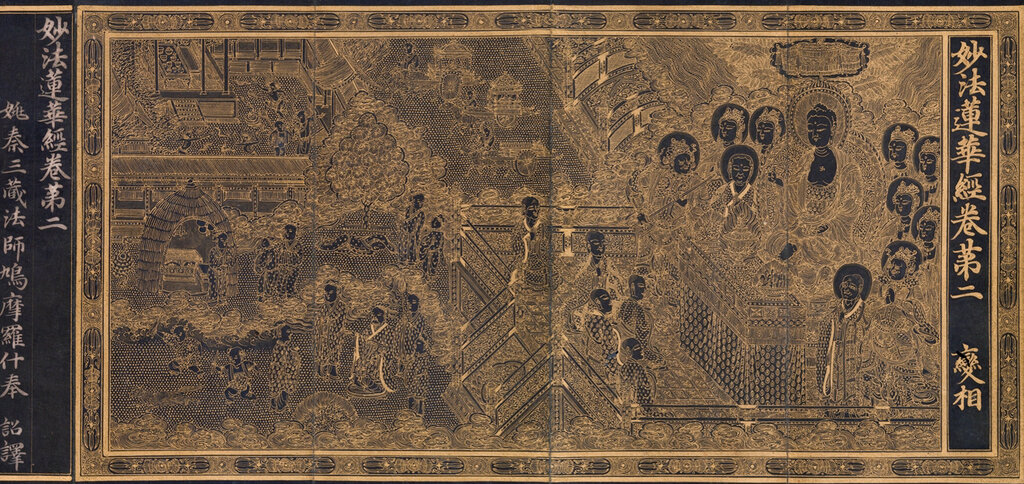
These woodblocks are more than just religious artifacts; they are a masterpiece of printing technology. To create a book, ink would be applied to a block, and paper pressed onto it. This allowed for the mass production of texts long before the printing press became common in Europe. The Tripitaka Koreana is renowned for its accuracy, containing very few errors among its millions of characters.
Amazingly, the entire collection of 81,258 woodblocks survives to this day, stored in the Haeinsa Temple, where they have been preserved for over 750 years.
Time to see what you've learned about these incredible innovations.
What was the primary function of the hwacha developed in 15th-century Korea?
The creation of the Tripitaka Koreana in the 13th century was primarily motivated by the belief that it would...
From the battlefield to the temple, ancient Korea's technological and cultural achievements left a lasting legacy.