Korean Language Fundamentals
Hangul Alphabet
A King's Gift
Before the 15th century, writing in Korean was a challenge. Most people used classical Chinese characters, which were complex and didn't fit the sounds of the Korean language well. This meant that literacy was mostly reserved for the elite.
King Sejong the Great wanted to change that. He believed everyone should have the ability to read and write. So, he and a group of scholars created a new writing system specifically for Korean. It was originally called Hunminjeongeum, which means "The Correct Sounds for the Instruction of the People."
Today, we know it as Hangul (한글).
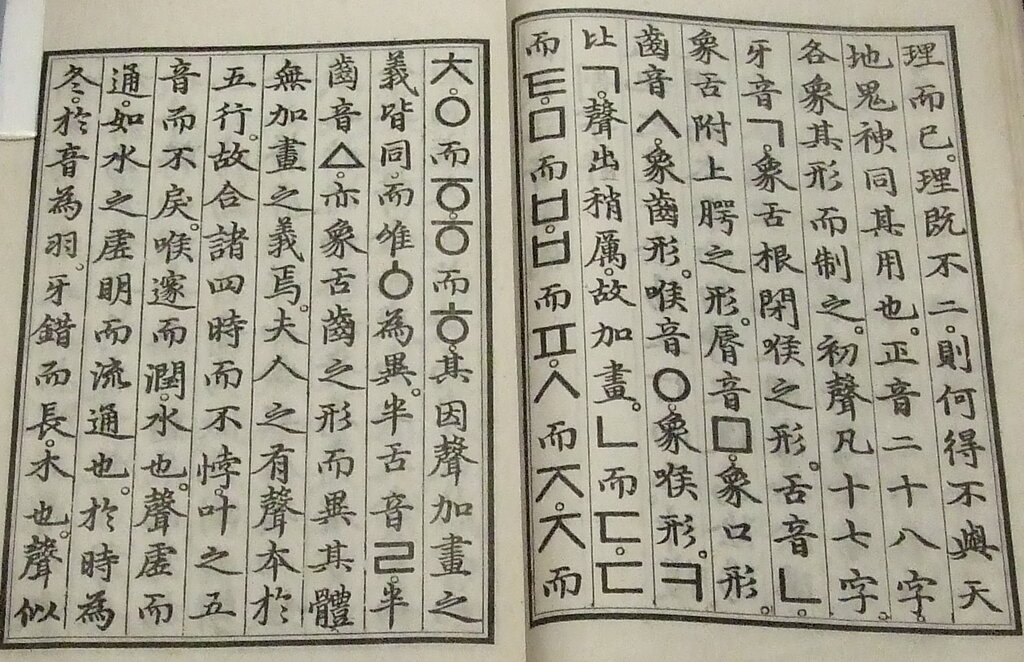
What makes Hangul remarkable is its design. The shapes of the letters are not random. They are based on the shapes the mouth, tongue, and throat make when producing the corresponding sound. This scientific approach makes Hangul one of the most logical writing systems ever created.
The Building Blocks
Hangul consists of basic letters called jamo (자모). There are 14 basic consonants and 10 basic vowels. Think of them as the alphabet you'll use to build words.
The Korean alphabet, Hangul, is one of the most logical and easy-to-learn writing systems in the world.
Let's start with the basic consonants. Their shapes are designed to mimic the position of your speech organs.
| Hangul | Name | Romanization | Sound Similar to... |
|---|---|---|---|
| ㄱ | giyeok (기역) | g/k | go / book |
| ㄴ | nieun (니은) | n | nose |
| ㄷ | digeut (디귿) | d/t | day / cat |
| ㄹ | rieul (리을) | r/l | r in Spanish / light |
| ㅁ | mieum (미음) | m | mom |
| ㅂ | bieup (비읍) | b/p | boy / top |
| ㅅ | siot (시옷) | s | sea |
| ㅇ | ieung (이응) | ng / silent | ng in sing / silent at start |
| ㅈ | jieut (지읒) | j | jam |
| ㅊ | chieut (치읓) | ch | chair |
| ㅋ | kieuk (키읔) | k | kite |
| ㅌ | tieut (티읕) | t | top |
| ㅍ | pieup (피읖) | p | pie |
| ㅎ | hieut (히읗) | h | hat |
Next are the vowels. Their designs are based on three elements: a dot for the sun (•), a horizontal line for the Earth (ㅡ), and a vertical line for humanity (ㅣ).
| Hangul | Romanization | Sound Similar to... |
|---|---|---|
| ㅏ | a | father |
| ㅑ | ya | yard |
| ㅓ | eo | son |
| ㅕ | yeo | yonder |
| ㅗ | o | go |
| ㅛ | yo | yo-yo |
| ㅜ | u | boot |
| ㅠ | yu | you |
| ㅡ | eu | took |
| ㅣ | i | feet |
Building Syllables
Unlike English, where letters are written in a line, Hangul letters are grouped into syllable blocks. Each block represents one syllable and always contains at least one consonant and one vowel.
A syllable block is read from left to right, and top to bottom. It starts with an initial consonant, followed by a vowel. Sometimes, there's an optional final consonant at the bottom, called a batchim (받침).
If a syllable starts with a vowel sound, you must use the consonant 'ㅇ' as a silent placeholder in the initial position. For example, the vowel 'ㅏ' by itself is written as '아'.
Reading Practice
Now, let's try reading some simple words by combining the letters into syllable blocks. Remember to read each block as a single unit.
furniture
This word has two syllable blocks: 가 (ga) and 구 (gu). The first block is ㄱ + ㅏ. The second is ㄱ + ㅜ.
country
Here we have 나 (na) and 라 (ra). That's ㄴ + ㅏ and ㄹ + ㅏ.
sea
This word is made of 바 (ba) and 다 (da).
One of the best things about Hangul is its consistency. Once you learn the sound for each letter, you can reliably pronounce most words you see. There are some exceptions, but it's far more regular than English.
With these basics, you've taken the most important step in learning Korean. Practice recognizing the letters and combining them into syllables. Soon, you'll be able to read any Korean word you come across.
Who was the monarch responsible for commissioning the creation of Hangul?
The shapes of Hangul's basic consonant letters are based on the...