Korean Language Fundamentals
Hangul Basics
An Alphabet for Everyone
Before the 15th century, writing in Korean was complicated. Most people used classical Chinese characters, which took years of study to master. This meant that literacy was mostly limited to the elite. King Sejong the Great wanted to change that. He believed everyone should be able to read and write.
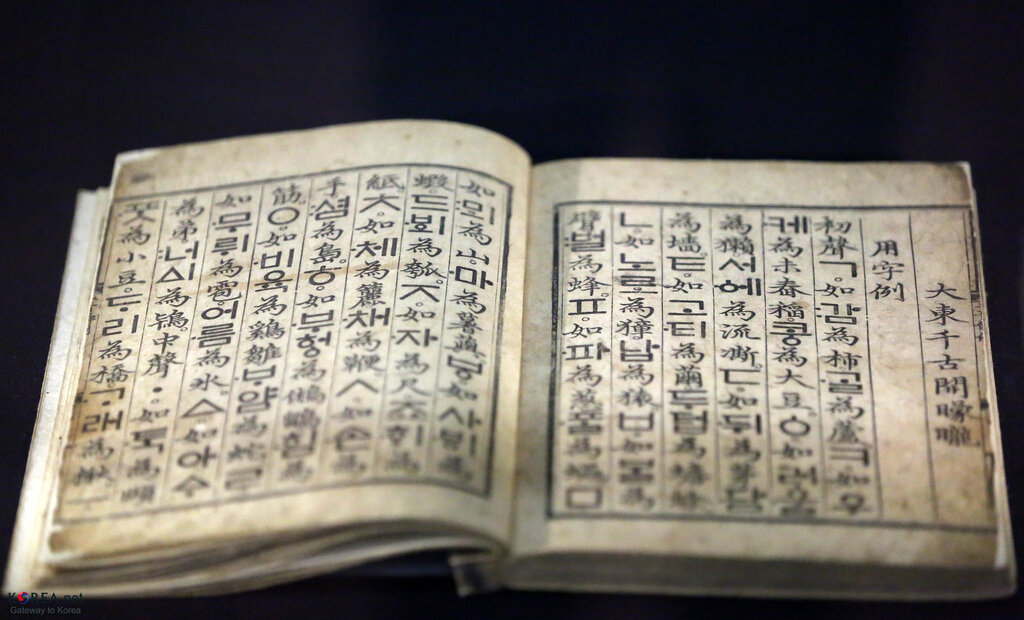
So, in 1443, he and a group of scholars created a new alphabet called Hangul (한글). It was designed to be incredibly logical and easy to learn. The goal was simple: an alphabet so intuitive that a wise person could learn it in a morning, and anyone could learn it in ten days. This invention revolutionized Korean society and is a major point of national pride today.
The Korean alphabet, Hangul, is one of the most logical and easy-to-learn writing systems in the world.
Syllable Blocks
Unlike the English alphabet where letters are written one after another in a straight line, Hangul groups letters into syllable blocks. Think of them as little boxes. Each box contains one syllable, which is always made up of at least an initial consonant and a vowel.
A syllable block always has two or three parts:
- Initial Consonant: Every syllable starts with a consonant.
- Medial Vowel: A vowel always follows the initial consonant. It can be placed to the right of it or below it, depending on the vowel's shape.
- Final Consonant (Optional): Some syllables have a final consonant, called a batchim (받침), which always sits at the bottom of the block.
Even if a syllable sounds like it starts with a vowel, like "ah," it is written with a silent placeholder consonant, ㅇ, in the initial position. So "ah" is written as 아.
Consonants and Vowels
Hangul has 14 basic consonants and 10 basic vowels. The genius of the system is that the shapes of the letters are not random. The consonant shapes are based on the shape of the mouth and tongue when making the sound. The vowel shapes are based on philosophical principles: a vertical line for a person (ㅣ), a horizontal line for the flat Earth (ㅡ), and a short stroke (originally a dot) for the round Heaven (ㆍ).
From these basic letters, we can create more. Five of the consonants can be doubled to create a stronger, tensed sound. The vowels can be combined to form 11 different diphthongs, which are sounds made by combining two vowels.
| Character | Sound | Name |
|---|---|---|
| ㄱ | g/k | giyeok |
| ㄴ | n | nieun |
| ㄷ | d/t | digeut |
| ㄹ | r/l | rieul |
| ㅁ | m | mieum |
| ㅂ | b/p | bieup |
| ㅅ | s | siot |
| ㅇ | ng / silent | ieung |
| ㅈ | j | jieut |
| ㅊ | ch | chieut |
| ㅋ | k | kieuk |
| ㅌ | t | tieut |
| ㅍ | p | pieup |
| ㅎ | h | hieut |
Here are the double consonants, which are pronounced with more tension in the throat, without a puff of air.
| Character | Sound | Name |
|---|---|---|
| ㄲ | kk | ssang giyeok |
| ㄸ | tt | ssang digeut |
| ㅃ | pp | ssang bieup |
| ㅆ | ss | ssang siot |
| ㅉ | jj | ssang jieut |
And now for the basic vowels.
| Character | Sound | Description |
|---|---|---|
| ㅏ | a | as in 'father' |
| ㅓ | eo | as in 'uh-oh' |
| ㅗ | o | as in 'boat' |
| ㅜ | u | as in 'moon' |
| ㅡ | eu | like 'oo' in 'good', but unrounded lips |
| ㅣ | i | as in 'see' |
| ㅐ | ae | as in 'cat' |
| ㅔ | e | as in 'set' |
| ㅑ | ya | 'y' + 'a' |
| ㅕ | yeo | 'y' + 'eo' |
| ㅛ | yo | 'y' + 'o' |
| ㅠ | yu | 'y' + 'u' |
Reading Your First Words
Now let's try reading. We'll combine the letters into syllable blocks to form words. Remember to read the blocks one syllable at a time.
furniture
This word has two syllable blocks: 가 (ga) and 구 (gu).
- The first block combines ㄱ (g) and ㅏ (a).
- The second block combines ㄱ (g) and ㅜ (u).
tree
This word has two syllable blocks: 나 (na) and 무 (mu).
- The first block combines ㄴ (n) and ㅏ (a).
- The second block combines ㅁ (m) and ㅜ (u).
Korea
This word, a bit more complex, has two blocks: 한 (han) and 국 (guk). Notice the final consonants.
- The first block is ㅎ (h) + ㅏ (a) + ㄴ (n).
- The second block is ㄱ (g) + ㅜ (u) + ㄱ (k).
With these basic building blocks, you can start to sound out almost any word in Korean. Practice recognizing the characters and how they fit together in syllables. It's the first and most important step to becoming fluent.
What was the primary motivation for King Sejong the Great to create the Hangul alphabet?
The shapes of the basic Hangul consonants are based on...
Learning Hangul opens up the entire Korean language. Once you're comfortable with the alphabet, you'll find learning vocabulary and grammar much easier.