Korean Language Fundamentals
Korean Alphabet
Meet Hangul
The first step to learning Korean is getting to know its alphabet, Hangul (한글). Unlike alphabets that evolved over centuries, Hangul was created with a specific purpose: to be easy to learn and use. It was introduced in 1446 by King Sejong the Great to promote literacy among all people, not just the elite who could read complex Chinese characters.
The first and most important step in learning Korean is mastering Hangul.
This scientific design is what makes Hangul so approachable. Most learners find they can pick up the basics in just a few hours. Let's start with the fundamental building blocks: the vowels and consonants.
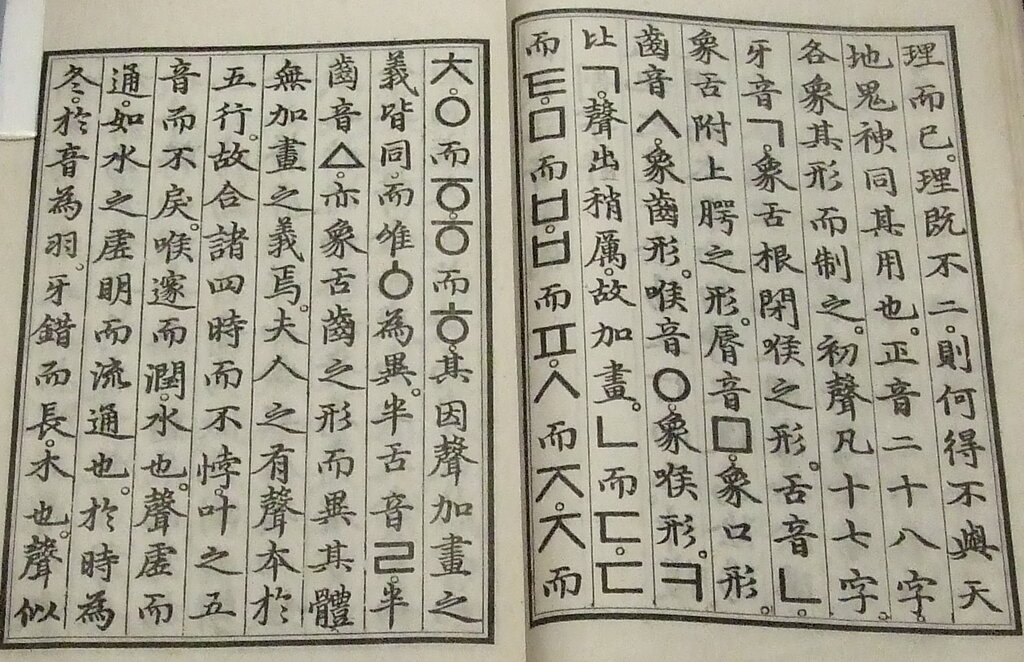
The Building Blocks
Hangul has 10 basic vowels and 14 basic consonants. Many of the letters are designed to mimic the shape your mouth or tongue makes when you produce their sound. This clever system makes them intuitive to remember.
For example, the consonant ㄱ (g/k) is shaped like the back of the tongue raised to the roof of the mouth.
Let's look at the basic vowels and consonants. Don't worry about memorizing them all at once. The goal is to get familiar with their shapes and sounds.
| Character | Romanization | Sound Like |
|---|---|---|
| ㅏ | a | ah, as in father |
| ㅓ | eo | uh, as in sun |
| ㅗ | o | oh, as in boat |
| ㅜ | u | oo, as in moon |
| ㅡ | eu | oo, as in good |
| ㅣ | i | ee, as in meet |
And here are some of the basic consonants.
| Character | Romanization | Sound Like |
|---|---|---|
| ㄱ | g/k | go / sky |
| ㄴ | n | nose |
| ㄷ | d/t | day / stop |
| ㄹ | r/l | run / lamp |
| ㅁ | m | mom |
| ㅂ | b/p | bed / spot |
| ㅅ | s | sea |
| ㅇ | -/ng | silent / sing |
| ㅈ | j | jam |
You might notice that some consonants have two sounds. For example, ㄱ sounds like a 'g' at the start of a syllable but more like a 'k' at the end. The consonant ㅇ is a placeholder. It is silent when it comes before a vowel but has an 'ng' sound when it's at the end of a syllable.
Putting It Together
Unlike English where letters are written in a line, Hangul characters are grouped into syllable blocks. Each block always contains at least one consonant and one vowel. The structure is quite simple.
Every syllable starts with an initial consonant. This is followed by a medial vowel, which can be placed to the right of the consonant or below it, depending on the vowel's shape.
For vertical vowels like ㅏ and ㅣ, they go to the right:
- ㄴ + ㅏ = 나 (na)
- ㅅ + ㅣ = 시 (si)
For horizontal vowels like ㅗ and ㅜ, they go below:
- ㄱ + ㅗ = 고 (go)
- ㅂ + ㅜ = 부 (bu)
If a syllable ends with a consonant sound, that final consonant, or batchim (받침), is always placed at the bottom of the block.
- ㄱ + ㅏ + ㄴ = 간 (gan)
- ㅁ + ㅜ + ㄹ = 물 (mul)
What about words that start with a vowel sound, like 'ah'? Remember the silent consonant ㅇ. It acts as a placeholder at the beginning of a syllable.
- ㅇ + ㅏ = 아 (a)
Let's Practice
The best way to learn is by doing. Let's try to read and write a few simple words using the letters we've learned so far.
Take the word for "Korea," which is Hanguk.
Korea
It has two syllable blocks:
- 한 (han): Starts with ㅎ (h), followed by the vowel ㅏ (a) to its right. It ends with the final consonant ㄴ (n) at the bottom.
- 국 (guk): Starts with ㄱ (g), followed by the vowel ㅜ (u) below it. It ends with the final consonant ㄱ (k) at the bottom.
Here are a few more to try breaking down:
Kimchi
- 김 (gim) = ㄱ + ㅣ + ㅁ
- 치 (chi) = ㅊ + ㅣ (ㅊ is an aspirated 'ch' sound we'll cover later, but you can see the structure!)
Seoul
- 서 (seo) = ㅅ + ㅓ
- 울 (ul) = ㅇ + ㅜ + ㄹ
You've just taken your first step into reading Korean. By mastering these foundational letters and understanding how they snap together like puzzle pieces, you've unlocked the ability to pronounce any word in the language.
What was the primary reason King Sejong the Great introduced Hangul in 1446?
How is the Hangul character ㅇ (ieung) pronounced when it is placed at the end of a syllable block (as a batchim)?