Korean Language Essentials for Indian Learners
Hangul Alphabet
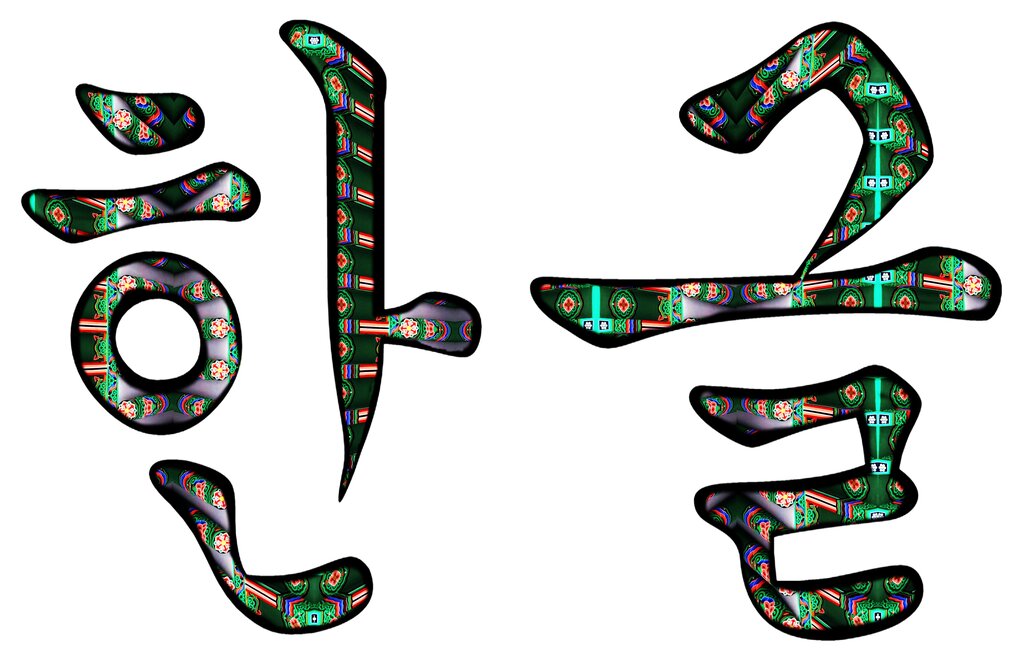
The Korean Alphabet, Hangul
Welcome to Hangul (한글), the Korean alphabet. Unlike writing systems that evolved over centuries, Hangul was created intentionally in the 15th century by King Sejong the Great. His goal was to make literacy accessible to everyone, not just the elite who knew classical Chinese.
The result is one of the most logical and straightforward writing systems in the world. Instead of memorizing thousands of characters, you only need to learn 24 basic letters: 14 consonants and 10 vowels. With a little practice, you can learn to read them in just a few hours.
Vowels The Foundation of Sound
The basic vowels in Hangul were designed using three simple shapes representing core philosophical concepts: a dot for Heaven (•, now a short line), a horizontal line for Earth (ㅡ), and a vertical line for Humanity (ㅣ). All the vowels are just combinations of these three elements.
Let's look at the ten basic vowels. Notice how they are built from the core vertical and horizontal lines. Adding a short stroke indicates a 'y' sound is added.
| Vowel | Romanization | Pronunciation Guide |
|---|---|---|
| ㅏ | a | like the 'a' in 'father' |
| ㅑ | ya | like 'ya' in 'yacht' |
| ㅓ | eo | like the 'o' in 'song' |
| ㅕ | yeo | like 'yo' in 'yonder' |
| ㅗ | o | like the 'o' in 'go' |
| ㅛ | yo | like 'yo' in 'yo-yo' |
| ㅜ | u | like the 'oo' in 'moon' |
| ㅠ | yu | like 'yu' in 'yule' |
| ㅡ | eu | like the 'u' in 'put', but without rounding your lips |
| ㅣ | i | like the 'ee' in 'see' |
Consonants Shaping Your Speech
Hangul's consonants are even more ingenious. Their shapes were designed to mimic the position of your mouth, tongue, and throat when you make the sound. This makes learning their pronunciation incredibly intuitive.
For example, the character for the 'g' sound, ㄱ, looks like the side-profile of your tongue raised to touch the back of your mouth. The character for the 'n' sound, ㄴ, mimics the tip of your tongue touching the back of your upper teeth.
Some consonants are derived from others. Adding a stroke to a basic consonant often creates a more aspirated or 'airy' sound. For instance, adding a stroke to ㄱ (g) makes ㅋ (k), and adding one to ㄷ (d) makes ㅌ (t).
Here are the 14 basic consonants. Note that some letters, like ㄱ, ㄷ, ㅂ, and ㄹ, have slightly different sounds depending on their position in a word, but we'll stick to the most common sounds for now.
| Consonant | Name | Sound | Pronunciation Guide |
|---|---|---|---|
| ㄱ | Giyeok | g/k | A soft 'g' like in 'go', sometimes a 'k' |
| ㄴ | Nieun | n | Like 'n' in 'nose' |
| ㄷ | Digeut | d/t | A soft 'd' like in 'door', sometimes a 't' |
| ㄹ | Rieul | r/l | A mix between 'r' and 'l', like a Spanish 'r' |
| ㅁ | Mierum | m | Like 'm' in 'mom' |
| ㅂ | Bieup | b/p | A soft 'b' like in 'bus', sometimes a 'p' |
| ㅅ | Siot | s/sh | Like 's' in 'see', or 'sh' before 'i' |
| ㅇ | Ieung | ng/silent | Silent at the start of a syllable, 'ng' at the end |
| ㅈ | Jieut | j | Like 'j' in 'jump' |
| ㅊ | Chieut | ch | Like 'ch' in 'church' |
| ㅋ | Kieuk | k | An airy 'k' sound, like in 'king' |
| ㅌ | Tieut | t | An airy 't' sound, like in 'top' |
| ㅍ | Pieup | p | An airy 'p' sound, like in 'pop' |
| ㅎ | Hieut | h | Like 'h' in 'hello' |
Putting It All Together Syllable Blocks
Now for the fun part. In Korean, you don't write letters in a straight line like in English. Instead, you group them into syllable blocks. Every block must contain at least one consonant and one vowel.
A block always starts with a consonant. If a syllable starts with a vowel sound, you use the silent consonant ㅇ as a placeholder. For example, the vowel ㅏ ('a') by itself is written as 아.
The letters are arranged within a square space, typically from top-to-bottom and left-to-right.
Think of it like building with LEGOs. Each syllable is a small construction made of a few specific pieces, and these blocks then line up to form words.
Let's combine the consonant ㄱ (g) with the vowel ㅏ (a). This forms the syllable 가 (ga).
To write the word for 'singer', gasu, you would combine two blocks: 가 (ga) + 수 (su) = 가수.
Here are a few more examples:
- ㄴ (n) + ㅏ (a) = 나 (na), which means 'I' or 'me'.
- ㅅ (s) + ㅗ (o) = 소 (so), which means 'cow'.
- ㄱ (g) + ㅜ (u) = 구 (gu), which is part of the word for 'shoes' (구두).
Ready to test your knowledge? Let's see how well you remember the sounds.
Who created Hangul in the 15th century, and for what primary purpose?
What is the ingenious design principle behind the shapes of basic Hangul consonants?
Congratulations on taking your first step into the Korean language. By mastering these basic letters, you've unlocked the ability to read and pronounce any Korean word you see. Keep practicing, and you'll be reading Hangul fluently in no time.