Korean Language Basics
Hangeul Basics
A Purposefully Simple Alphabet
Before the 15th century, Korean was written using complex Chinese characters. This was difficult for most people, so literacy was low. King Sejong the Great wanted to change that. He and a team of scholars created a new, simple alphabet just for the Korean language.
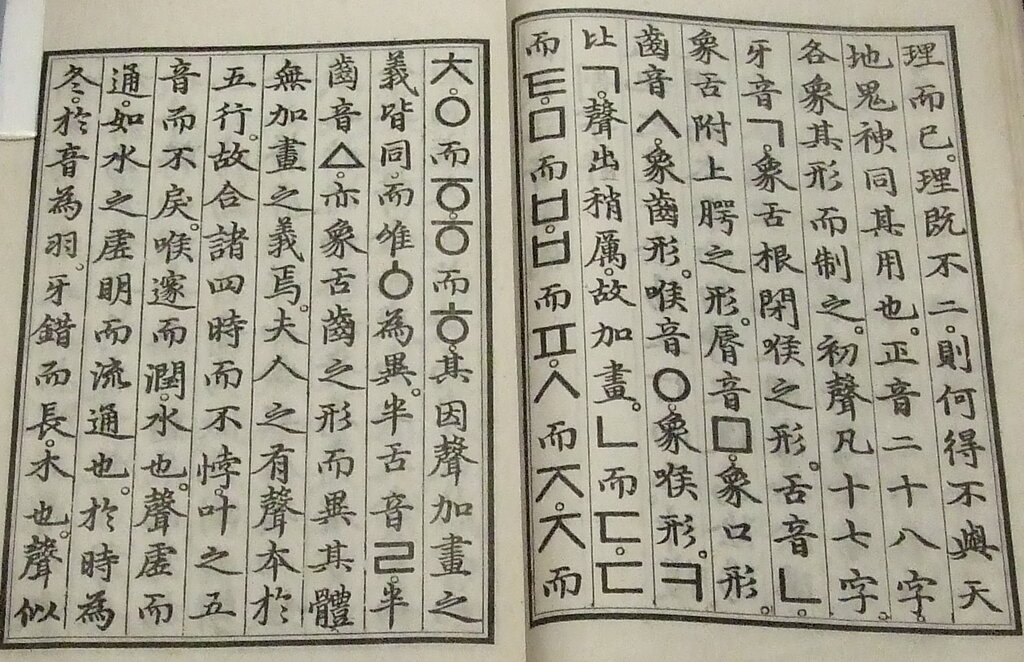
They called it Hunminjeongeum, or "The Proper Sounds for the Instruction of the People." Today, it's known as Hangeul (한글). It was designed to be so logical that a wise person could learn it in a morning, and anyone could learn it in ten days. Its scientific design makes it one of the easiest and most efficient alphabets in the world.
The Korean alphabet, Hangul, is one of the most logical and easy-to-learn writing systems in the world.
The Building Blocks
Hangeul has 24 basic letters: 14 consonants and 10 vowels. What makes it brilliant is that the shapes of the letters often mimic the shape of your mouth or tongue when you make the sound. This makes them much easier to remember.
Let's look at the basic consonants and their sounds.
| Hangeul | Name | Sound |
|---|---|---|
| ㄱ | giyeok (기역) | g / k |
| ㄴ | nieun (니은) | n |
| ㄷ | digeut (디귿) | d / t |
| ㄹ | rieul (리을) | r / l |
| ㅁ | mieum (미음) | m |
| ㅂ | bieup (비읍) | b / p |
| ㅅ | siot (시옷) | s / sh |
| ㅇ | ieung (이응) | ng / silent |
| ㅈ | jieut (지읒) | j |
| ㅊ | chieut (치읓) | ch |
| ㅋ | kieuk (키읔) | k |
| ㅌ | tieut (티읕) | t |
| ㅍ | pieup (피읖) | p |
| ㅎ | hieut (히읗) | h |
Note that some consonants have two sounds. The sound often depends on whether the letter is at the beginning or end of a syllable. For example, ㄱ sounds like 'g' at the beginning of a syllable but 'k' at the end.
The vowels are even simpler. They are built from just three shapes: a dot for the sun (∙), a horizontal line for the flat earth (ㅡ), and a vertical line for a standing person (ㅣ). Combining these creates all the basic vowels.
| Hangeul | Sound (like in...) |
|---|---|
| ㅏ | ah |
| ㅑ | yacht |
| ㅓ | uh-oh |
| ㅕ | yum |
| ㅗ | oh |
| ㅛ | yo-yo |
| ㅜ | ooze |
| ㅠ | you |
| ㅡ | stook (without rounding lips) |
| ㅣ | tree |
Making Syllable Blocks
Hangeul letters aren't written one after another in a straight line like English. Instead, they're grouped into square syllable blocks. Each block represents one syllable and must contain at least one consonant and one vowel.
There are a few basic structures. The simplest is a consonant followed by a vowel.
If a syllable starts with a vowel sound, you must use the consonant 'ㅇ' as a silent placeholder. For example, the vowel 'ㅏ' (a) by itself is written as 아. When 'ㅇ' comes at the end of a syllable, it makes the "ng" sound, as in 한 (han).
Let's try reading a few words with the letters we've learned:
furniture
country
tree
Writing Hangeul
Writing Hangeul follows simple stroke order rules, which helps with speed and legibility. The basic principles are:
- Top to bottom.
- Left to right.
For example, to write the consonant 'ㄱ' (giyeok), you write the horizontal stroke from left to right first, then the vertical stroke from top to bottom. For the vowel 'ㅏ' (a), you write the long vertical stroke first (top to bottom), then the short horizontal stroke (left to right).
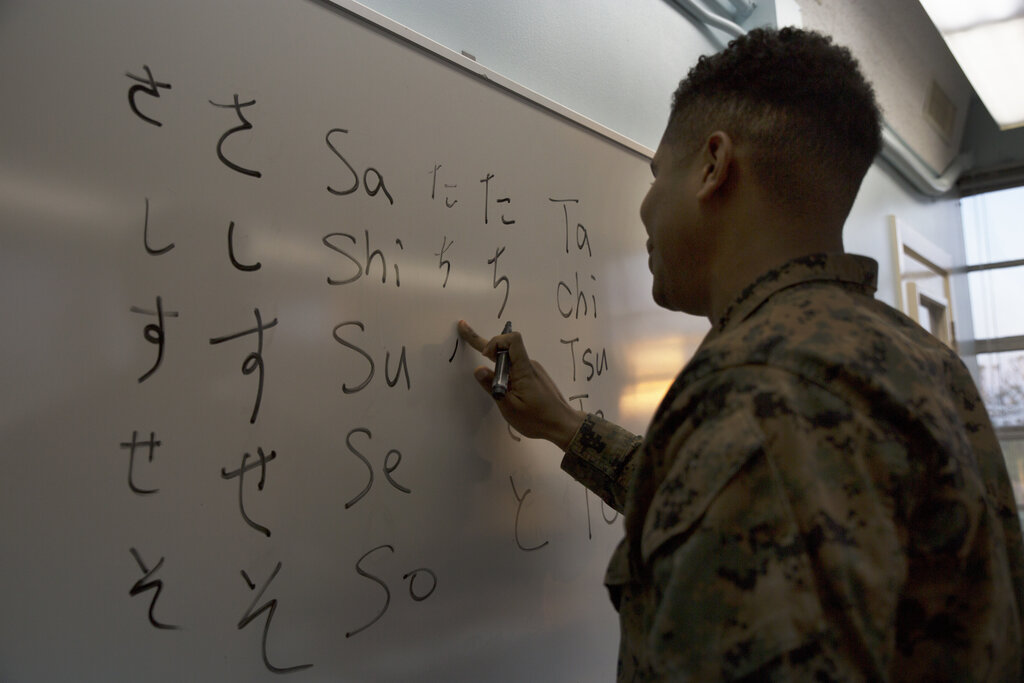
Getting a feel for these rules is the first step. The best way to learn is to practice writing the letters yourself, focusing on the correct stroke order for each one.
Ready to test your knowledge?
Who was the king responsible for the creation of the Korean alphabet, Hangeul?
The basic Hangeul vowels are created from combinations of three fundamental shapes. What do these shapes represent?
Learning Hangeul is the essential first step into the Korean language. By mastering these basic letters and how they combine, you build a strong foundation for everything that comes next.