Korean for Business and Tech
Hangul and Pronunciation
The Korean Alphabet
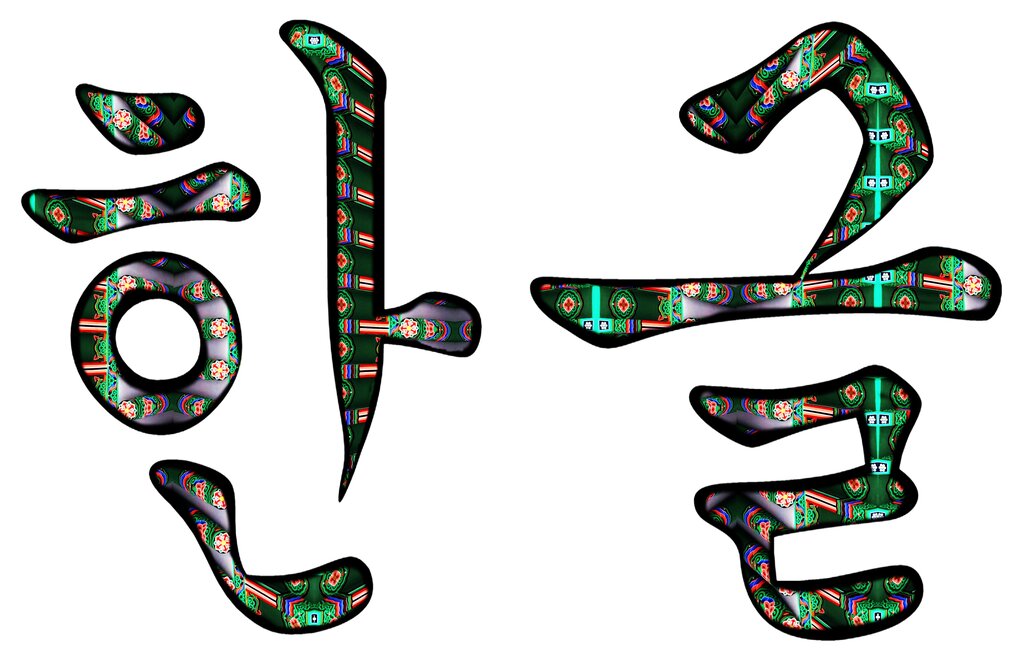
The first step to learning Korean is mastering its alphabet, Hangul (한글). Unlike writing systems that evolved over centuries, Hangul was created intentionally in the 15th century by King Sejong the Great. His goal was to make literacy accessible to everyone, and the result is one of the most logical writing systems in the world.
The Korean alphabet, Hangul, is one of the most logical and easy-to-learn writing systems in the world.
Instead of memorizing thousands of characters, you only need to learn 24 basic letters: 14 consonants and 10 vowels. The shapes of the letters are not random. They were designed to mimic the shape of the mouth and tongue when making the corresponding sound. This makes them surprisingly intuitive to learn.
Consonants and Vowels
Let's start with the building blocks. There are 14 basic consonants and 10 basic vowels. Many of the consonant sounds will be familiar to English speakers, but a few have no direct equivalent and require careful listening.
| Letter | Name | Romanization | Approximate Sound |
|---|---|---|---|
| ㄱ | giyeok | g/k | 'g' in 'go', 'k' in 'sky' |
| ㄴ | nieun | n | 'n' in 'nose' |
| ㄷ | digeut | d/t | 'd' in 'dog', 't' in 'stop' |
| ㄹ | rieul | r/l | 'r' in Spanish 'pero', 'l' in 'feel' |
| ㅁ | mieum | m | 'm' in 'mom' |
| ㅂ | bieup | b/p | 'b' in 'bed', 'p' in 'spin' |
| ㅅ | siot | s | 's' in 'see', but softer |
| ㅇ | ieung | ng / none | Silent at start of syllable, 'ng' at end |
| ㅈ | jieut | j | 'j' in 'jump', but less airy |
| ㅊ | chieut | ch | 'ch' in 'cheese' |
| ㅋ | kieuk | k | 'k' in 'king' |
| ㅌ | tieut | t | 't' in 'top' |
| ㅍ | pieup | p | 'p' in 'pie' |
| ㅎ | hieut | h | 'h' in 'hat' |
Notice how some letters, like ㄱ, ㄷ, and ㅂ, have two sounds depending on their position. This is a key concept we'll return to. The letter ㄹ is also tricky; it's a light 'r' or flap sound between vowels and an 'l' sound at the end of a syllable.
Now for the vowels. Korean vowels are composed of three simple strokes: a vertical line (ㅣ), a horizontal line (ㅡ), and a short tick. The vertical line represents a person standing, the horizontal line represents the earth, and the tick represents heaven. All vowels are combinations of these.
| Letter | Romanization | Approximate Sound |
|---|---|---|
| ㅏ | a | 'a' in 'father' |
| ㅑ | ya | 'ya' in 'yacht' |
| ㅓ | eo | 'o' in 'song' |
| ㅕ | yeo | 'yo' in 'yonder' |
| ㅗ | o | 'o' in 'go' |
| ㅛ | yo | 'yo' in 'yoyo' |
| ㅜ | u | 'oo' in 'moon' |
| ㅠ | yu | 'u' in 'yule' |
| ㅡ | eu | 'u' in 'put', but unrounded lips |
| ㅣ | i | 'ee' in 'see' |
Building Syllable Blocks
Unlike English where letters are written in a line, Hangul letters are grouped into syllable blocks. Every syllable block must contain at least one consonant and one vowel. The silent consonant ㅇ acts as a placeholder if a syllable starts with a vowel sound.
Think of it like building with LEGOs. You have consonant pieces and vowel pieces, and you snap them together in a square space to form a sound.
A syllable block is always read in the same order:
- Initial Consonant (top-left or top)
- Medial Vowel (top-right or middle)
- Final Consonant (bottom, if present)
Let's see how the word 'Hangul' (한글) is formed.
The first block, 한 (han), is formed with ㅎ (h), ㅏ (a), and ㄴ (n). The second block, 글 (geul), is formed with ㄱ (g), ㅡ (eu), and ㄹ (l). Notice how the shapes fit together neatly.
Here are a few more examples:
water
love
Pronunciation Challenges
While Hangul is logical, some sounds can be tricky for English speakers because they fall between sounds we're used to. The key is to listen and mimic, not just match them to the closest English letter.
Aspirated vs. Unaspirated Sounds: Korean distinguishes between sounds made with a strong puff of air (aspirated) and those without. For example:
- ㅂ (b/p) is unaspirated. Say 'spy'. The 'p' sound has no air puff.
- ㅍ (p) is aspirated. Hold your hand in front of your mouth and say 'pie'. You should feel the air.
- The same logic applies to ㄱ/ㅋ (g/k) and ㄷ/ㅌ (d/t).
The 'eo' and 'eu' Vowels: These vowels often cause the most trouble.
- ㅓ (eo) is like the 'o' sound in 'song' or 'caught', but with your mouth a bit more relaxed and open.
- ㅡ (eu) has no English equivalent. Try to say 'oo' as in 'goose' but without rounding your lips. Another way to find it is to say 'uh' and pull the corners of your mouth back slightly, like a grimace.
Don't worry about getting these perfect right away. The goal is to be aware of the differences. Consistent listening practice is the best way to train your ear.
Now, let's review the key concepts with some flashcards.
Ready to test your knowledge? This quiz will cover the basic letters and syllable structure you've just learned.
Who is credited with the creation of the Korean alphabet, Hangul?
How are Hangul letters arranged to form words?
Learning Hangul is the single most important step you can take to learn Korean. It unlocks reading, improves pronunciation, and builds a solid foundation for everything that comes next.