Koine Greek Essentials and Syntax
Orthography and Phonology
The Koine Alphabet
The Koine Greek alphabet consists of 24 letters, inherited directly from its Classical predecessor. While the characters remained the same, their pronunciation underwent significant shifts. The most notable change was the move from a pitch-based accent system to one based on stress, and several letters and diphthongs softened their sounds.
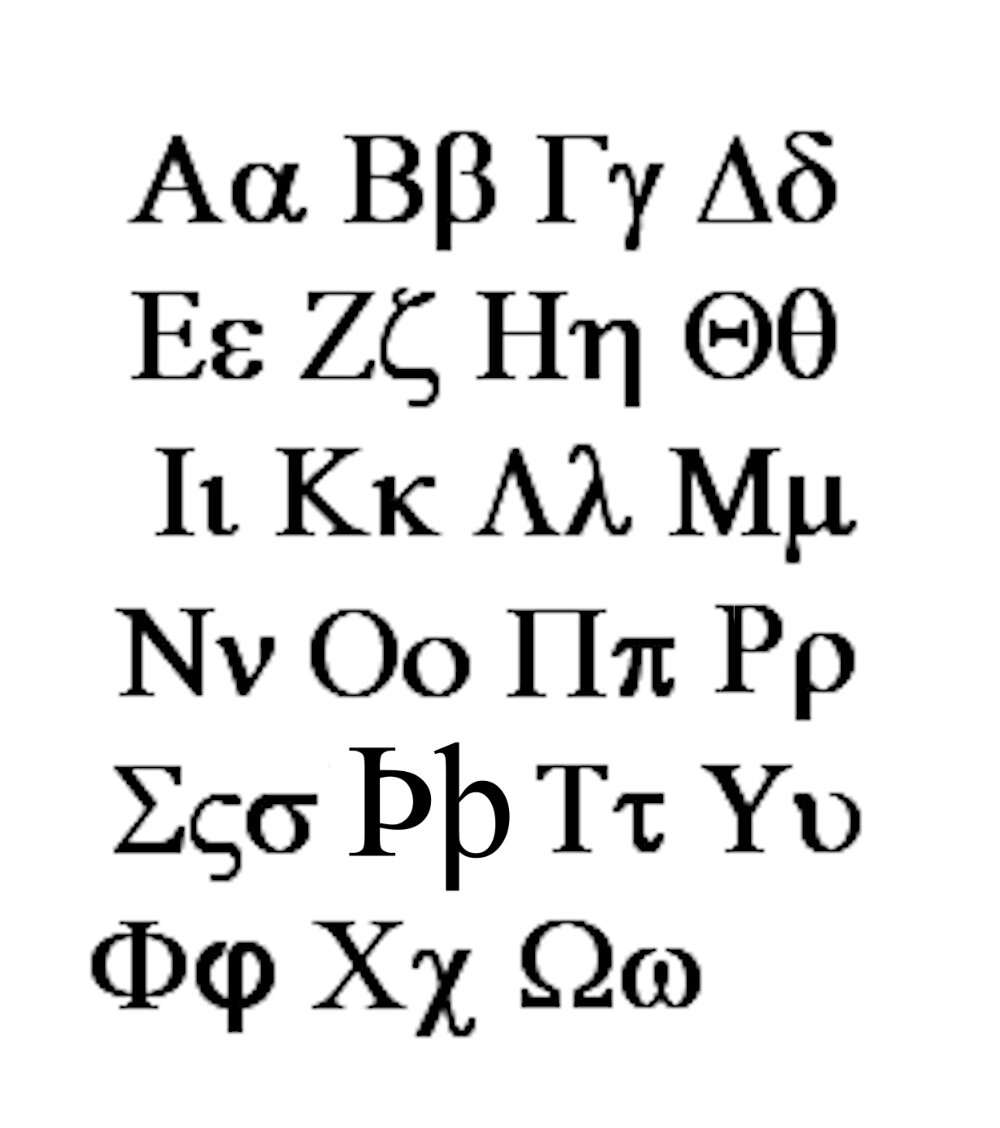
For example, Beta () transitioned from a hard /b/ sound (as in "ball") to a voiced fricative /v/ (as in "vine"). This process, known as lenition, affected several consonants. Similarly, the aspirates Phi (), Theta (), and Chi () lost their breathy quality, becoming simple fricatives.
Here are the letters and their approximate Koine pronunciations.
| Upper | Lower | Name | Pronunciation |
|---|---|---|---|
| Α | α | Alpha | a as in father |
| Β | β | Beta | v as in vine |
| Γ | γ | Gamma | g as in leg (before γ, κ, χ, ξ); y as in yes (before ε, ι, η, υ) |
| Δ | δ | Delta | th as in that |
| Ε | ε | Epsilon | e as in met |
| Ζ | ζ | Zeta | z as in zoo |
| Η | η | Eta | ee as in feet (same as iota) |
| Θ | θ | Theta | th as in thin |
| Ι | ι | Iota | ee as in feet |
| Κ | κ | Kappa | k as in kit |
| Λ | λ | Lambda | l as in let |
| Μ | μ | Mu | m as in met |
| Ν | ν | Nu | n as in net |
| Ξ | ξ | Xi | x as in axe |
| Ο | ο | Omicron | o as in log |
| Π | π | Pi | p as in pin |
| Ρ | ρ | Rho | r as in red (often rolled slightly) |
| Σ | σ/ς | Sigma | s as in sit (ς is used only at the end of a word) |
| Τ | τ | Tau | t as in top |
| Υ | υ | Upsilon | ee as in feet (same as iota and eta) |
| Φ | φ | Phi | f as in fill |
| Χ | χ | Chi | ch as in Scottish loch |
| Ψ | ψ | Psi | ps as in lapse |
| Ω | ω | Omega | o as in log (same as omicron) |
Vowel Sounds and Markings
Koine Greek simplified its vowel system. The distinction between long and short vowels, crucial in Classical Greek, largely disappeared in pronunciation, though it remained in writing. For example, omicron () and omega () were both pronounced as a short /o/ sound. Similarly, eta (), iota (), and upsilon () all merged into the same /i/ sound, a process called itacism.
Diphthongs—pairs of vowels pronounced as a single sound—also simplified. This is known as monophthongization.
| Diphthong | Koine Pronunciation |
|---|---|
| αι | e as in met (like epsilon) |
| ει | ee as in feet (like iota) |
| οι | ee as in feet (like iota) |
| υι | ee as in feet (like iota) |
| αυ | af or av (depending on following sound) |
| ευ | ef or ev (depending on following sound) |
| ου | oo as in food |
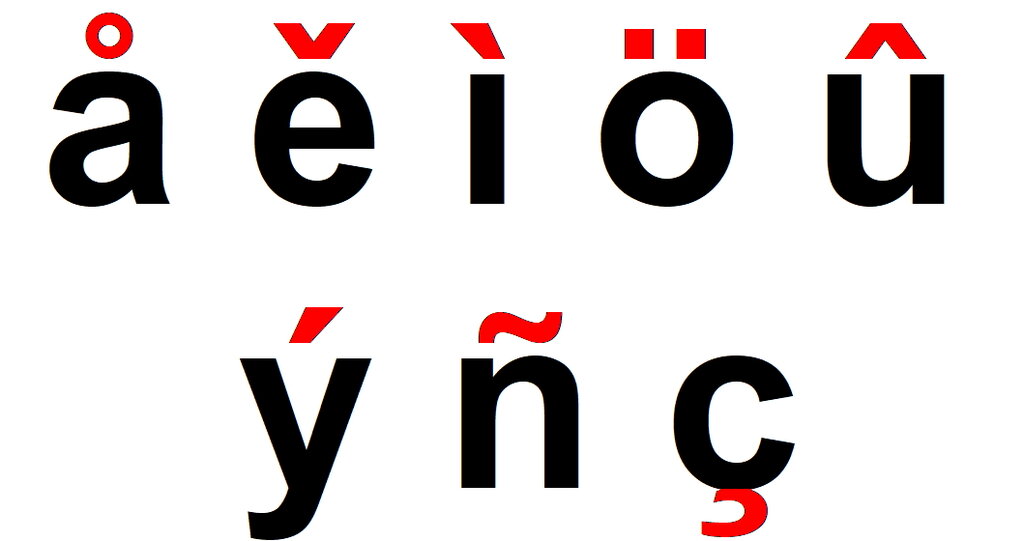
Two other important markings relate to vowels: the iota subscript and the diaeresis.
An iota subscript (e.g., ) is a small iota written beneath a long vowel. Phonetically, it became silent by the Koine period, but it's a crucial grammatical fossil. It indicates a long diphthong that was pronounced in earlier forms of Greek, often signaling the dative case.
A diaeresis (¨), placed over the second of two vowels (e.g., ), indicates that the vowels should be pronounced separately, not as a diphthong. For example, Ἠσαΐας (Isaiah) is pronounced Ee-sah-ee-ahs, not Ee-seh-as.
Breathings and Accents
Every word beginning with a vowel (or the letter rho, ) must have a breathing mark. These marks indicate the presence or absence of an /h/ sound at the beginning of the word.
- Smooth Breathing (᾿): Looks like a left-facing apostrophe (e.g., ἀπό). It indicates no /h/ sound. The word is pronounced starting with the vowel sound.
- Rough Breathing (῾): Looks like a right-facing apostrophe (e.g., ἁμαρτία). It indicates an /h/ sound before the vowel. This word is pronounced hamartia.
By the later Koine period, the /h/ sound was often dropped in speech, but the marks remained essential in writing to distinguish between words like οὐ (not) and οὗ (where).
Koine Greek texts also use a polytonic orthography with three accent marks. In Classical Greek, these represented different pitch contours. By the Koine era, they had coalesced into a single stress accent, marking the syllable that receives emphasis. However, the distinct written forms were preserved.
- Acute (´): Can appear on any of the last three syllables. Example: λόγος.
- Grave (`): Replaces an acute on the final syllable of a word when another word follows it in the sentence. It signals a lowering of pitch in context. Example: ἀγαθὸς δοῦλος (good servant).
- Circumflex (~ or ^): Appears only on long vowels in one of the last two syllables. Example: σῶμα.
Punctuation was minimal. A period (.) functioned as in English. A high dot (·) served as a semicolon or colon. The question mark was a semicolon (;).
Reading the Script
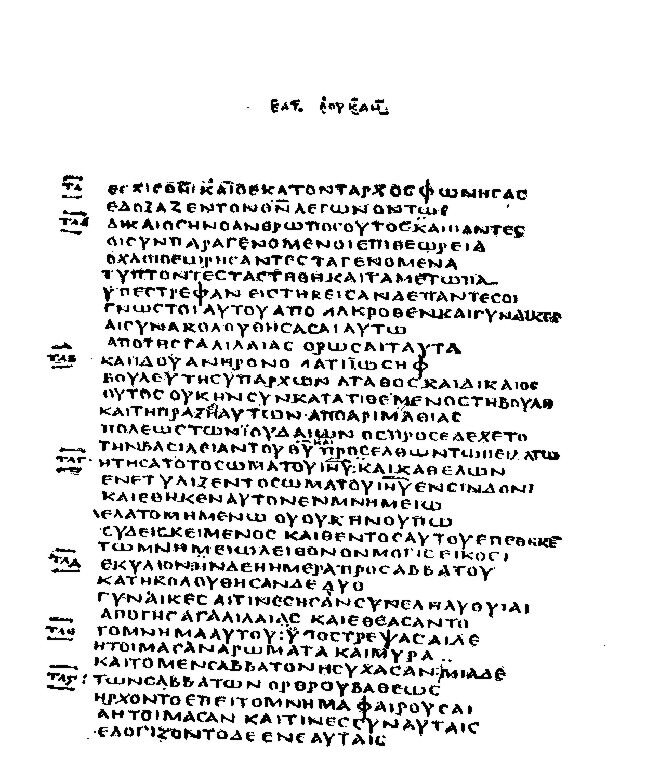
Capitalization was not standardized as it is in modern languages. In ancient manuscripts, text might be all capitals (uncials) or all lowercase (minuscules). In modern editions, a capital is typically used for the beginning of a paragraph, quotation, or proper noun.
Syllabification follows simple rules: a single consonant goes with the following vowel (e.g., ἀ-γά-πη). A consonant cluster that can start a word in Greek also goes with the following vowel (e.g., γρά-φω). Other clusters are split (e.g., ἄν-θρω-πος).
Understanding these conventions is the key to sounding out the words preserved in countless historical and biblical texts.
Now, let's test your knowledge of these foundational elements.
How did the pronunciation of the Greek letter Beta () change from Classical to Koine Greek?
The process of 'itacism' in Koine Greek caused several vowels to be pronounced with the same sound. Which of the following vowels all came to be pronounced as /i/ (like in "machine")?
With these rules for letters, sounds, and markings, you're equipped to begin deciphering Koine Greek texts.