Knowledge Graphs for RAG
Introduction to Knowledge Graphs
What Are Knowledge Graphs?
Think of a knowledge graph as a digital brain. Instead of just storing isolated facts in tables or documents, it connects them, creating a web of information that mirrors how we understand the world. Its main purpose is to map out the relationships between different pieces of data, making complex information easier for both humans and computers to navigate.
Imagine a social network, but for concepts instead of people. In a social network, you have profiles (people) and connections (friendships, family ties). In a knowledge graph, you have entities like people, places, and ideas, all linked by their specific relationships. This structure turns data from a simple list of facts into a rich, interconnected network of knowledge.
The Building Blocks
Knowledge graphs are built from a few simple components that work together to represent information.
Node
noun
A fundamental unit representing an entity, which can be a person, place, object, or abstract concept.
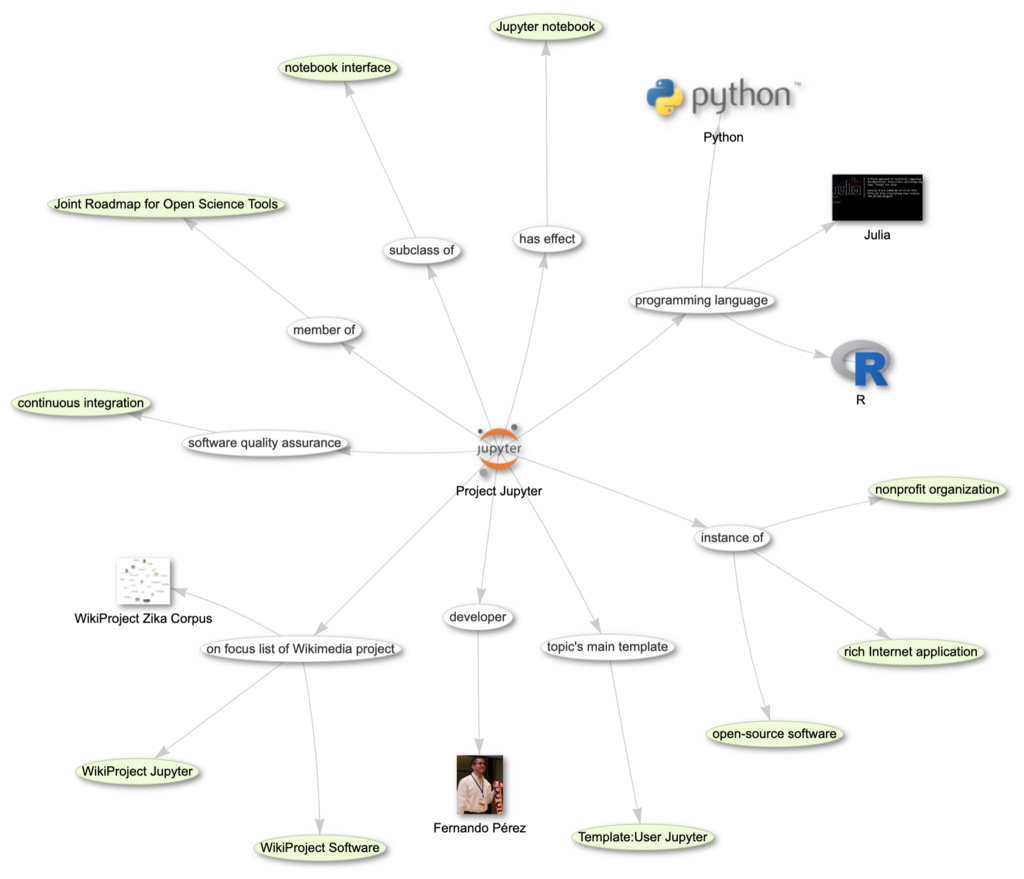
Nodes, also called entities or vertices, are the main subjects in our graph. Following our example, Leonardo da Vinci is one node, and the Mona Lisa is another. The city of Florence could be a third.
Edge
noun
A connection between two nodes that represents the relationship between them.
Edges, or relationships, are the lines that connect the nodes. They are always labeled to describe how two nodes are related. An edge connects Leonardo da Vinci to the Mona Lisa with the label "painted." Another might connect him to Florence with the label "born in."
This combination of two nodes and a connecting edge creates a single, simple fact called a triple. For example: (Node 1: Leonardo da Vinci) → (Edge: painted) → (Node 2: Mona Lisa).
Finally, nodes can have properties, which are extra pieces of information that describe the node itself. For example, the "Mona Lisa" node might have properties like year_created: 1503 or medium: oil_on_poplar.
Unifying a Mess of Data
One of the greatest strengths of a knowledge graph is its ability to connect data from different sources. Most organizations have information scattered across various systems—a customer database, a product inventory, a transaction ledger. These are often called data silos, and they don't talk to each other.
A knowledge graph breaks down these silos. It acts as a flexible data layer that can link a customer from one database to a product in another, and then to their purchase history in a third. This creates a single, unified view where all the relationships are clear.
A knowledge graph consolidates information from multiple data silos and creates cross-functional value:Links, processes, and centrally manages information from various systems, giving you a 360-degree view of your products and services.
This unified view makes it much easier to ask complex questions. Instead of just asking "How many products did we sell?" you can ask, "Which customers in California who bought product X also reported a specific issue in the last month?" The graph already has those connections mapped out.
Knowledge Graphs in Action
Knowledge graphs are already used in many applications you interact with daily. When you search on Google and see an information box on the side with key facts about a person or place, that's powered by a knowledge graph. It pulls together connected facts to give you a quick summary.
Recommendation engines on platforms like Amazon, Netflix, and Spotify also rely on them. They create a graph connecting users, products, artists, and movies. By analyzing your position in this graph and comparing it to others, they can make surprisingly accurate suggestions for what you might like next.
In science and medicine, knowledge graphs help researchers discover hidden connections in massive datasets. For example, they can link genes to proteins, proteins to diseases, and diseases to potential treatments, speeding up the process of discovery.
What is the primary purpose of a knowledge graph?
In a knowledge graph about movies, the connection between a 'Director' node and a 'Movie' node would be best described as a(n) ________.
Now that we've covered the basics, you can see how knowledge graphs provide a powerful way to organize and understand information. They transform flat data into a dynamic network of insights.