Knowledge Graph Construction
Introduction to Knowledge Graphs
What Are Knowledge Graphs?
A knowledge graph organizes information by connecting facts, just like a human brain. Instead of just storing data in lists or tables, it maps out the relationships between different pieces of information. This helps computers understand the context behind data, not just the data itself.
Think of it like a web of facts. At the core, every knowledge graph has three main components:
Entity
noun
Any real-world object, person, place, or abstract concept. In a graph, entities are the nodes.
Relationship
noun
The connection or link between two entities. In a graph, relationships are the edges that connect the nodes.
Attribute
noun
A property or quality that describes an entity. Attributes provide specific details, like dates, numbers, or text.
Together, these components create a rich, interconnected network of information. For example, a simple connection might look like this:
More Than Just a Database
You might wonder how this is different from a traditional database, like a spreadsheet. While both store information, they do it in fundamentally different ways. Traditional databases use a rigid structure of tables, rows, and columns. Knowledge graphs are flexible and prioritize the relationships between data points.
A knowledge graph is a flexible, semantic data layer that unifies and provides meaning to your data silos, with models that evolve as your data evolves.
This focus on connections makes knowledge graphs much better at handling complex, messy, real-world information. You can ask nuanced questions that would be difficult for a standard database to answer. Here’s a quick comparison:
| Feature | Traditional Database | Knowledge Graph |
|---|---|---|
| Structure | Rigid tables (rows, columns) | Flexible network (nodes, edges) |
| Focus | Storing data entries | Storing relationships between data |
| Flexibility | Difficult to change structure | Easy to add new types of data and connections |
| Queries | Asks "What is in this table?" | Asks "How are these things related?" |
Knowledge Graphs in the Wild
Knowledge graphs are already a part of your daily life. They power many of the smart features you use online.
Google's Knowledge Graph is a classic example. When you search for a person, movie, or company, the information panel that appears on the side of the results is powered by a massive knowledge graph. It connects your search term to related entities like dates, places, people, and works, giving you a comprehensive overview at a glance.
DBpedia and Wikidata are two enormous, open-source knowledge graphs built from the information in Wikipedia. They take the encyclopedia's unstructured text and turn it into structured, machine-readable data that anyone can use for research, analysis, or building applications.
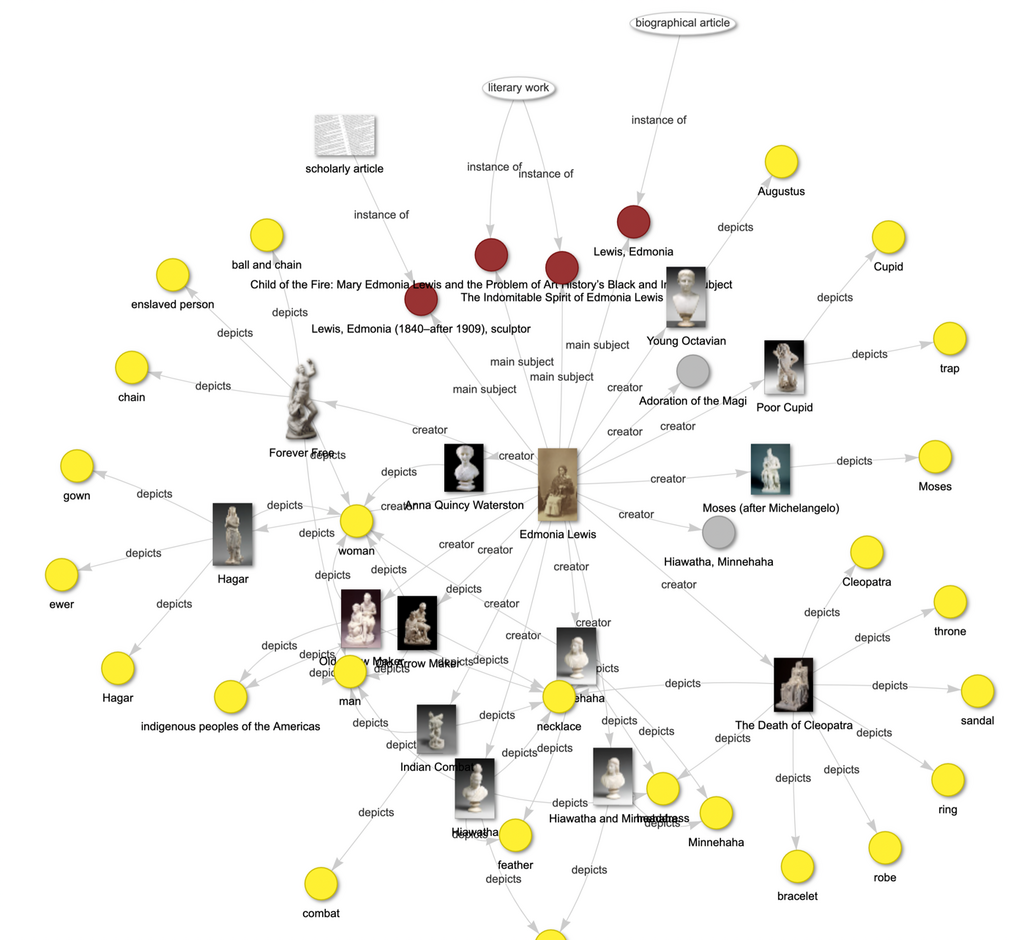
From powering virtual assistants like Siri and Alexa to providing smarter recommendations on streaming services, knowledge graphs help technology understand the meaning and context behind our questions and data. They turn a sea of information into a connected web of knowledge.
What are the three core components that form the structure of a knowledge graph?
What is the primary advantage of a knowledge graph's flexible structure over a traditional database's rigid structure?