Knitting Fundamentals
Knitting Tools and Materials
The Right Tools for the Job
Before you can cast on your first stitch, you need to gather your supplies. At its core, knitting only requires two things: a pair of needles and a ball of yarn. But choosing the right ones can make all the difference, especially when you're just starting out.
Choosing Your Needles
Knitting needles come in a few basic styles, each suited for different kinds of projects.
- Straight needles: These are the classic needles you probably picture first. They have a point on one end and a stopper on the other. They're used in pairs to knit flat pieces, like scarves or dishcloths.
- Circular needles: These are two short needle tips connected by a flexible cable. They can be used for knitting large flat projects (like blankets) or for knitting in the round to create seamless tubes (like hats and sweaters).
- Double-pointed needles (DPNs): These are short needles with points at both ends. They come in sets of four or five and are used for knitting small tubes in the round, such as socks, mittens, and the crowns of hats.
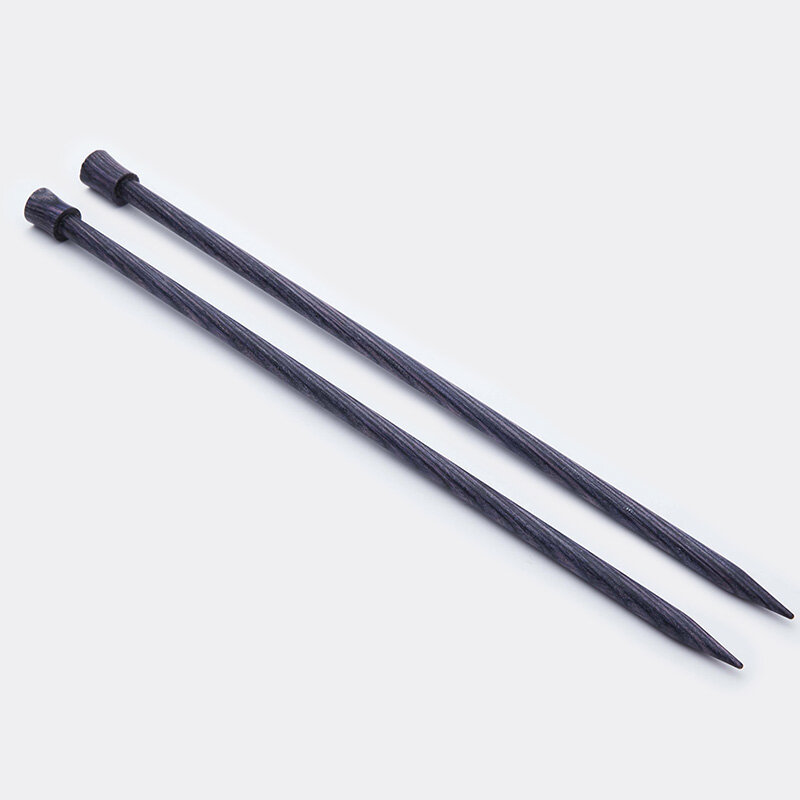
Needles are also made from different materials. Bamboo and wood needles have a bit of grip, which keeps stitches from sliding off too easily. This makes them a great choice for beginners. Aluminum and other metal needles are slicker, allowing you to knit faster once you get more comfortable.
Finally, you'll notice needles come in different sizes, usually measured in millimeters (mm) or a US numbering system. The size of the needle determines the size of your stitches. Larger needles create larger, looser stitches, while smaller needles create smaller, tighter ones.
Understanding Yarn
Yarn is more than just colorful string. Its characteristics, like fiber content and thickness, will completely change the look and feel of your finished project.
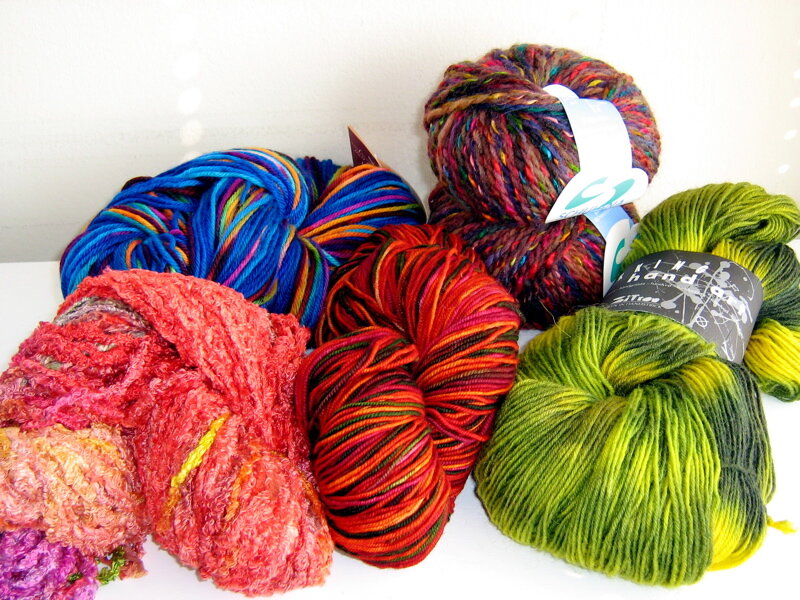
Yarn fibers fall into two main categories: natural and synthetic. Natural fibers come from plants (like cotton and linen) or animals (like wool and alpaca). They are breathable and have unique textures. Synthetic fibers, like acrylic and nylon, are man-made, durable, and often more affordable. Many yarns are a blend of different fibers to combine their best qualities.
For your first project, it's best to choose a smooth, light-colored yarn. This makes it much easier to see your individual stitches and spot any mistakes.
The most important yarn characteristic to understand is its weight. This doesn't refer to how much the ball weighs, but rather to the thickness of the strand.
| Yarn Weight | Description | Recommended Needle Size (US) |
|---|---|---|
| Lace | Very thin, used for shawls | 000 - 1 |
| Fingering | Thin, used for socks and baby items | 1 - 3 |
| Sport | Slightly thicker than fingering | 3 - 5 |
| DK (Double Knitting) | A common, versatile weight | 5 - 7 |
| Worsted | The workhorse of yarns, great for beginners | 7 - 9 |
| Bulky | Thick and cozy, knits up quickly | 9 - 11 |
| Super Bulky | Very thick, for chunky blankets | 11 - 17 |
Luckily, you don't have to guess this information. It's all on the yarn label. Learning to read the label is a key skill. It tells you the fiber content, the yarn weight, how much yarn is in the ball (yardage), and the recommended needle size.
Essential Accessories
Besides needles and yarn, a few small tools will make your knitting life much easier. You don't need all of them right away, but they are good to have on hand.
- Tape measure: Crucial for checking your project's size and your knitting gauge (how many stitches fit into an inch).
- Scissors: A small, sharp pair for cutting yarn.
- Tapestry needle: A blunt-tipped needle with a large eye, used for weaving in the loose ends of yarn when you're finished.
- Stitch markers: Small rings of plastic or metal that you slip onto your needle to mark your place, such as the beginning of a round or a pattern repeat.
When you're starting a new project, the pattern will tell you what weight of yarn and what size of needles to use. For your first scarf, a worsted weight yarn and a pair of US size 8 (5.0 mm) needles is a perfect combination to learn with. With these tools in hand, you're ready to tackle the fundamental techniques.
Which type of knitting needle material is generally recommended for beginners because its grip helps prevent stitches from slipping?
What is the primary effect of using a larger diameter knitting needle?