Kitchen Confidence Five Core Recipes
Knife Skills
The Right Tool for the Job
Walking down a kitchen aisle, you'll see a wall of knives in all shapes and sizes. It can be tempting to buy a huge block of them, but you really only need a few key players to handle almost any task. Understanding which knife to use, and when, is the first step to cooking with confidence.
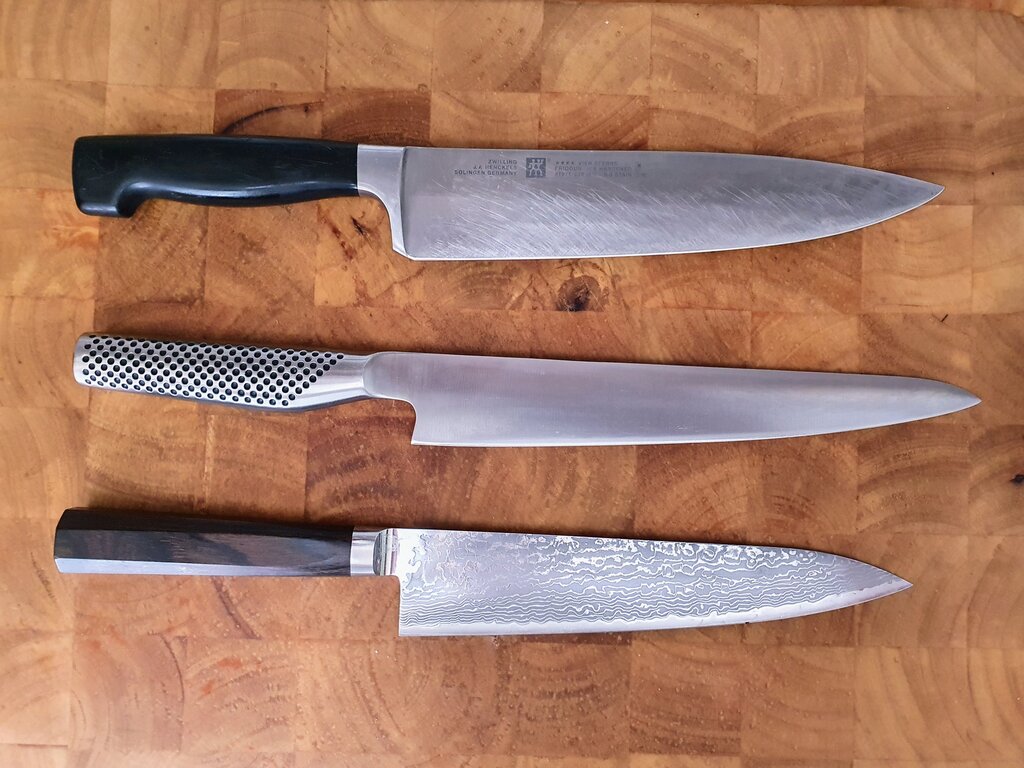
Let's focus on the three most essential knives.
Chef's Knife
noun
The all-purpose workhorse of the kitchen. Its broad, tapering blade is ideal for a wide range of tasks, from chopping vegetables to slicing meat.
Next is the paring knife. Think of it as a mini chef's knife. Its small size gives you the dexterity needed for delicate work.
Paring Knife
noun
A small knife with a plain edge, ideal for peeling fruits and vegetables, deveining shrimp, or other intricate tasks.
Finally, the serrated knife. Its tooth-like edge is designed to slice through foods with hard exteriors and soft interiors without crushing them.
| Knife Type | Primary Uses |
|---|---|
| Chef's Knife | Chopping, slicing, dicing, mincing most ingredients |
| Paring Knife | Peeling, trimming, coring, detailed cuts |
| Serrated Knife | Slicing bread, tomatoes, and citrus fruit |
Holding Your Knife
How you hold your knife affects your control, efficiency, and safety. Many beginners grip the knife by wrapping all their fingers around the handle, like a hammer. This offers power, but it sacrifices control.
A better method is the "pinch grip." You grip the handle with your last three fingers, while your thumb and index finger pinch the blade itself, just in front of the handle. It feels a little strange at first, but it gives you far more precision.
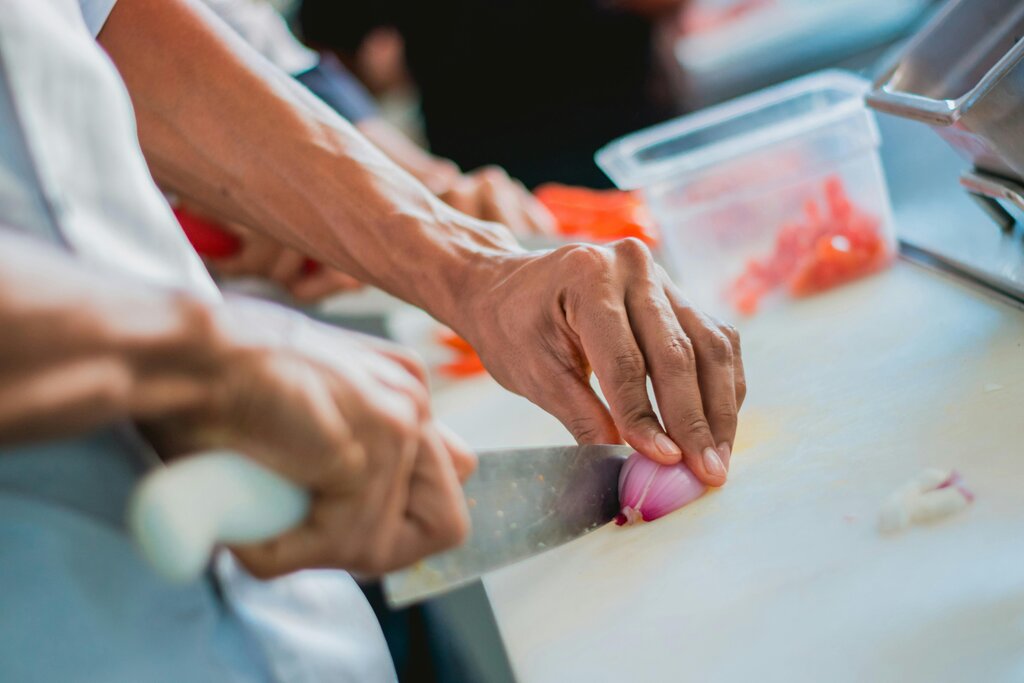
Your other hand, the guiding hand, is just as important. Its job is to hold the food steady and guide the knife. To keep your fingertips safe, curl them inward, forming a "claw." Your knuckles should press against the side of the blade, acting as a guide and a protective barrier.
Your guiding hand's knuckles should be the only part touching the knife's blade. This ensures your fingertips stay tucked away and safe.
Making the Cut
Once your grip is solid, you can start practicing the fundamental cuts. The size and shape of your ingredients impact how evenly they cook and the final texture of your dish. Consistency is key.
Practice basic cuts like chopping, dicing, mincing, and julienning.
Let's break down the most common cuts.
| Cut | Description |
|---|---|
| Chop | Irregular, bite-sized pieces. Precision is not the main goal. |
| Dice | Uniform cubes. Small, medium, or large dice are common sizes. |
| Julienne | Long, thin matchstick-like strips. Also known as the French cut. |
| Mince | Chopped as finely as possible. Often used for garlic, ginger, and herbs. |
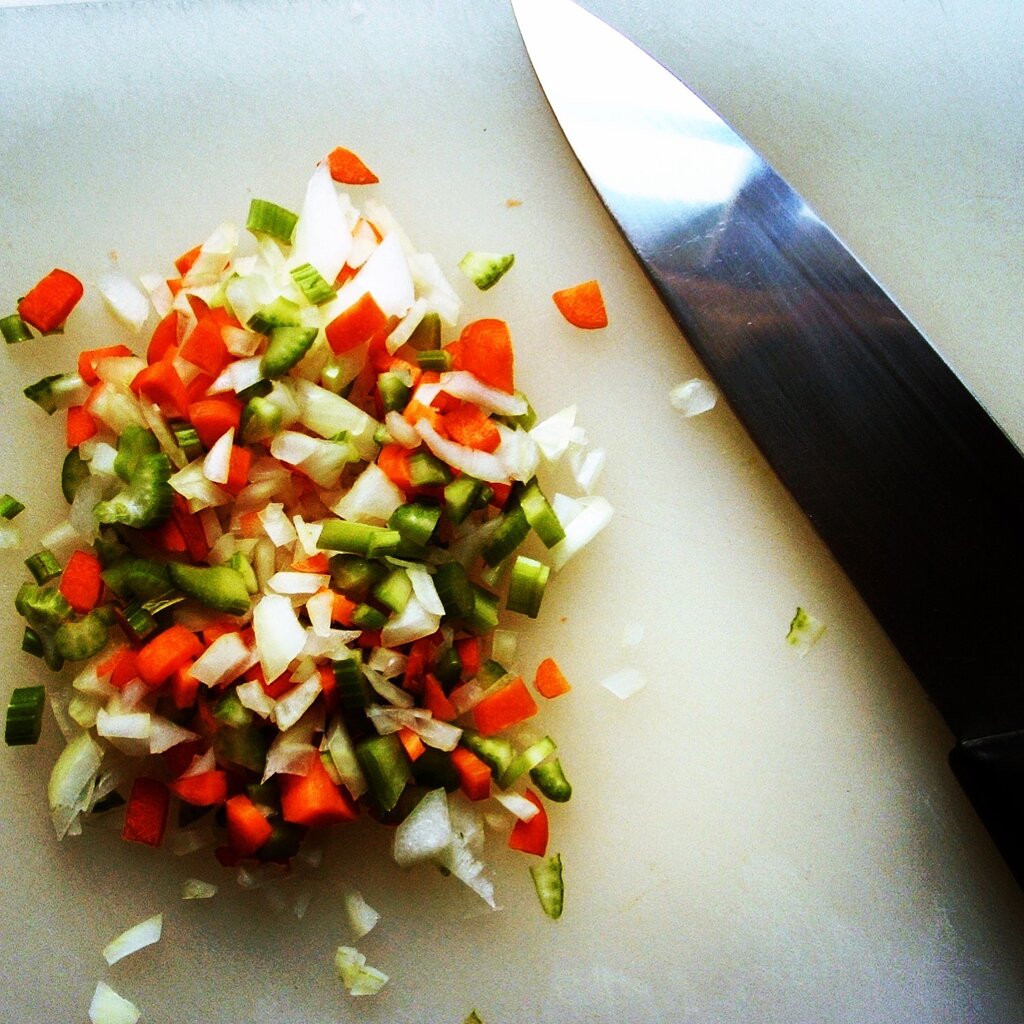
To make any of these cuts, it helps to first create a flat, stable surface on your ingredient. For a round vegetable like an onion or potato, slice a thin piece off one side. Now you can lay it flat on the cutting board, and it won't roll around while you work.
A Sharp Knife is a Safe Knife
It might sound backward, but a dull knife is far more dangerous than a sharp one. A sharp blade slices cleanly through food with minimal pressure. A dull blade requires you to apply more force, which makes it more likely to slip off the food and cut you.
“Sharp knives allow you to do your prep faster and more safely,” says Ralston, pointing out that duller knives tend to promote slips and cuts.
Maintaining your knife's edge involves two different processes: honing and sharpening.
Honing realigns the microscopic edge of the blade. Daily use can cause the edge to get knocked out of alignment, making it feel dull. A few passes on a honing steel before each use straightens the edge back out. Honing doesn't remove metal; it just straightens what's already there.
Sharpening is the process of grinding away a tiny bit of steel to create a brand-new, sharp edge. This is only necessary when honing no longer seems to be effective, perhaps a few times a year for a home cook. You can use a whetstone or a pull-through sharpener for this.
Hone your knife regularly, and sharpen it rarely.
With these basics, you're ready to start practicing. Let's review the key ideas.
Now, let's test your knowledge.
Which knife is specifically designed to slice through foods with a hard exterior and soft interior, like crusty bread or a tomato?
For maximum control and precision, the recommended "pinch grip" involves gripping the blade itself with your thumb and which other finger?
Remember, good knife skills develop with practice. Start slow, focus on your technique, and the speed will come naturally. Safe and consistent cutting is the foundation for almost everything you'll do in the kitchen.