King Athelstan
Inheritance and Consolidation
Forging a Unified Realm
When Edward the Elder died in 924, he left behind a fractured kingdom teetering on the edge of collapse. Rather than focusing on simple biography, this chapter explores the volatile power struggles between Wessex and Mercia that defined Athelstan’s early reign. We will examine the strategic military manoeuvres, including the pivotal 927 conquest of York, that turned competing regional fiefdoms into a single, cohesive nation. By the end of this exploration, you will understand how Athelstan navigated these internal divisions to physically construct the first truly English hegemony.
The Fractured Kingdom
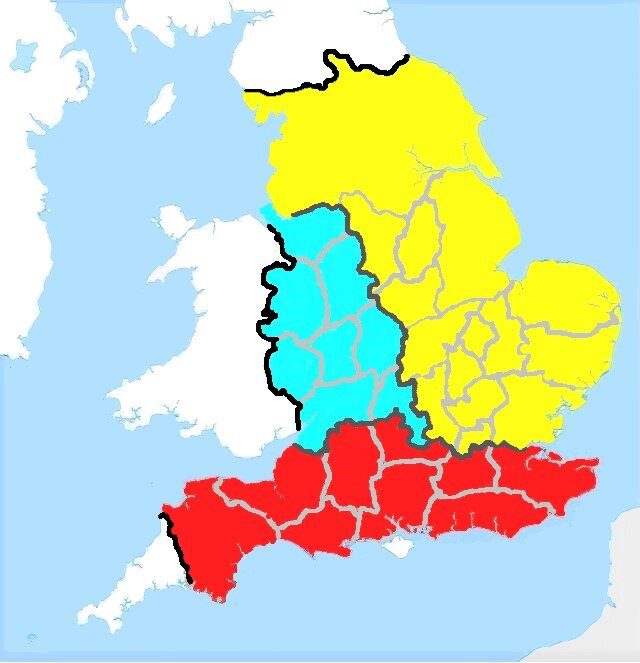
Upon the death of King Edward in 924, the fragile peace of the British Isles was pushed to its breaking point. While history often paints a picture of a steadily growing English state, the reality was a held together by the personal force of the previous king. The union between the southern power of Wessex and the central heartland of Mercia was tenuous at best. These were not yet parts of a single country; they were distinct regional houses with their own laws, cultures, and political ambitions.
The problem was not just who would wear the crown, but whether the crown itself could represent both peoples. Edward had spent years expanding his territory, but he had failed to fully integrate the administrations of these regions. When he died, the internal stitches began to pull apart. The local leaders in Mercia and Wessex did not necessarily see their futures as shared. This was a crisis of identity: were they to be separate kingdoms again, or could they survive as one?
The Crisis of Succession
The succession was a logistical and political nightmare. While Athelstan was Edward's eldest son, his path to the throne was blocked by the , who held their own deep-seated dynastic leanings. They preferred a ruler who would prioritise their local interests over the southern dominance of Wessex. This regional friction created a direct threat to any hope of consolidation.
In the early months of 924, it looked as though the kingdom would split in two. Athelstan was accepted as king in Mercia almost immediately, but Wessex held out, initially favouring his half-brother Ælfweard. It was a situation that required more than just a soldier; it required a diplomat who could bridge the gap between two disparate worlds before the Vikings or other external threats could exploit the gap.
Athelstan's early leadership acted as the necessary bridge. He did not simply demand obedience; he worked to integrate the two administrations, ensuring that Mercian voices were heard in his court. This decisive consolidation was the essential groundwork for his later, more famous military campaigns. Without first steadying the house of cards at home, he could never have looked north toward the conquest of York.
This internal stability allowed Athelstan to project power outward, eventually leading to his claim as the first king of all England. Having secured his base, he was ready to move from a king of two houses to a king of an entire island.