King Ahaz of Judah
Introduction to Ancient Judah
The Land of Judah
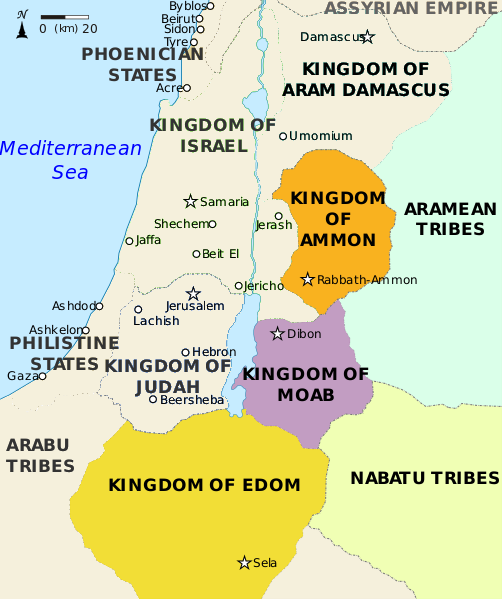
The Kingdom of Judah was situated in the southern part of the Levant, a region we now call the Middle East. It occupied the hill country south of its larger neighbor, the Kingdom of Israel. This rugged, elevated terrain provided natural defenses but also made large-scale agriculture a challenge. Farmers relied on terracing the hillsides to grow olives, grapes, and grains.
Judah's capital, Jerusalem, was centrally located within the kingdom and was its political and religious heart. The kingdom was bordered by several other small states and peoples. To the west, along the Mediterranean coast, were the city-states of the Philistines. To the east and southeast, across the Dead Sea and the Jordan Rift Valley, were the kingdoms of Moab, Edom, and Ammon.
Kings and Priests
At the top of Judah's political structure was the king. The monarchy was hereditary, passed down through the male line of the Davidic dynasty, which traced its ancestry back to King David. The king served as the head of state, the chief judge, and the commander of the army. His authority was seen as granted by God, and his palace in Jerusalem was the center of government.
Sharing power and influence with the monarchy was the priesthood, based at the Temple of Solomon in Jerusalem. The Temple was the only legitimate place for sacrificial worship of Yahweh, the national god. The high priest and the priestly class were responsible for all Temple rituals and for interpreting religious law. This gave them immense authority over the spiritual and daily lives of the people. The relationship between the king and the high priest was a defining feature of Judah's political landscape, sometimes cooperative and sometimes filled with tension.
Life and Beliefs
In the 8th century BCE, the official state religion of Judah was the worship of Yahweh. The Temple in Jerusalem was the focal point of this worship, with a calendar of festivals and a system of sacrifices managed by the priests. The core belief was that Yahweh had a special covenant with the people of Israel and Judah.
However, religious practice on the ground was often more complex. Alongside the official Temple cult, many people in Judah continued to worship other deities from the broader Canaanite culture, such as Baal, the storm god, and Asherah, a mother goddess. This worship often took place at local shrines known as “high places.”
This religious syncretism, or the blending of different beliefs, was a major source of conflict. Prophets during this period often condemned the worship of other gods and called for exclusive devotion to Yahweh. These religious tensions were a constant undercurrent in the social and political life of the kingdom.
While the Temple in Jerusalem was the center of official worship, many local shrines dedicated to various gods dotted the Judean countryside.
Let's review some of the key terms from this section.
Now, check your understanding of ancient Judah.
Which of these peoples bordered the Kingdom of Judah to the west, along the Mediterranean coast?
How was the position of the king in Judah typically determined?
This combination of geography, political power, and religious belief created a unique and dynamic society in ancient Judah, setting the stage for the dramatic events of the 8th century BCE.