Kierkegaard's Existential Thought
Introduction to Kierkegaard
Who Was Søren Kierkegaard?
Søren Kierkegaard was a Danish philosopher who lived from 1813 to 1855. He is often called the father of existentialism, a philosophy that emphasizes individual freedom, responsibility, and the search for meaning in a meaningless world. But Kierkegaard himself was less interested in founding a movement and more concerned with a single, burning question: How should I, as an individual, live my life?
Born into a wealthy but troubled family in Copenhagen, his life was marked by a deep sense of melancholy, which he inherited from his father. A pivotal event was his broken engagement to a young woman named Regine Olsen. Kierkegaard loved her deeply but felt called to a different, more solitary path. He broke off the engagement in a way that made him appear cruel, a decision that haunted him and fueled much of his writing on choice, guilt, and sacrifice.
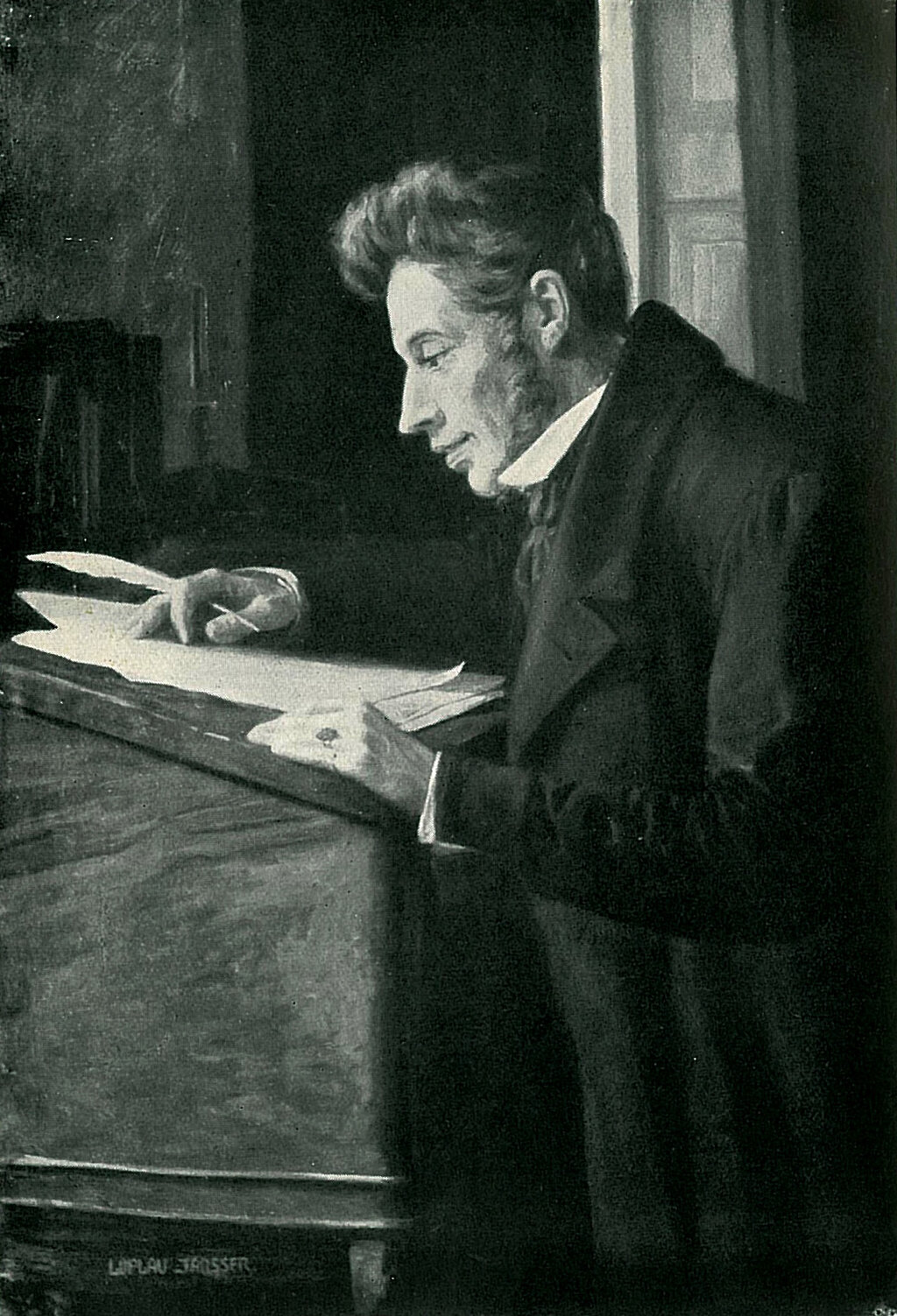
He lived a quiet life, using his inheritance to fund his work. He never married and had few close friends. Instead, he poured his energy into his books, often writing at a feverish pace. His work challenged the comfortable, conventional Christianity of his time and the abstract philosophical systems that were in fashion.
Denmark's Golden Age
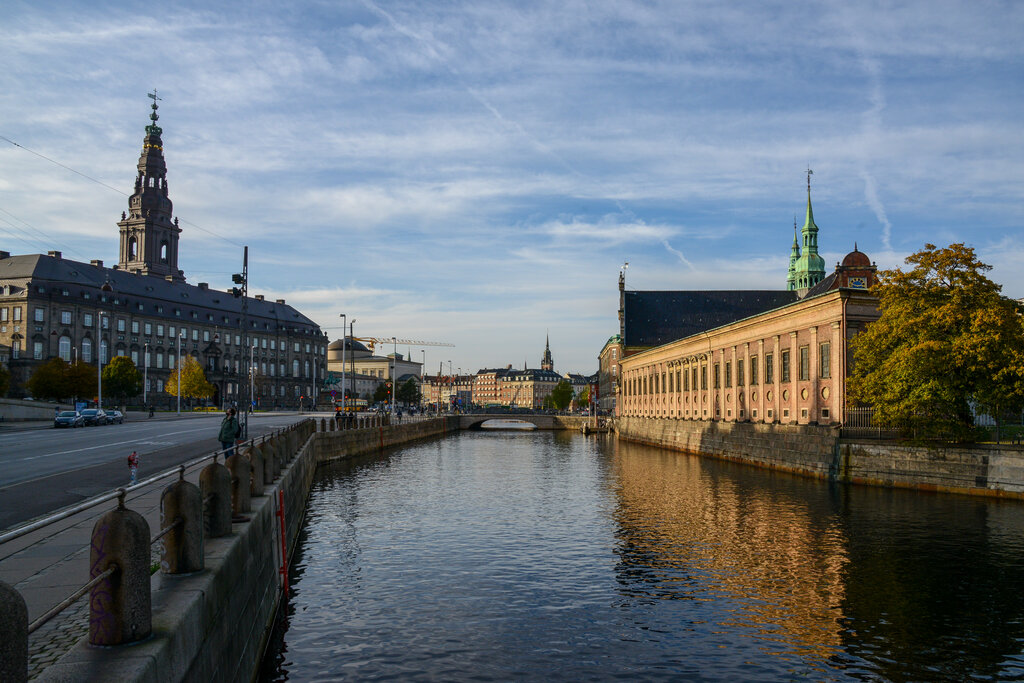
Kierkegaard wrote during the Danish Golden Age, a period in the first half of the 19th century when art, science, and philosophy flourished in Denmark. This was the era of Hans Christian Andersen's fairy tales and the paintings of Christen Købke. Despite recent national traumas like the loss of Norway, Copenhagen was a vibrant intellectual hub.
The dominant philosopher of the day was the German thinker G.W.F. Hegel. Hegel's philosophy was all about grand, abstract systems. He believed history was progressing logically toward a final, rational end. For Hegel, the individual was just a small part of this massive, impersonal system.
Kierkegaard hated this idea. He felt it ignored the messy, passionate, and deeply personal reality of human existence. What good is a perfect system if it doesn't speak to the individual's fear, hope, and anxiety?
His work was a direct rebellion against the Hegelian system. He wanted to bring philosophy back down to earth, to focus on the
subjective
adjective
Relating to or based on an individual's personal feelings, tastes, or opinions.
truth that a person lives and feels, not the objective truth of an abstract system.
A Forest of Books
Kierkegaard's writing style is as unique as his ideas. He often published his works under pseudonyms, creating a cast of fictional authors to present different points of view. He did this to force the reader to engage with the ideas themselves, rather than simply accepting the author's authority. It was a way of saying, "Don't just listen to me; think for yourself."
His major works explore what he called the "stages on life's way" or spheres of existence. These aren't levels to be conquered, but different ways of living one's life.
| Work | Pseudonym | Core Idea |
|---|---|---|
| Either/Or (1843) | Victor Eremita | Explores the choice between a life of pleasure (the aesthetic) and a life of duty (the ethical). |
| Fear and Trembling (1843) | Johannes de silentio | Examines the story of Abraham and Isaac to explore the nature of faith as a leap beyond reason and ethics. |
| The Concept of Anxiety (1844) | Vigilius Haufniensis | Analyzes anxiety not as a psychological disorder, but as a fundamental part of human freedom—the dizziness of possibility. |
| Concluding Unscientific Postscript (1846) | Johannes Climacus | Argues that truth is subjectivity and critiques the idea of objective, systematic truth in matters of faith and existence. |
These books weren't dry academic treatises. They are filled with stories, parables, and literary flair, designed to provoke, challenge, and inspire the reader to confront the fundamental questions of life. Kierkegaard's goal was not to give answers, but to make his reader acutely aware of the questions.