Kierkegaard's Armed Neutrality
Introduction to Kierkegaard's Philosophy
The Lonely Individual
Many philosophers try to build grand systems to explain the entire universe. Søren Kierkegaard wasn't interested in that. He was interested in you.
More specifically, he was focused on the single, existing individual. For him, the most important truths weren't objective facts floating out in the world. They were the truths you live by, the ones that shape who you are. He famously said, "Truth is subjectivity." This doesn't mean you can just believe whatever you want. It means that a truth only becomes real when it's personally and passionately embraced by an individual.
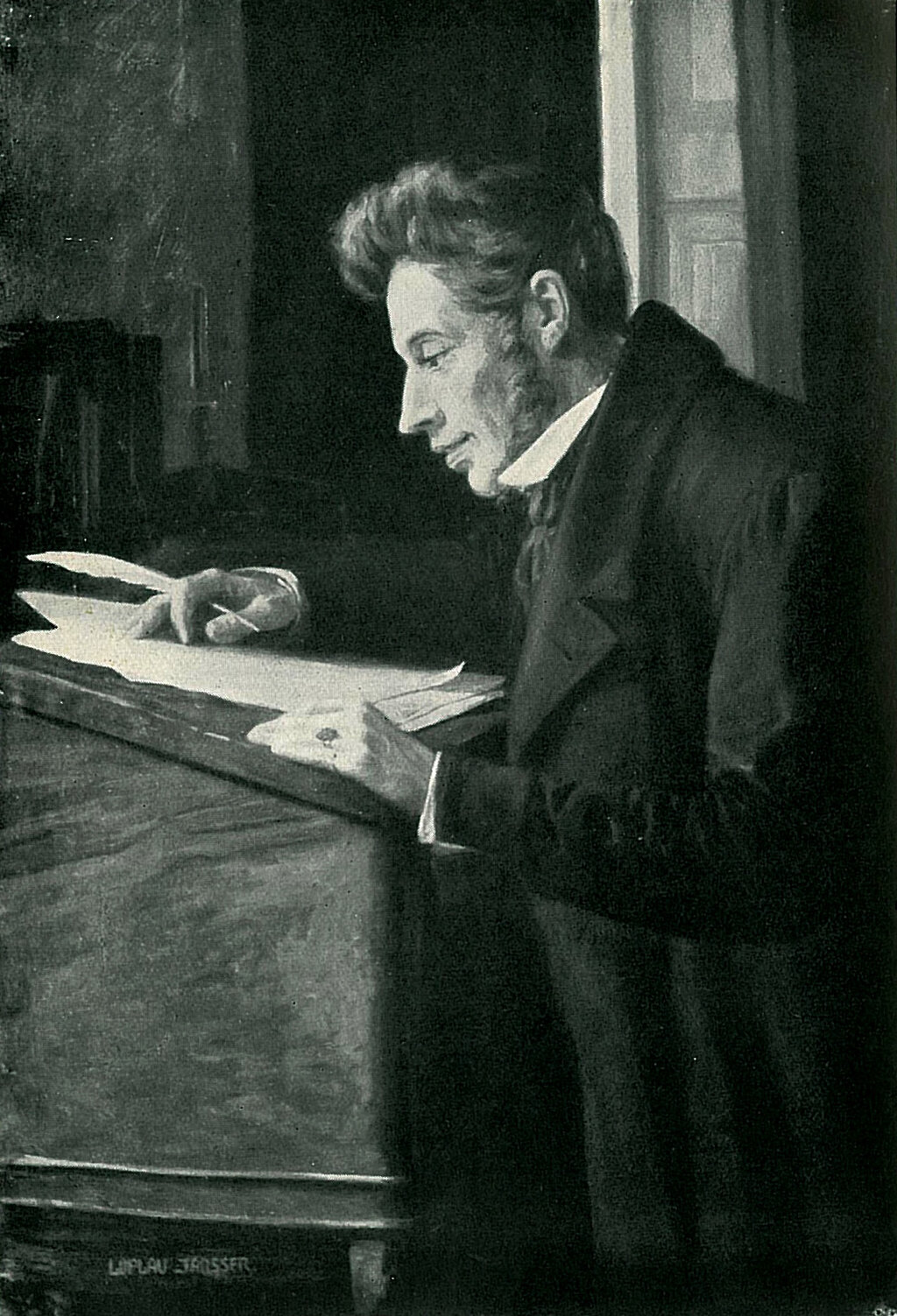
Kierkegaard saw society as a dangerous force that lulls people into a state of thoughtless conformity. He called this the "crowd." The crowd is the anonymous 'they'—they say, they think, they do. When you're part of a crowd, you lose your sense of personal responsibility. You do things because everyone else is doing them, not because you've chosen to.
To truly exist as an individual is to break away from the crowd. It means facing life's choices alone and taking full ownership of your beliefs and actions. This path is often filled with anxiety and uncertainty, but for Kierkegaard, it's the only path to an authentic life.
Whatever form your existential crisis takes, the problem, as the Danish philosopher Søren Kierkegaard (1813-55) saw it, was that living without passion amounts to not existing at all.
The Leap of Faith
If personal conviction is the goal, how do you reach it, especially in matters of religion? Kierkegaard argued that reason has its limits. You can't logically prove the existence of God or the core tenets of Christianity. There will always be a gap between what your intellect can grasp and what faith demands.
To cross this gap, you must make what he called a "leap of faith." It's not a conclusion you reach through careful calculation. It's a risk, a passionate commitment made in the face of uncertainty.
This leap is intensely personal. No one can make it for you, and there's no guarantee of a safe landing. This is what makes faith so powerful for Kierkegaard. It's not a passive belief but an active, ongoing choice that defines the individual.
Critique of the Church
Kierkegaard lived in Denmark, where Lutheranism was the state religion. Nearly everyone was a Christian by default. They were baptized as infants, confirmed as youths, and went to church on Sundays. But for Kierkegaard, this was a hollow imitation of true faith.
He called this system "Christendom." He saw it as a social club that had stripped Christianity of its passion, difficulty, and paradox. It made being a Christian easy and comfortable, something you could do without thinking, just by being a good Danish citizen.
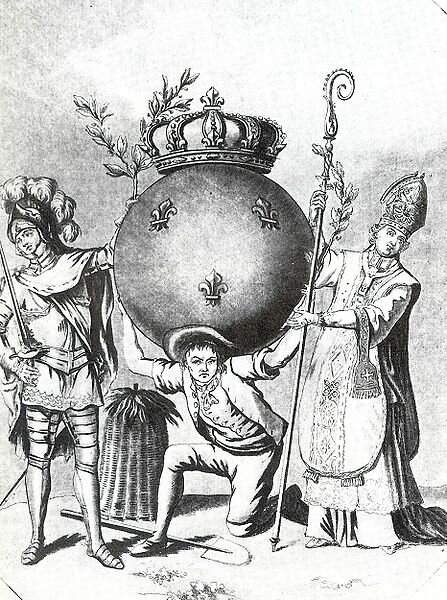
This deeply troubled him. He argued that true Christianity was meant to be a difficult, lifelong struggle, a personal relationship with God marked by doubt and passion. By turning it into a comfortable cultural institution, Christendom had made authentic faith nearly impossible. His attacks on the state church were fierce, arguing that it deceived people into thinking they were Christians when they were merely members of a crowd.
Kierkegaard's goal wasn't to destroy Christianity, but to save it from the comfortable complacency of Christendom. He wanted to reintroduce the difficulty and personal responsibility that he believed were at the heart of genuine faith.
These core ideas—the focus on the individual, the necessity of a subjective leap of faith, and the critique of empty social norms—form the foundation of his philosophy. They challenge us to examine our own lives and ask whether our beliefs are truly our own, or just echoes from the crowd.
What did Søren Kierkegaard mean by his famous statement, "Truth is subjectivity"?
According to Kierkegaard, what is the primary danger of the "crowd"?
These concepts are the building blocks for understanding Kierkegaard's more complex ideas, which we'll explore next.