Kids Cartoon Creation for YouTube Stardom
Understanding Animation Basics
The Illusion of Movement
At its heart, animation is a trick. It's the art of creating the illusion that something is moving. The most fundamental way to achieve this is through frame-by-frame animation. Think of it like a flipbook. Each page has a drawing that is slightly different from the one before it. When you flip through the pages quickly, your brain blends the still images together, and the drawing appears to move.
Each drawing is a single "frame." When you play these frames in sequence, you create animation. Traditionally, animators would draw every single frame by hand on paper or clear cels. While digital tools have changed the process, the core principle remains the same: a sequence of still images creates motion.
The magic isn't just in the sequence of drawings, but in how you control their changes from one frame to the next. Two principles are key: timing and spacing.
Timing and Spacing
Timing is about the speed of an action. It's determined by the number of frames you use to show that action. If a ball takes 24 frames to cross the screen, that action lasts one second (at a standard 24 frames per second). If it only takes 12 frames, the action lasts half a second, making the ball appear much faster.
Spacing refers to how the object's position changes between those frames. Imagine our ball crossing the screen. If the distance it moves is the same in every single frame, the movement will look robotic and unnatural. In the real world, objects speed up and slow down. Spacing is how animators show this acceleration and deceleration. When the drawings are spaced closely together, the object moves slowly. When they are spaced far apart, it moves quickly.
Look at the diagram above. The ball with constant spacing seems to move at a steady, mechanical pace. The second ball, with its spacing adjusted, seems to start slow, speed up through the middle of its arc, and then slow down again before stopping. This simple change makes the movement feel more natural and believable.
Two fundamental principles of animation bring this illusion to reality: timing and spacing.
Mastering timing and spacing is essential. It's how animators convey weight, emotion, and personality. A heavy object will start moving slowly (close spacing) and take a while to stop. A light, bouncy character might move with quick, widely spaced frames.
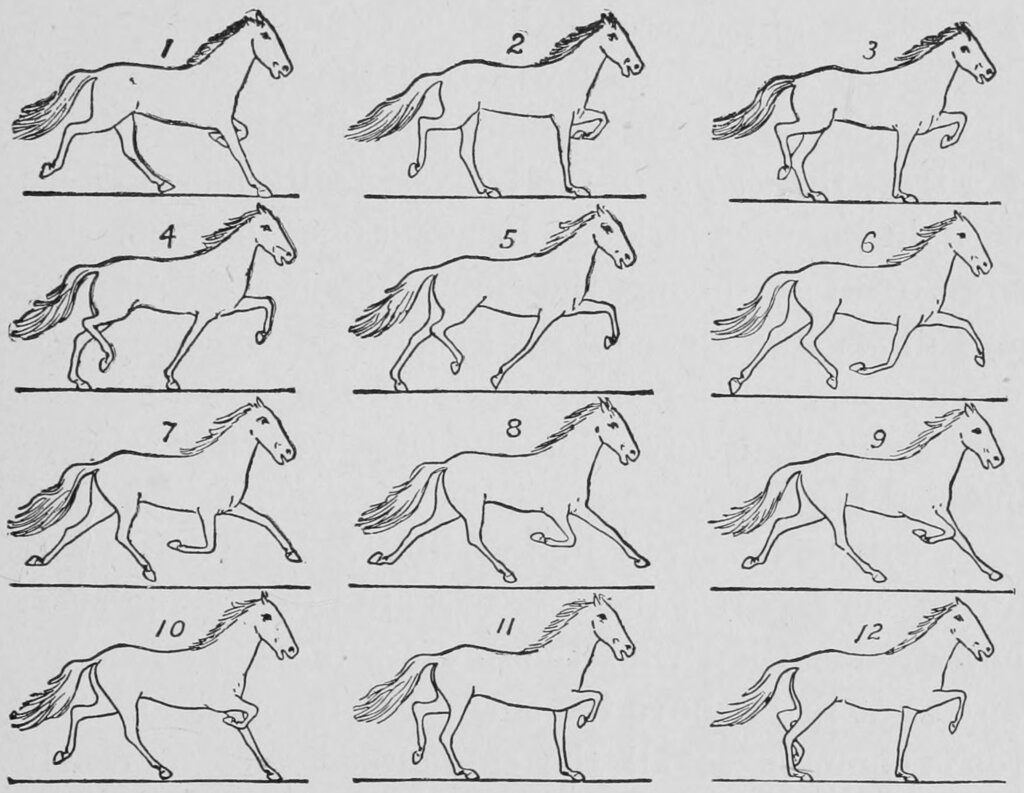
The best way to understand these concepts is to try them out yourself. You don't need fancy software. A simple sketchbook or even a stack of sticky notes will work perfectly for creating your first flipbook animation.
Try This: On the corner of a notepad, draw a small circle. On the next page, draw the same circle slightly moved. Repeat this for 20-30 pages, varying the spacing. Make the circle start slow (drawings close together), speed up (drawings far apart), and then slow to a stop. Flip the pages to see your first animation.
Understanding these basic principles is the first step. By focusing on how each frame relates to the next, you can begin to create compelling and lifelike movement from a series of simple drawings.