Key Historical Events of Thailand
Early Thai Kingdoms
The Dawn of Sukhothai
In the 13th century, Tai-speaking peoples began to assert their independence from the powerful Khmer Empire, which had dominated much of Southeast Asia for centuries. From this movement, the first major Thai kingdom, Sukhothai, emerged. Its name translates to "Dawn of Happiness."
Two local chieftains, Pho Khun Bang Klang Hao and Pho Khun Pha Mueang, led a successful revolt against Khmer control around 1238. Bang Klang Hao was crowned as the first king of Sukhothai, taking the name Sri Indraditya. This marked the beginning of a new era for the Thai people.
Sukhothai's political structure was unique for its time. The early kings ruled as paternalistic monarchs, referring to themselves as Pho Khun, or "father ruler." This style of governance emphasized a close, benevolent relationship between the king and his people. The most famous example comes from the reign of King Ramkhamhaeng, who is said to have hung a bell at the palace gate. Anyone with a grievance could ring it and receive a personal hearing from the king.
This approach created a society with a strong sense of community and direct access to justice, a stark contrast to the rigid, hierarchical systems of neighboring empires.
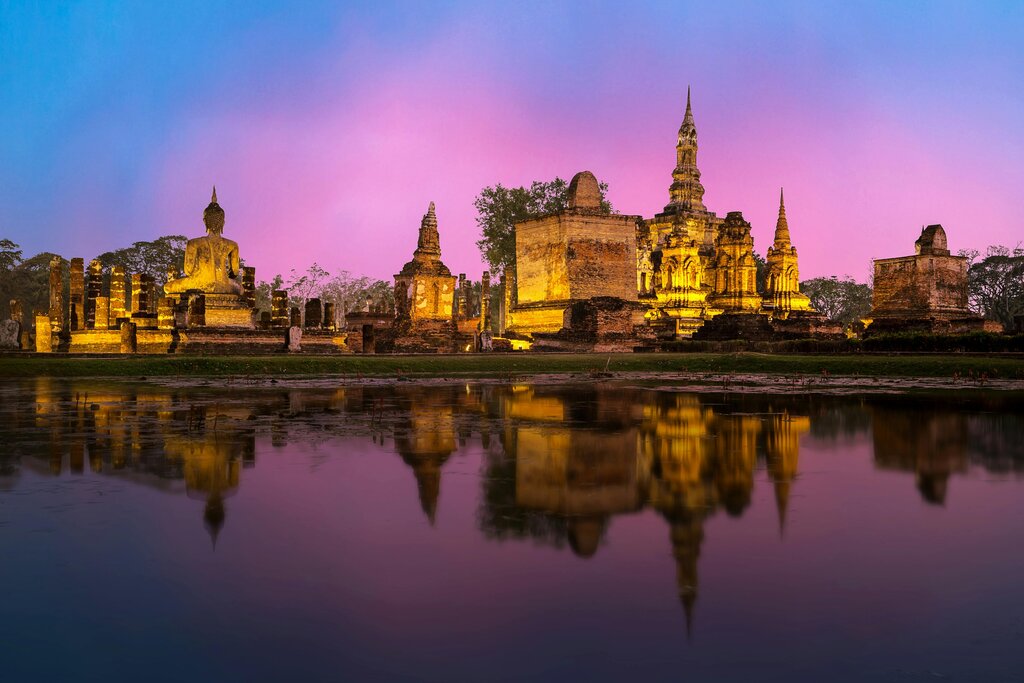
Under Sukhothai's patronage, Theravada Buddhism flourished and became the state religion. This had a profound impact on the kingdom's culture, art, and architecture. A distinct artistic style developed, particularly in the creation of Buddha images. Sukhothai Buddhas are known for their graceful, elegant, and spiritual features, often with a flame-like halo atop the head, symbolizing enlightenment.
The Rise of Ayutthaya
As Sukhothai's power waned in the 14th century, a new power rose to the south. In 1351, a prince named Uthong established the kingdom of Ayutthaya on an island at the confluence of three rivers: the Chao Phraya, Pasak, and Lopburi. This strategic location provided natural defenses and excellent access for trade, setting the stage for Ayutthaya to become a dominant force in the region for over 400 years.
Unlike Sukhothai's paternalistic model, Ayutthaya's governance was heavily influenced by Khmer and Brahmin traditions. The king was considered a devaraja, or "god-king," a divine figure with absolute power. This concept created a more formal and hierarchical society.
A complex bureaucracy was established to manage the vast kingdom. This system, known as the Chatusadom ("Four Pillars"), divided the administration into four ministries: Interior, Palace, Finance, and Agriculture. This organized structure allowed Ayutthaya to effectively govern its territories and manage its resources.
A Global Crossroads
Ayutthaya's true strength was its economy. Its port became one of the most important trading hubs in Asia, attracting merchants from China, Japan, India, and Persia. Later, in the 16th century, European traders—including the Portuguese, Dutch, English, and French—established trading posts in the city, making it a truly cosmopolitan center.
The kingdom's wealth was built on its fertile lands, which produced a surplus of rice, and its control over valuable trade goods.
| Key Exports | Key Imports |
|---|---|
| Rice | Chinese Ceramics |
| Tin | Indian Textiles |
| Sappanwood (dye) | Persian Rugs |
| Deerskins & Hides | European Firearms |
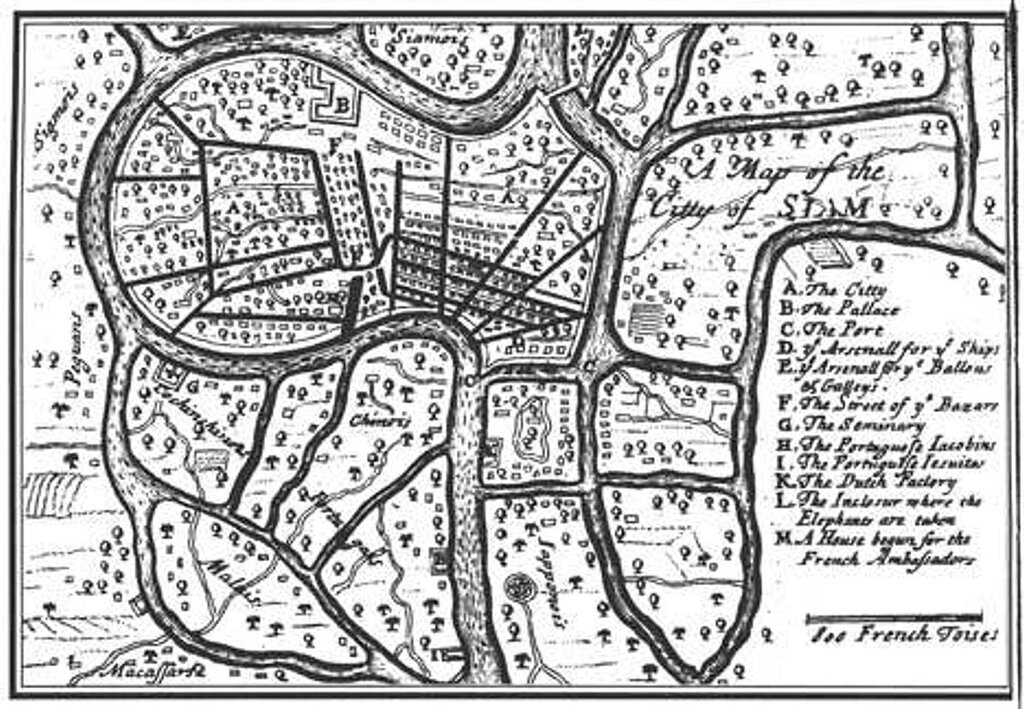
Ayutthaya skillfully managed its foreign relations, balancing powers to maintain its independence. It engaged in diplomacy and warfare with neighboring states like the Khmer Empire, Lan Na, and various Burmese kingdoms. The kingdom's interactions with a wide array of foreign powers brought new technologies, ideas, and cultural influences, contributing to a vibrant and dynamic society.
These two early kingdoms, Sukhothai and Ayutthaya, were foundational periods in Thai history, shaping the nation's political, cultural, and religious identity for centuries to come.
What major event led to the establishment of the Sukhothai Kingdom around 1238?
The rulers of the Sukhothai Kingdom adopted the title of "Pho Khun," which emphasized their role as a ______.