Kant Beyond the Basics Transcendental Idealism and the Architectonic of Reason
Transcendental Logic and Synthesis
Kant's Copernican Turn
Instead of assuming our knowledge must conform to objects, Immanuel Kant proposed the reverse: objects must conform to our knowledge. This was his Copernican Revolution in philosophy. He argued that the mind isn't a passive blank slate that simply receives information from the world. Instead, it actively structures our experience using innate rules, or 'categories.'
Think of it like wearing a pair of permanently fixed glasses. You can never take them off, so everything you see is shaped by their lenses. For Kant, space and time are the lenses of our sensibility, and the categories are the rules our understanding uses to process what comes through those lenses. This shift from the object itself to the conditions of knowing the object is the core of his transcendental project.
The Threefold Synthesis
So how does the mind build a coherent experience from the chaotic stream of raw sensory data? Kant breaks it down into a three-step process he calls the threefold synthesis. It's not a chronological sequence, but a logical breakdown of a single, unified act of cognition.
-
Synthesis of Apprehension in Intuition: This is the mind's first act of gathering. It takes the raw, fleeting sense-data (what Kant calls the 'manifold of intuition') and pulls it together into a preliminary whole. Imagine seeing a house. Your eyes don't perceive the entire house at once, but rather a sequence of parts: a window, a door, the roofline. Apprehension is the act of holding these successive impressions together in the mind to form a single, preliminary image.
-
Synthesis of Reproduction in Imagination: An image held in the mind for a moment is useless if it vanishes instantly. This second synthesis links the present moment of perception with the moments that just passed. As you scan the house, your imagination reproduces the image of the window and door as you look at the roof. This creates continuity, allowing the mind to treat a sequence of perceptions as belonging to a single object, rather than a disconnected series of flashes.
-
Synthesis of Recognition in a Concept: This is the final and crucial step. The mind applies a concept, or a rule, to the reproduced sequence of intuitions. When you recognize the collection of windows, doors, and a roof as a house, you are applying the concept 'house.' This act of recognition is what turns a subjective series of perceptions into an objective experience of a thing. You're not just having random sensations; you are experiencing an object.
This three-part synthesis is how the mind constructs what we call an 'object.' The object isn’t a pre-existing thing that we simply stumble upon; it is the result of the mind's rule-based activity of unification. For someone familiar with Bas van Fraassen's constructive empiricism, the parallel is striking. While van Fraassen focuses on the construction of scientific models that must be 'empirically adequate,' Kant is describing a more fundamental construction: the creation of any possible experience of an object at all.
The Unity of the Self
What ensures this process is coherent? Kant argues there must be a single, unified consciousness that performs these synthetic acts. He calls this the Transcendental Unity of Apperception (TUA). It's the simple fact that all of my perceptions are my perceptions. The thought "I think" must be able to accompany all my representations.
This 'I think' is not the empirical self, the personality you know as 'you.' It’s a formal, logical requirement for experience. Without this underlying unity, my perceptions would be a disconnected jumble. The experience of the window and the experience of the door would belong to two different consciousnesses. The TUA is the thread that strings all the beads of experience together, making them the experience of a single subject observing a single world.
The TUA is the ultimate source of unity, making both a coherent self and a coherent world of objects possible. An object is an object for a subject.
Phenomena and Noumena
This brings us to one of Kant’s most famous distinctions. Because our mind actively structures reality, we can only ever know things as they appear to us, filtered through our innate cognitive framework. These objects of experience are what Kant calls phenomena (singular: phenomenon).
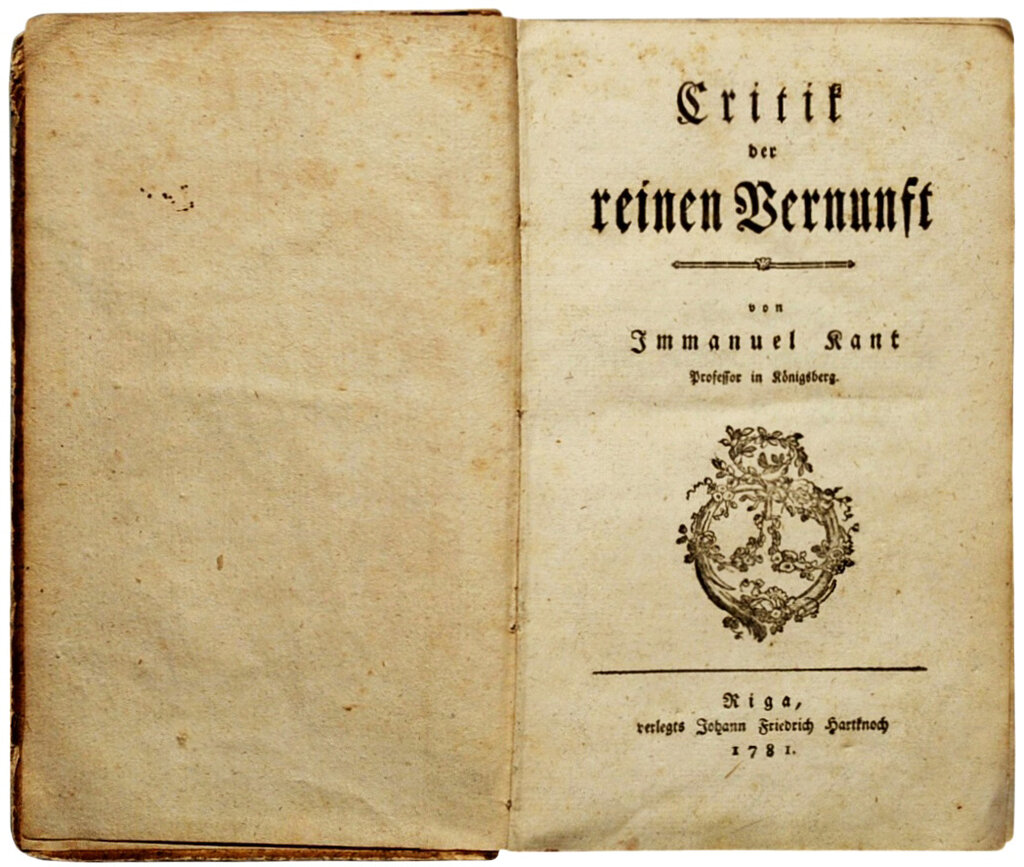
What about things as they are in themselves, independent of our minds? Kant calls these noumena (singular: noumenon), and he argues that we can never know them. To know something is to apply the categories of understanding to it, but those categories only apply to sensory experience. Trying to know noumena is like trying to see without your eyes. The concept of the noumenal world serves as a crucial limit for reason. It reminds us that our scientific models and empirical knowledge are always of the phenomenal world, the world as structured by us.
For a constructive empiricist, this distinction is powerful. Scientific theories aim to be empirically adequate—to accurately model the observable, phenomenal world. Kant provides a philosophical grounding for why this is the only world science can access. The 'true' reality of things-in-themselves, the noumena, remains forever beyond the reach of empirical investigation, a mere 'limit-concept'.
Finally, how do these pure, abstract categories like 'causality' or 'substance' connect with concrete sensory data? Kant introduces the concept of the Schematism to bridge this gap. The schemas are time-based rules that translate the pure categories into a form that can be applied to our temporal experience. For example, the schema for 'substance' is the permanence of an object in time, while the schema for 'causality' is the regular succession of events in time. The schemas are the procedural rules for applying the mind's blueprint to the raw material of sensation.
What is the core idea of Kant's "Copernican Revolution" in philosophy?
You see a series of flashes: a red light, then a green light, then a yellow light. Your mind's ability to hold onto the image of the red light while perceiving the green one is an example of which stage of the threefold synthesis?
Kant's transcendental logic offers a radical re-framing of how we understand knowledge. By focusing on the mind's active role in constructing experience, it establishes the conditions and limits of what we can know.