Kannada Language Fundamentals
Kannada Script and Pronunciation
Meet the Kannada Script
The Kannada script, like many scripts in South and Southeast Asia, traces its roots back to the ancient Brahmi script. This makes it a cousin to scripts like Devanagari (used for Hindi) and Tamil. At first glance, the rounded, flowing characters might look intricate, but they follow a very logical system.
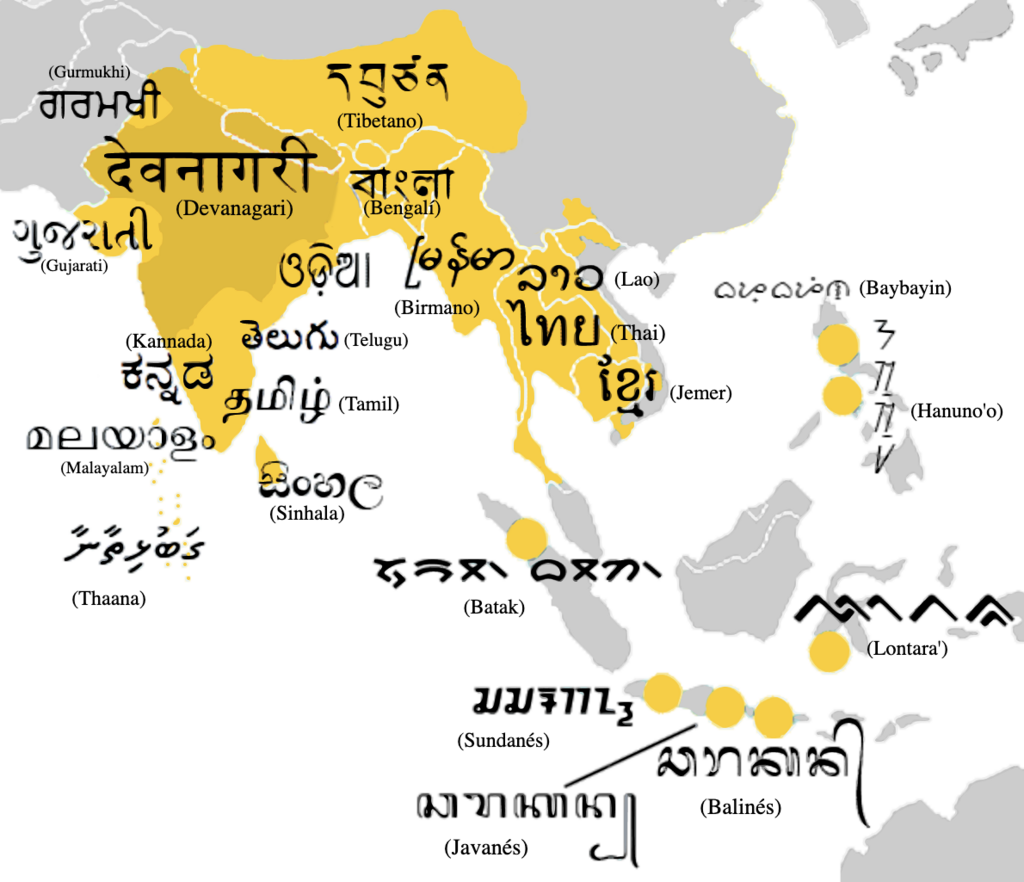
Kannada is an abugida, which is a type of writing system where each character represents a consonant with an inherent vowel, usually 'a' (like the 'a' in 'sofa'). To change that vowel sound, you add a small stroke or symbol, called a diacritic, to the base consonant. This is different from an alphabet like English, where vowels and consonants are separate, independent letters.
Think of it like this: each consonant is a base shape, and vowel marks are modifiers that change its sound.
Vowels and Consonants
Let's start with the building blocks. Kannada has a set of independent vowels, used when a word or syllable starts with a vowel sound. Here are the basic ones.
| Kannada | Romanization | Pronunciation (like the 'a' in...) |
|---|---|---|
| ಅ | a | ago |
| ಆ | ā | father |
| ಇ | i | pin |
| ಈ | ī | feet |
| ಉ | u | put |
| ಊ | ū | rule |
Next are the consonants. Each one has a built-in 'a' (ಅ) sound. Notice how some sounds, like 'k' and 'g', have both an unaspirated and an aspirated version (with a puff of air). This is a common feature in many Indian languages.
| Kannada | Romanization | Pronunciation (like in...) |
|---|---|---|
| ಕ | ka | cat |
| ಗ | ga | go |
| ಚ | ca | chair |
| ಜ | ja | jug |
| ತ | ta | (soft 't', as in Spanish) |
| ದ | da | then |
| ಪ | pa | spin |
| ಬ | ba | bat |
| ಮ | ma | man |
| ಯ | ya | yes |
| ರ | ra | (rolled 'r', as in Spanish) |
| ಲ | la | lip |
| ವ | va | van |
| ಸ | sa | sit |
Combining Sounds
This is where the abugida system really shines. Instead of writing a consonant and a vowel as two separate letters, you modify the consonant with a vowel sign. Let's take the consonant ಕ (ka) as our base. To change its vowel sound from 'a' to 'i' or 'u', we add a specific mark.
As you can see, the base consonant ಕ (ka) plus the 'i' vowel sign ( ಿ) becomes ಕಿ (ki). The vowel sign attaches to the consonant. Each vowel has its own unique sign. This might seem like a lot to remember, but the pattern is consistent across all consonants.
Every consonant can be paired with every vowel diacritic. Once you learn the signs for the vowels, you can correctly pronounce hundreds of combinations.
Let's look at a few more examples with the consonant 'pa' (ಪ).
| Combination | Result | Romanization |
|---|---|---|
| ಪ (pa) + ಾ (ā sign) | ಪಾ | pā |
| ಪ (pa) + ಿ (i sign) | ಪಿ | pi |
| ಪ (pa) + ೀ (ī sign) | ಪೀ | pī |
| ಪ (pa) + ು (u sign) | ಪು | pu |
| ಪ (pa) + ೂ (ū sign) | ಪೂ | pū |
The key is to recognize the base consonant first, then identify the vowel mark to get the correct sound. It takes practice, but it's a very efficient way to write.
Now, let's test what you've learned about the script and its sounds.
What type of writing system is the Kannada script?
In its most basic form, without any added marks, a Kannada consonant character like 'ಕ' represents...
Getting comfortable with the script is the most important first step in learning Kannada. Keep practicing these basic sounds.