Kabbalah Fundamentals
Introduction to Kabbalah
The Hidden Wisdom
Within Judaism, there is a mystical tradition that seeks to understand the deepest secrets of God, the universe, and the human soul. This path is known as Kabbalah. It’s not a separate religion, but rather an esoteric dimension of Jewish thought, a way of reading sacred texts to uncover hidden meanings.
Kabbalah
noun
A mystical tradition in Judaism that seeks to understand the hidden nature of God and the divine structure of creation.
The word itself means "to receive" or "that which is received," pointing to its origins as a wisdom passed down from teacher to student. The core purpose of Kabbalah is to experience a direct connection with the divine. It provides a map of consciousness and a set of tools for spiritual growth, aiming to answer life's biggest questions: Who are we? Why are we here? What is our connection to the infinite?
Kabbalah, a mystical branch of Judaism, offers profound insights into the nature of existence and the soul’s journey.
Ancient Roots
While Kabbalah became most prominent in the Middle Ages, its roots stretch back to ancient Jewish mysticism. Early texts like the Sefer Yetzirah (Book of Formation) explored the creation of the universe through the letters of the Hebrew alphabet. For centuries, this knowledge was guarded carefully, shared only orally with a select few who were deemed spiritually mature enough to handle it.
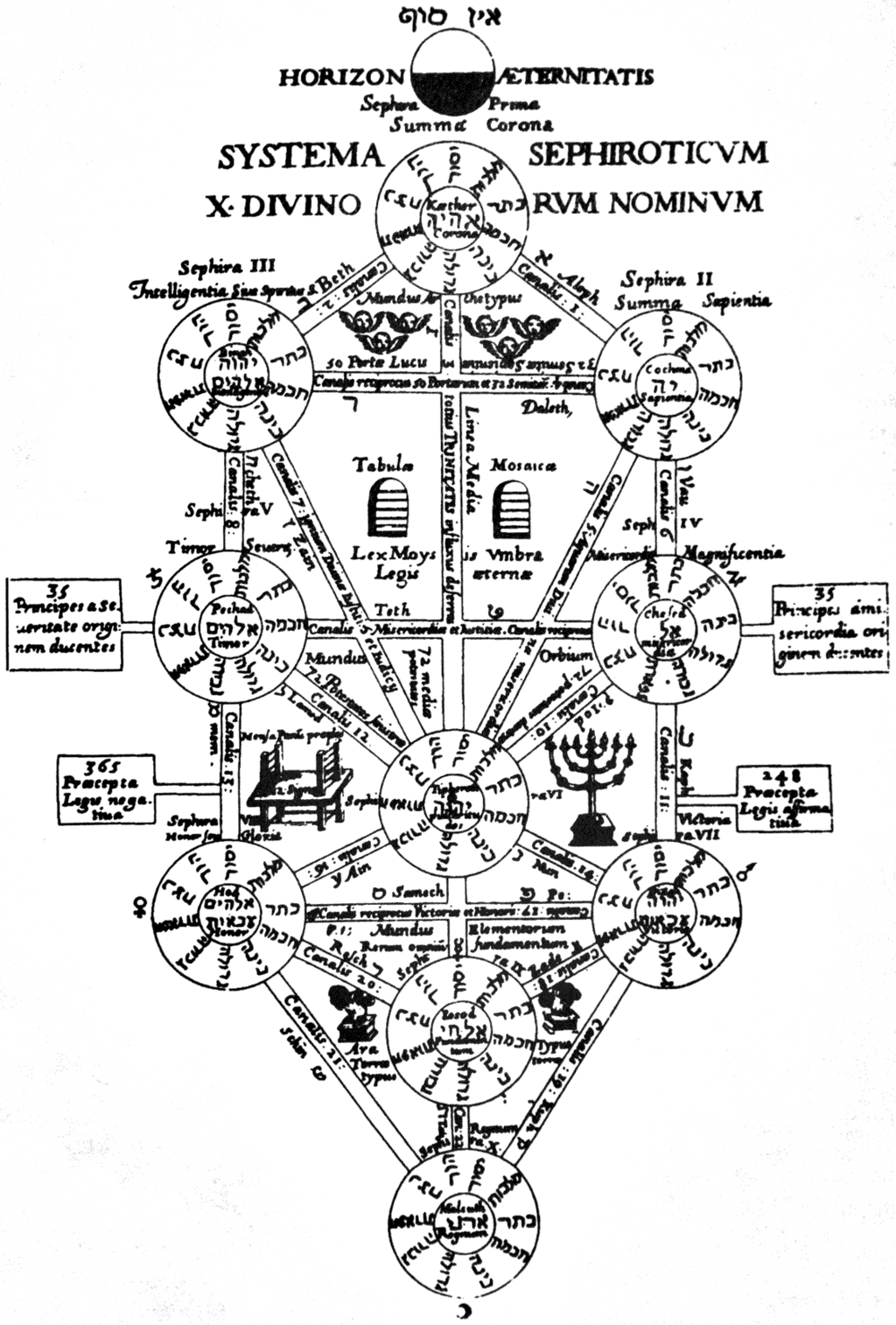
Kabbalah truly blossomed in 12th and 13th century Spain and Provence, France. This period saw the appearance of the Zohar (Book of Splendor), a vast and cryptic commentary on the Torah that became the foundational text of Kabbalistic thought. Written as a mystical novel, it unveils the spiritual dynamics that lie beneath the surface of the biblical stories.
Core Ideas
Kabbalah introduces several key concepts to explain the relationship between God and the world. At the highest level is the idea of Ein Sof, which means "Endless" or "Without End." This is the ultimate, unknowable aspect of God—a pure, infinite reality beyond all human description or comprehension.
So how does this infinite, unknowable God create a finite world? Kabbalah teaches that Ein Sof brought the universe into being through a series of emanations, like light flowing from a source. These are stages of divine energy, each revealing a different attribute of God. Together, they form the structure of all existence.
The human soul is seen as a spark of this divine light, temporarily housed in a physical body. The spiritual journey, therefore, is one of remembrance and return. Through study, prayer, and good deeds, a person can climb back up the ladder of emanations and reconnect their soul to its infinite source.
Kabbalah is not just abstract philosophy. It's a practical guide for living a more meaningful life by aligning one's actions with the hidden spiritual currents of the universe.
It’s important to remember that Kabbalah operates within traditional Judaism. Kabbalists see their work not as an invention, but as the discovery of the deepest layer of meaning within the Torah, one that has been there all along. It provides a mystical lens through which to view Jewish law and practice, infusing everyday rituals with profound cosmic significance.
The Hebrew word "Kabbalah" literally translates to...
Which text is considered the foundational work of Kabbalistic thought, appearing in the Middle Ages?
This introduction only scratches the surface. Kabbalah is a deep and complex tradition that has fascinated spiritual seekers for centuries, offering a profound vision of a connected and meaningful cosmos.