Junior Chemistry Fundamentals
Matter and Particles
What Is Everything Made Of?
Look around you. You might see a desk, a book, or a glass of water. Outside, there are trees, clouds, and the air you breathe. All of this 'stuff' has something in common: it's all made of matter. is the science that studies this stuff – what it's made of, what its properties are, and how it changes.
But what is matter made of? If you could zoom in, way past what your eyes can see, you'd find that all matter is made up of tiny, tiny particles. These particles are always moving. This simple but powerful idea is called the particle theory of matter. It helps us understand why different substances behave in different ways.
The Three States of Matter
Depending on how these tiny particles are arranged and how they move, matter can exist in different forms, or states. The three most common states are solid, liquid, and gas.
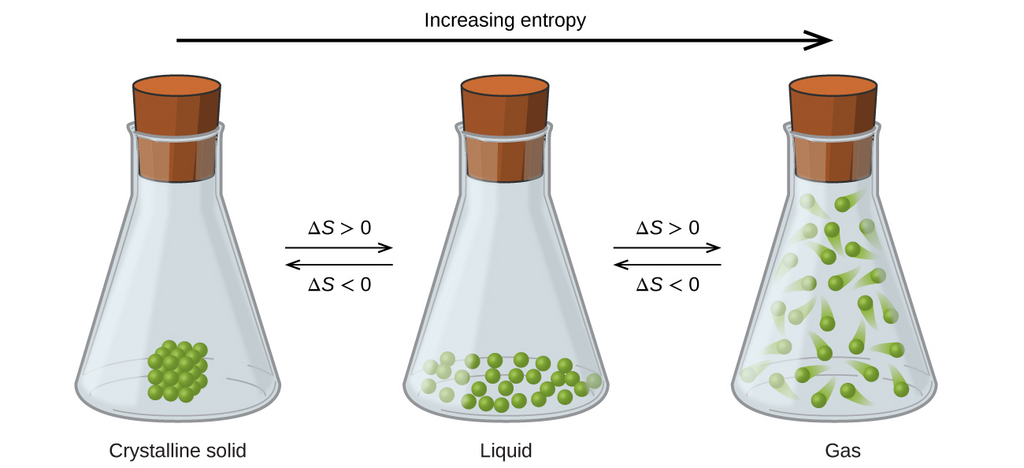
Solids In a solid, like an ice cube or a rock, the particles are packed very tightly together in a neat, ordered pattern. They don't have much room to move, so they just vibrate in their fixed spots. This is why solids have a definite shape and volume; they don't change shape if you move them from a bowl to a plate.
Liquids In a liquid, like water or juice, the particles are still close together, but they aren't locked in place. They have enough energy to slide past one another. Think of a crowded dance floor. This is why a liquid can be poured and will take the shape of whatever container it's in, from a tall glass to a wide puddle.
Gases In a gas, like the air in a balloon or steam from a kettle, the particles are spread far apart and move around very quickly and randomly. They have lots of energy and will spread out to fill any container they are in, no matter its size or shape. This is why you can smell a cake baking from another room; the gas particles carrying the smell spread throughout the house.
Mass
noun
A measure of how much 'stuff' or matter an object contains. It's not the same as weight, which is the force of gravity on an object.
All matter has mass. This is easy to understand for solids and liquids, but even invisible gases have mass. If you weigh an empty balloon and then weigh it again after it's been inflated, you'll find it's slightly heavier. That extra mass comes from the air particles you blew inside.
Changing States
Substances don't have to stay in one state forever. Think about water. You can have solid ice, liquid water, and gaseous steam. These changes happen when we add or take away energy, usually in the form of heat. The energy of moving particles is called . Adding heat gives particles more kinetic energy, making them move faster and faster.
Adding heat makes particles move faster. Removing heat makes them slow down.
When you heat a solid like ice, its particles vibrate more and more violently until they break free from their fixed positions. The solid melts and becomes a liquid. This process is called melting.
If you cool a liquid down, you're removing energy. The particles slow down and eventually lock back into a fixed pattern, turning the liquid into a solid. This is called freezing.
What happens if you keep heating a liquid? Its particles gain so much energy that they break away from each other completely and fly off as a gas. This is called evaporation. The reverse happens when a gas cools. Its particles slow down and clump together to form a liquid. This process is called condensation, and it's why you see water droplets on the outside of a cold drink on a warm day.
Understanding how particles behave is the first step to understanding all of chemistry. From the solid ground beneath your feet to the air you breathe, it's all just particles in motion.
According to the particle theory of matter, all matter is made up of tiny particles that are...
Which state of matter is described as having particles that are close together but can slide past one another, allowing it to take the shape of its container?