Jung's Red Book Analysis
Active Imagination Mechanics
From Fantasy to Dialogue
Carl Jung's journey into the depths of his psyche wasn't a passive experience. He didn't simply record his dreams and fantasies as they came. Instead, he developed a method for actively engaging with them. This process, which he called Active Imagination, marked a pivotal shift from being a spectator of his inner world to becoming a participant within it. The transition is most evident in the evolution of his private journals.
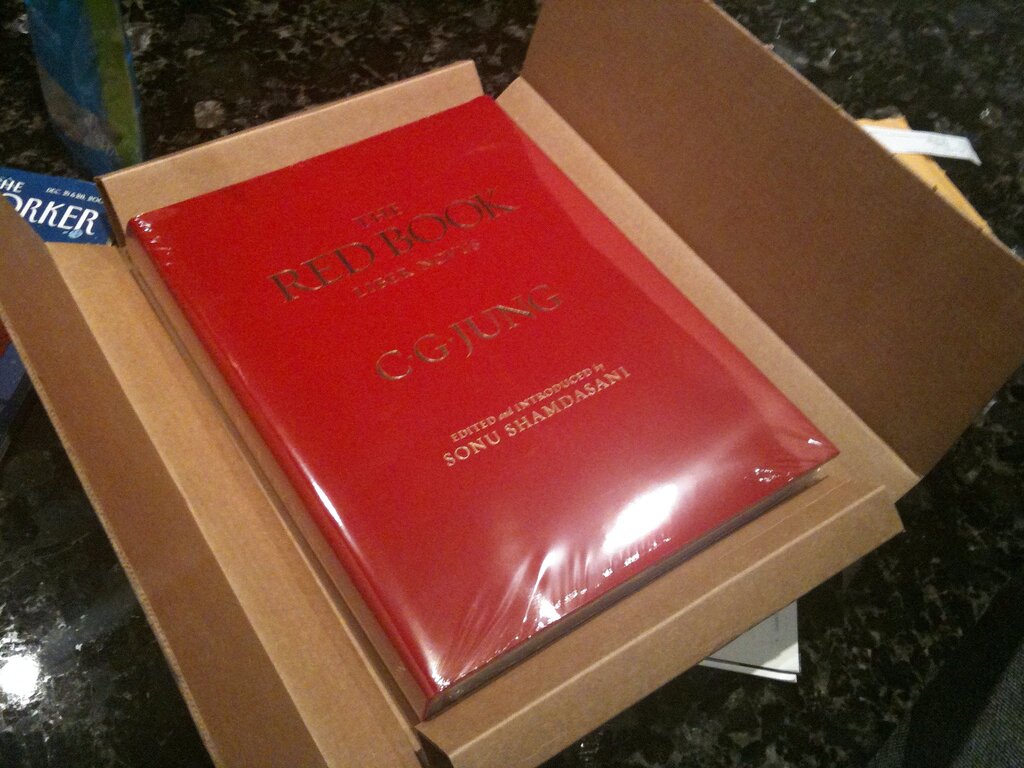
His initial explorations, documented in what are now known as 'The Black Books', were raw, immediate records of visions and dialogues. They were the unfiltered stream of his unconscious. Over time, this practice was refined and formalized into the illustrated manuscript, Liber Novus, or 'The Red Book'. This wasn't just a prettier version of the same notes. It represented a fundamental change in method: a move towards a structured, intentional dialogue with the figures that emerged from his mind. Jung was forging a dialectic between his conscious ego and the autonomous figures of the unconscious.
The Method of Descent
So, how did Active Imagination work in practice? The process began with a conscious act of will. Jung would deliberately focus his attention on a particular mood or a fleeting inner image. Instead of analysing it from the outside, he would enter it. He described this as a 'voluntary immersion' in the unconscious.
Imagine seeing a faint image at the edge of your vision. Instead of dismissing it, you turn your full attention towards it, allowing it to grow, take shape, and acquire a life of its own. You then step into the scene and begin to interact with what you find.
This wasn't about losing control or inducing a trance. On the contrary, it required intense concentration. The goal was to give the unconscious fantasy a chance to unfold and reveal its own logic, without the ego immediately interrupting, judging, or interpreting it. Jung's role was to observe, participate, and record the experience as faithfully as possible, allowing the narrative to be driven by the internal figures themselves.
Active imagination is a technique developed by Jung that encourages dialogue with elements from your dreams through creativity and expression.
The Ego as Anchor
The critical element that distinguishes Active Imagination from psychosis is the role of the ego. Jung was adamant that the conscious mind must remain present and active throughout the process. The ego acts as an anchor, preventing the individual from being completely submerged and lost in the powerful currents of the unconscious. It maintains a separate viewpoint, allowing for a true dialogue.
In these inner dialogues, Jung’s ego would question the figures he encountered. He would argue with them, challenge their statements, and demand to understand their purpose. This created a dynamic tension, a genuine interaction between two distinct psychic realities. One of the most significant figures he met this way was , a wise old man with the wings of a kingfisher, who became a kind of inner guru for Jung, representing superior insight. Through these conversations, the ego is not diminished; rather, it is expanded by integrating the wisdom of the unconscious.
Jung noted the real dangers of this work. It placed enormous psychological stress on him, and he even reported physiological symptoms. The primary risk was psychic inflation, where the ego might identify with the powerful archetypal figures, or conversely, be completely overwhelmed and shattered by them. The process required a strong and stable ego to begin with, one capable of navigating the often chaotic and terrifying landscapes of the psyche without losing its way. The reward, however, was a direct, empirical mapping of the psyche’s topography. It allowed him to chart the territories of what he would later call the collective unconscious and identify its core structures.
This method formed the empirical bedrock of Jung's most important theories. By turning inwards and engaging directly with the psyche's autonomous images, he moved beyond pure theory. He was not just interpreting mystical texts like the Zohar from an academic distance; he was undertaking his own visionary journey, using a systematic psychological technique to explore the same realms.