Jung's Archetypes Explained
Introduction to Jungian Psychology
Beyond Freud
You’ve likely heard of Sigmund Freud, but you might be less familiar with his onetime colleague and friend, Carl Jung. A Swiss psychiatrist, Jung started as a follower of Freud's ideas but eventually broke away to form his own school of thought: analytical psychology.
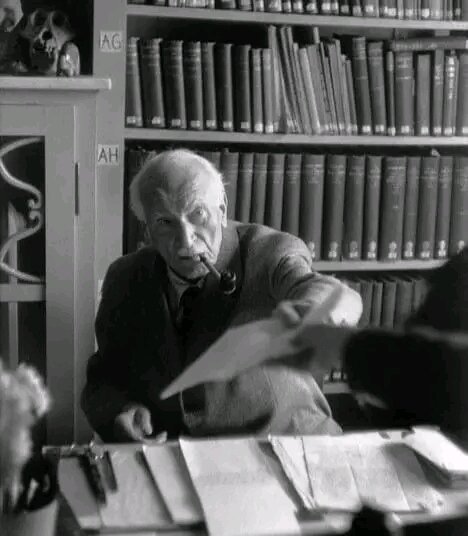
While both men were fascinated by the unconscious mind, Jung saw it as more than just a storage space for repressed desires. He believed the psyche was a self-regulating system, constantly striving for balance and wholeness. This journey toward becoming a complete, individual self is a central theme in his work.
Mapping the Mind
Jung viewed the human psyche as having three distinct, yet interconnected, layers. Think of it like the ocean. There's the surface we see, the murky shallows just below, and the vast, mysterious deep that connects everything.
Conscious
adjective
The part of the mind that includes our current thoughts, feelings, and awareness. It's the 'I' we know.
The surface of our ocean is the conscious mind. This is our awareness, the seat of our identity or ego. It’s what you're using to read and understand these words right now.
Just below the surface lies the personal unconscious. This layer holds all the things you know but aren't currently thinking about, like your phone number or what you ate for breakfast. It also contains memories that have been forgotten or repressed because they were unpleasant. This part of the unconscious is unique to you, shaped by your own life experiences.
But Jung's most revolutionary idea was a third, deeper layer: the collective unconscious.
This is the deep ocean, a shared, inherited reservoir of knowledge and imagery that connects all of humanity. Jung believed we are all born with this common psychological foundation, passed down from our ancestors. It's filled with patterns and symbols that are universal, appearing in myths, religions, and fairy tales across all cultures and throughout history.
The collective unconscious is a unique component in that Jung believed that this part of the psyche served as a form of psychological inheritance.
The Blueprints of Experience
So, what exactly is inside this shared collective unconscious? Jung called its contents archetypes.
Archetypes are not memories or specific images. Instead, think of them as universal blueprints or potentials for ideas and behaviors. They are innate patterns that shape how we experience the world. For example, every culture has a concept of a mother, a hero, a wise old guide, or a trickster. The specific details vary, but the fundamental pattern, the archetype, remains the same.
Jung believed these archetypes are not just concepts; they are active, living forces within our psyche. They influence our thoughts, feelings, and actions, often without our conscious awareness. They are the inherited predispositions that cause us to respond to certain situations in a way that is universally human.
Archetypes form the structure of the collective unconscious – the home for psychic innate dispositions to experience and represent basic human behavior and situations.
By understanding these foundational concepts—the structure of the psyche, the collective unconscious, and the role of archetypes—we can begin to appreciate the depth of Jung's vision. He provided a framework for exploring not just our personal history, but the shared psychological heritage that connects us all.
According to Carl Jung's model, which part of the psyche contains forgotten memories and experiences unique to an individual?
What did Jung call the universal, inherited patterns or blueprints for ideas and behaviors found within the collective unconscious?