Judy Garland Beyond the Rainbow
MGM Studio Mechanics
The MGM Dream Factory
In the 1930s and 40s, Metro-Goldwyn-Mayer wasn't just a film studio; it was a factory. Its product wasn't just movies, but stars. This was the heart of the Hollywood 'Studio System', a model of industrial-scale production where major studios, particularly the 'Big Five' which included MGM, controlled every aspect of filmmaking from creation to exhibition.
MGM's motto was "More stars than there are in heaven," and they manufactured them with ruthless efficiency. Actors were assets, bound by long, restrictive contracts. The studio dictated their roles, their public appearances, and even their names. Frances Gumm, a vaudeville singer with a powerful voice, became Judy Garland, an MGM property.
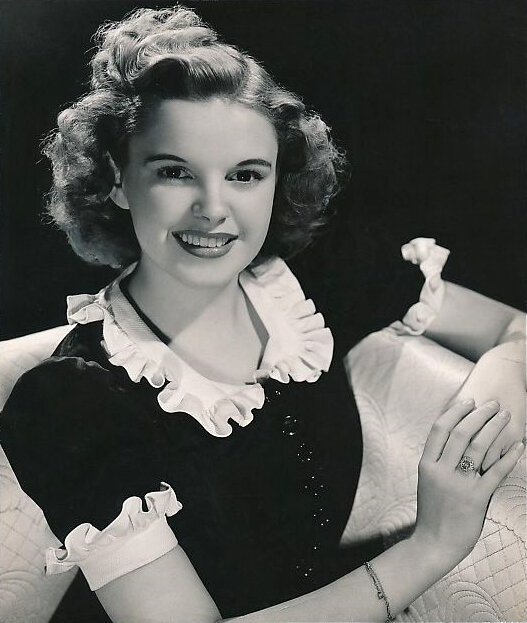
This system was a 'Star Machine'. It took raw talent and moulded it into a marketable commodity. For Garland, the mould was the 'Girl Next Door'. She was positioned as relatable, wholesome, and approachable, a stark contrast to the glamorous, unattainable personas of stars like Greta Garbo or Joan Crawford. This image was carefully constructed and fiercely protected by the studio, often clashing with her sharp wit and off-screen personality. It was a brand to be sold to the American public.
Crafting the Garland Style
Transforming the vaudevillian belter from the 'Gumm Sisters' trio into a cinematic singing star required technical refinement. This task fell to Roger Edens, a gifted vocal coach, composer, and arranger who became one of the key architects of Garland's sound. Edens understood how to adapt her immense natural talent for the microphone and the emotional demands of film narrative.
Her early style was loud and direct, designed to reach the back rows of a theatre without amplification. Edens taught her subtlety, control, and how to use her voice to convey character and story. He refined her phrasing, encouraged a more intimate delivery, and arranged her songs to build dramatic crescendos. This fusion of raw power and polished technique became the signature 'Garland Style', a sound that could pivot from a whisper to a roar, filled with a vulnerability that felt astonishingly real.
The Price of Perfection
The studio's control was absolute and invasive, particularly for its young stars. Garland's weight was a constant source of anxiety for the studio heads. From the age of 13, she was put on a strict, studio-mandated diet of chicken soup, black coffee, and up to eighty cigarettes a day to suppress her appetite. Studio executives publicly referred to her as their "little fat girl."
The gruelling production schedules demanded boundless energy. To keep their young assets working 16-hour days, six days a week, studio doctors prescribed amphetamines, or 'pep pills'. To counteract the effects and ensure they could sleep, they were then given barbiturates. This state-sanctioned cycle of stimulants and depressants, the so-called 'Pill Culture', was presented as a normal part of the job. For Garland, it began a lifelong battle with addiction that originated in the studio's infirmary.
The physical and psychological toll was immense. This regimen was designed to maximise the studio's return on its investment, treating the performer's body as another piece of machinery to be manipulated for peak output. The work ethic it instilled was relentless; Garland developed a reputation for professionalism, always hitting her mark and delivering her lines, but this was forged under unimaginable pressure. The Girl Next Door on screen was sustained by a brutal off-screen reality.
Let's review what we've learned about MGM's star-making process.
What was the dominant business model for major Hollywood studios like MGM in the 1930s and 40s, which gave them control over every aspect of filmmaking?
What was the primary purpose of branding Judy Garland as the 'Girl Next Door'?
The studio system was a complex engine of commerce and creativity. While it produced some of the most beloved films in history, it often did so at a significant human cost to the stars it created.