Judea on the Brink The Road to the First Jewish-Roman War
Historical Context
From Independence to Roman Shadow
Before Rome's legions ever marched on Jerusalem, Judea had enjoyed a century of fragile independence under its own kings, the Hasmonean dynasty. This period of self-rule began with a successful revolt against a Hellenistic empire, a story of great national pride. But by the 1st century BCE, that unity had fractured.
Two Hasmonean brothers, Hyrcanus II and Aristobulus II, were locked in a bitter civil war for the throne. Their struggle weakened the kingdom and created a power vacuum. Unfortunately for them, an ambitious new power was expanding nearby: Rome. Seeing an opportunity, both brothers appealed to the Roman general Pompey the Great for help. In 63 BCE, Pompey marched into Jerusalem, ostensibly to settle the dispute. He chose the weaker Hyrcanus II as High Priest but stripped him of the title of king. Judea was no longer truly independent. It had become a client state of the expanding Roman Republic.
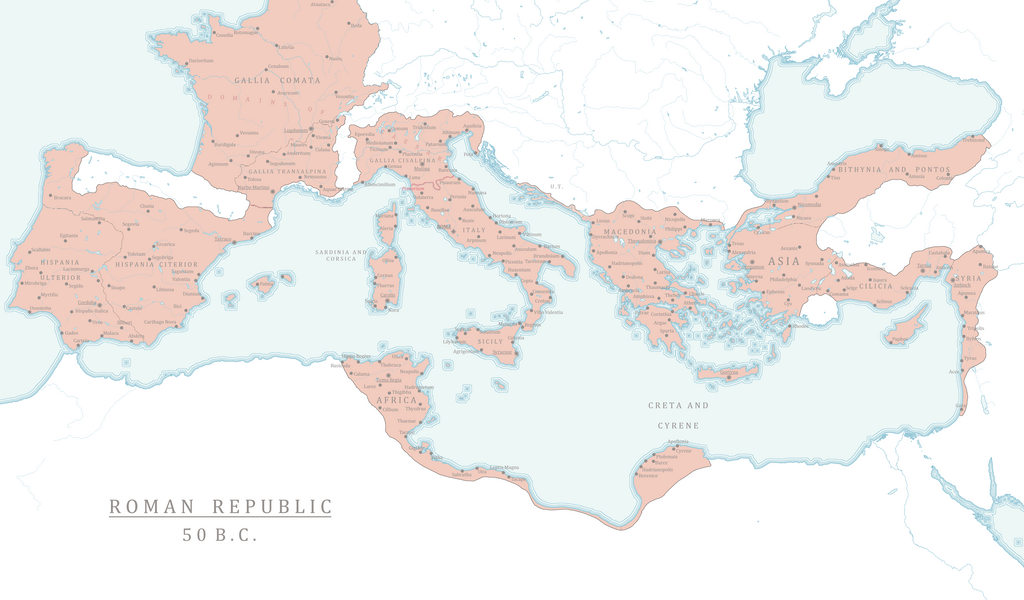
The Romans preferred to rule their new territories through loyal local leaders. This is where a shrewd and ruthless man named Herod entered the story.
The Reign of Herod the Great
Herod was not a Hasmonean. He was an Idumean, from a neighboring people who had been converted to Judaism, and his family had risen to prominence by backing the right people. With Roman support, Herod maneuvered his way to power, and in 37 BCE, the Roman Senate declared him "King of the Jews."
Herod's long reign was a study in contradictions. He was a master politician who kept Judea stable and prosperous, navigating the treacherous politics of Rome. He was also a prolific builder, undertaking massive projects across his kingdom. His most famous project was a lavish and grand renovation of the Second Temple in Jerusalem. Yet, for all his accomplishments, he was widely despised by many of his subjects. They saw him as a Roman puppet, a usurper with questionable Jewish credentials who ruled with an iron fist. His paranoia led him to execute anyone he saw as a threat, including members of his own family.
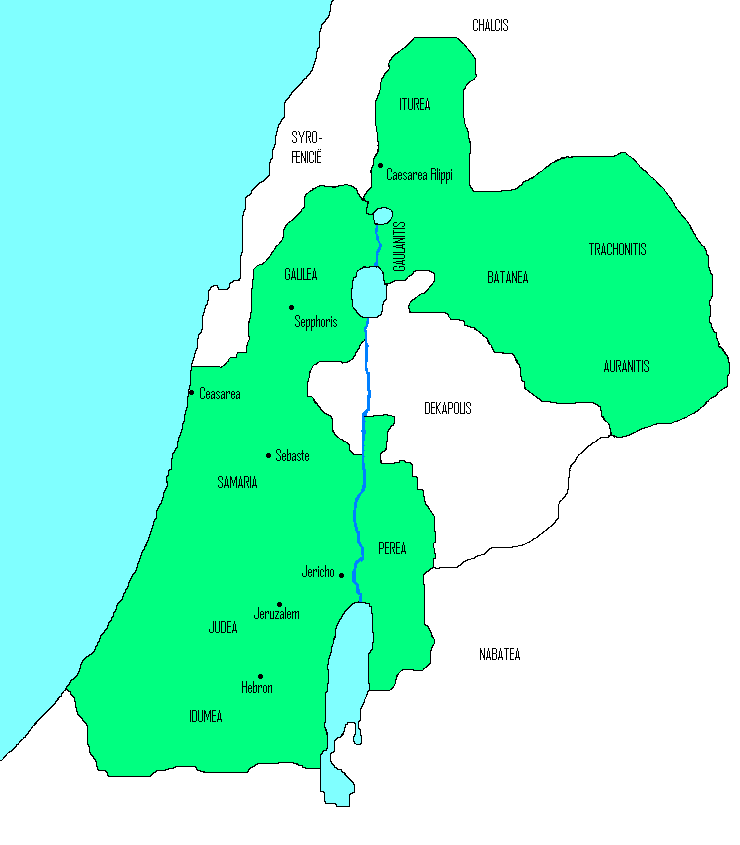
Herod's ultimate loyalty was to his patrons in Rome, not to the people he governed. This created a deep-seated resentment that simmered just beneath the surface.
Direct Roman Rule
When Herod died in 4 BCE, his kingdom was divided among three of his sons. This arrangement, known as the tetrarchy, proved unstable. The son who inherited Judea proper, Herod Archelaus, ruled so poorly that a delegation of Jewish and Samaritan leaders appealed directly to the Roman emperor Augustus to remove him.
In 6 CE, Augustus obliged. He banished Archelaus and transformed Judea into a Roman province. The days of even nominal Jewish kings were over. From now on, Judea would be governed directly by a Roman official, usually a prefect or procurator, who answered only to Rome.
These governors, of whom Pontius Pilate is the most famous, were primarily responsible for two things: collecting taxes and maintaining order. They commanded a small contingent of auxiliary troops and held the power of life and death. While the Jewish high court, the Sanhedrin, retained authority over religious and local civil matters, the ultimate power lay with the Roman governor. This system often put the Jewish high priests, who were typically from wealthy aristocratic families, in the position of collaborating with the Romans to maintain their own status.
This created a dangerous social dynamic: a foreign military power, a collaborating local elite, and a general populace that felt oppressed by both.
The cultural friction was immense. Roman religious practices, including the worship of the emperor, were deeply offensive to Jewish monotheistic beliefs. Heavy taxation, collected for a distant empire, was a constant economic burden and a source of humiliation. Small protests and riots were common, often sparked by a governor's perceived insult to Jewish law or tradition. Over the decades, this constant tension and resentment built up, setting the stage for a massive, kingdom-wide rebellion.