Journey Through English Literature
Old English Origins
The First English
Around the 5th century AD, after the Romans left Britain, new groups of people sailed across the North Sea. These were the Angles, Saxons, and Jutes, Germanic tribes from mainland Europe. They brought with them their language, their culture, and their stories. This language, now called Old English, was the ancestor of the English we speak today. It sounded very different, more like German or Dutch, but it was the beginning.
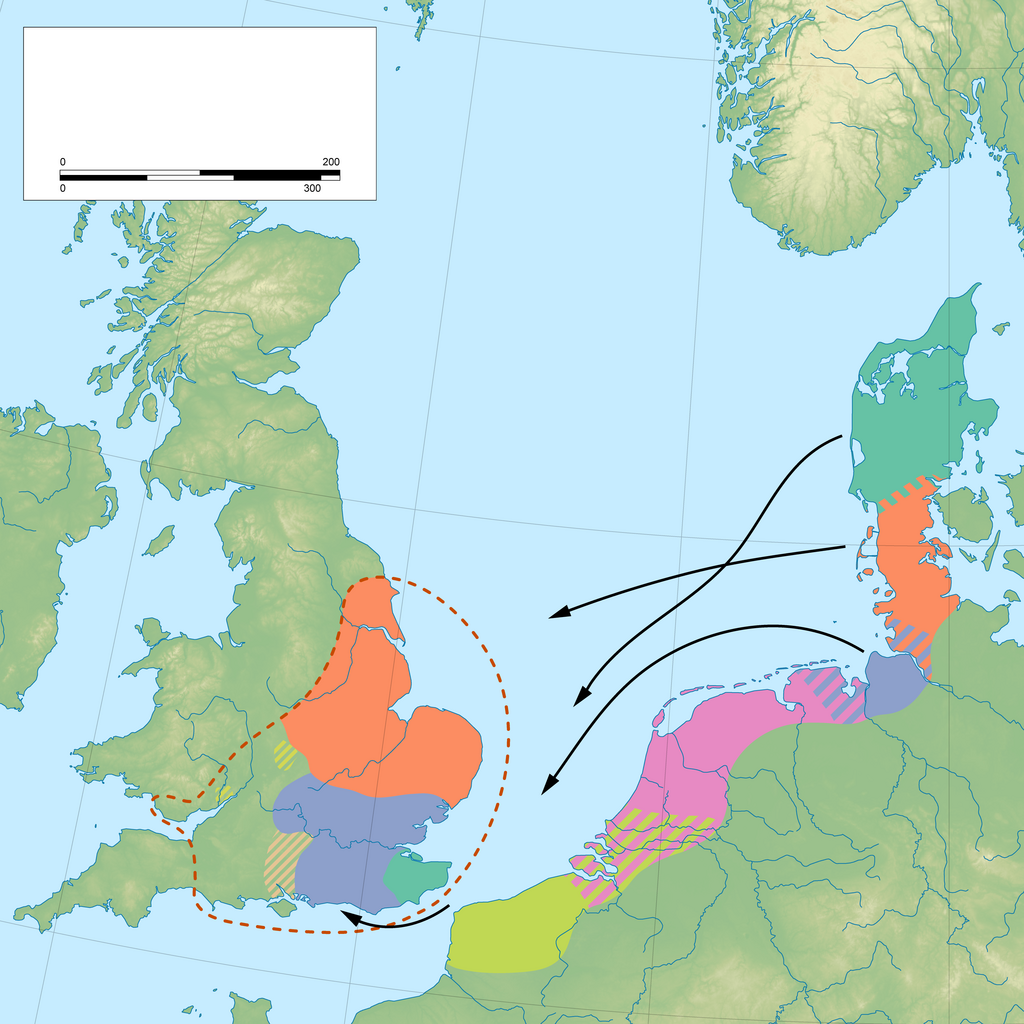
Life for the was harsh. It was a world of cold seas, small farming communities, and constant conflict. Their culture revolved around loyalty to a lord, courage in battle, and the grim acceptance of fate. They didn't write their stories down at first. Instead, they shared them aloud.
Songs of Heroes
In a world without books, memory was everything. History, entertainment, and cultural values were passed down through an oral tradition. After a day of work or a victorious battle, people would gather in a large mead-hall to feast, drink, and listen to stories.
The storyteller was a highly respected figure called a (pronounced 'shop'). Scops were professional poets who traveled from hall to hall, reciting long poems from memory, often accompanied by a harp. They were the living libraries of their time, preserving the tribe’s history and celebrating its heroes.
The scop's songs were not just entertainment. They taught people how to be brave, loyal, and honorable.
Beowulf's Tale
The greatest surviving work from this period is Beowulf. It’s an —a very long, narrative poem that tells the story of a great hero's deeds. The story follows a mighty warrior named Beowulf who sails to Denmark to help a king whose mead-hall is being terrorized by a monstrous creature named Grendel.
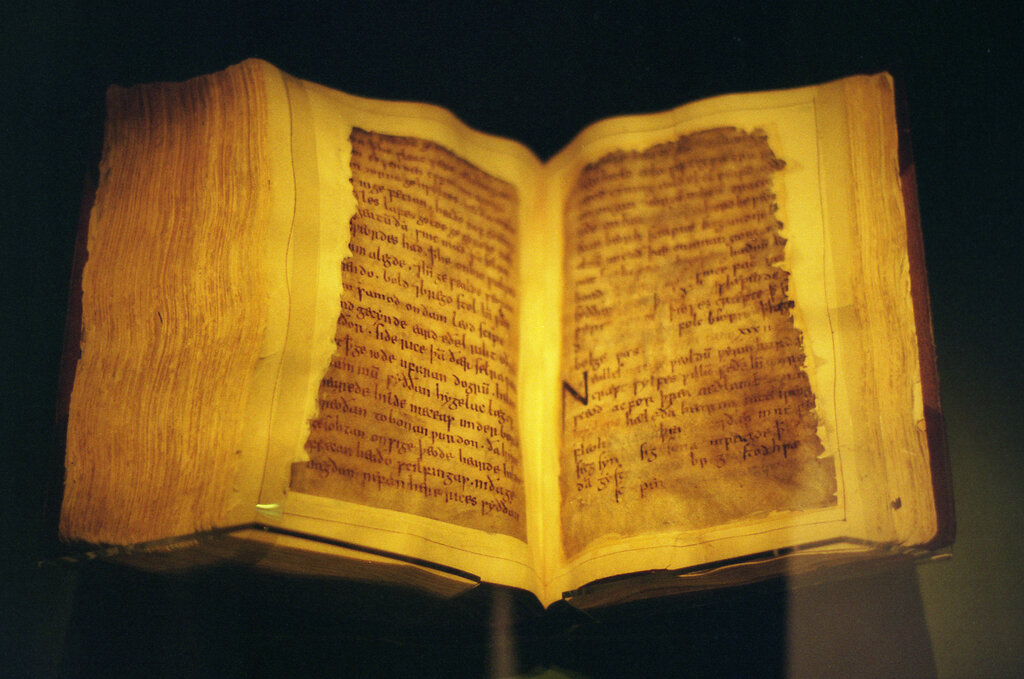
Beowulf is the perfect Anglo-Saxon hero. He is incredibly strong, fiercely loyal to his lord, and seeks glory that will outlast his own life. After defeating Grendel with his bare hands, he must then face Grendel's vengeful mother. Much later, as an old king, he fights a dragon to protect his own people, a battle that costs him his life.
His story embodies the heroic ideal: facing down dark, terrifying forces with courage, even when death is certain.
From Mead Hall to Monastery
So if these stories were only spoken, how do we have a written copy of Beowulf today? The answer lies with the arrival of Christianity in Britain around the 7th century. Christian monks established monasteries, which became centers of learning and writing.
These monks were the ones who first wrote down the old pagan stories they heard. But as they wrote, they infused the tales with their own beliefs. The result is a fascinating blend of two worldviews.
In Beowulf, the monster Grendel is described as a descendant of the biblical Cain, the first murderer. This is a clear example of a Christian element added to a pre-existing pagan story about monsters and warriors.
This mix of pagan and Christian values is a hallmark of Old English literature. Another poem, The Seafarer, vividly describes the misery and loneliness of life on the cold, hostile ocean. The speaker feels a deep sense of pagan fatalism and hardship. Yet, the poem ends with a Christian message of hope, turning the earthly journey into an allegory for the soul's journey toward God.
These early texts give us a window into a vanished world—a time when stories were sung in smoky halls and the foundations of the English language were being laid.
Now, let's test your knowledge of this foundational period.
Who were the primary groups that settled in Britain after the Romans left, forming the Anglo-Saxon culture?
What was the primary role of a 'scop' in Anglo-Saxon society?
The Anglo-Saxon period set the stage for everything that would follow in English literature, establishing themes of heroism, struggle, and faith that echo through the centuries.