Jhana and Vipassana Mastery in Theravada
Foundations of Theravada Buddhism
The School of the Elders
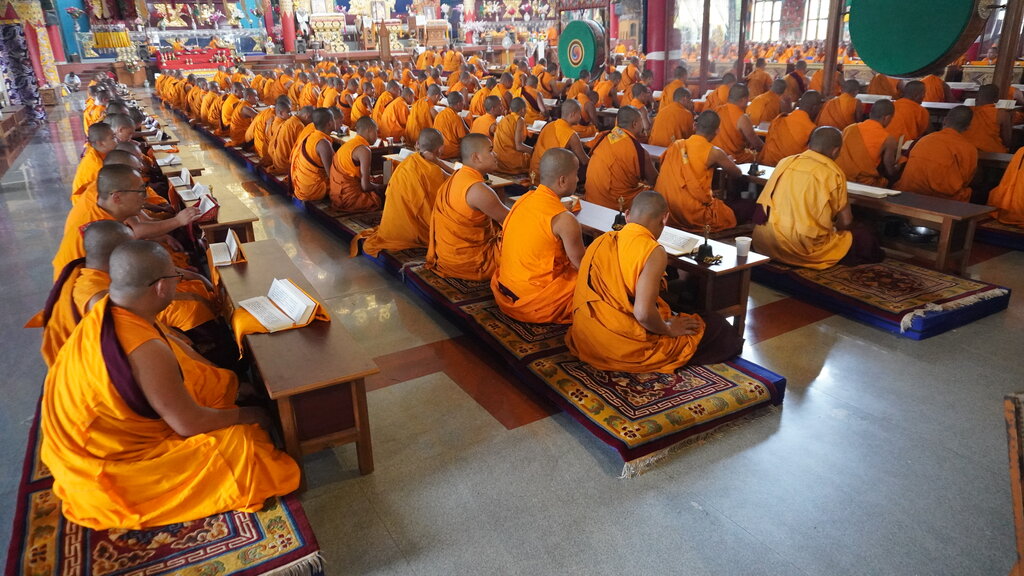
Theravada Buddhism is the oldest surviving branch of Buddhism. Its name translates to "The Way of the Elders," reflecting its commitment to preserving the original teachings of Siddhartha Gautama, the Buddha. This tradition took shape after the Buddha's death around 2,500 years ago as his followers worked to codify his teachings and monastic rules.
Historically, Theravada spread from India to Sri Lanka and across Southeast Asia. Today, it remains the predominant form of Buddhism in countries like Thailand, Cambodia, Laos, Myanmar, and Sri Lanka. At its heart, this school emphasizes self-liberation through one's own efforts, focusing on a path of discipline, meditation, and wisdom to achieve enlightenment.
The Guiding Texts
The foundation of Theravada Buddhism is the Pali Canon, also known as the Tipitaka, or "Three Baskets." It's the most complete collection of early Buddhist teachings, written in the Pali language. Think of it as the primary sourcebook for this entire tradition.
The Tipitaka is organized into three main sections:
- Sutta Pitaka: The "Basket of Discourses." This contains more than 10,000 teachings, or suttas, given by the Buddha and his close disciples. It's the core of the doctrine, covering everything from morality to meditation.
- Vinaya Pitaka: The "Basket of Discipline." This section lays out the rules of conduct for monks and nuns, forming the basis of monastic life.
- Abhidhamma Pitaka: The "Basket of Higher Doctrine." This is a more advanced section, offering a systematic and philosophical analysis of the nature of mind and matter. It breaks down the Buddha's teachings into a detailed framework.
The Core Diagnosis
The Buddha's first and most crucial teaching, delivered after his enlightenment, was the Four Noble Truths. This framework acts like a medical diagnosis for the human condition. It identifies the problem, its cause, the possibility of a cure, and the prescription to achieve it.
| Noble Truth | Description |
|---|---|
| 1. The Truth of Suffering (Dukkha) | Life inevitably involves dissatisfaction, stress, and suffering. This isn't just about pain, but also the subtle stress of change and impermanence. |
| 2. The Truth of the Cause (Samudāya) | The root cause of this suffering is craving, attachment, and aversion. We suffer because we cling to things that are impermanent. |
| 3. The Truth of Cessation (Nirodha) | There is a way to end this suffering. By eliminating craving and attachment, we can attain a state of liberation called Nirvana. |
| 4. The Truth of the Path (Magga) | The way to end suffering is to follow a specific path of practice, known as the Noble Eightfold Path. |
The Path to Liberation
The Fourth Noble Truth provides the prescription: the Noble Eightfold Path. This isn't a series of sequential steps but a set of eight interconnected practices to be developed simultaneously. They are often grouped into three main categories: Wisdom, Ethical Conduct, and Mental Discipline.
Meditation is central to the Theravada path, particularly within the Mental Discipline category. Practices like Samatha (concentration) and Vipassanā (insight) are the tools used to cultivate mindfulness and concentration. This mental training allows a practitioner to observe reality as it is, leading to the wisdom that cuts through the roots of suffering.
This entire framework, from the texts to the truths to the path, provides a complete roadmap. It explains why we experience dissatisfaction and offers a clear, practical method to find lasting peace.
Let's review these foundational concepts.
The term "Theravada" is a Pali phrase that translates to which of the following?
The Pali Canon, or Tipitaka, is organized into three main sections. Which section, known as the "Basket of Discipline," lays out the rules for monastic life?