Jet Engine Fundamentals
Introduction to Jet Engines
The Principle of Propulsion
A jet engine seems complex, but it operates on a simple, elegant principle you might remember from science class: Newton's Third Law of Motion.
For every action, there is an equal and opposite reaction.
Imagine you're standing on a skateboard and you throw a heavy bowling ball forward. What happens? You and the skateboard roll backward. The force you used to push the ball forward (the action) creates an equal force that pushes you backward (the reaction).
A jet engine does the same thing, but instead of a bowling ball, it throws a massive amount of hot gas out of its back end. By pushing this gas backward with incredible force, the engine propels itself, and the airplane it's attached to, forward.
The Journey of Air
To create this powerful jet of gas, the engine needs to process a huge volume of air. It does this in a continuous cycle using five key parts. Air is pulled in, squeezed, mixed with fuel and burned, and then blasted out the back.
Here’s a closer look at what each part does.
-
Intake: This is the front opening of the engine. It's designed to smoothly guide a large amount of air into the engine as the plane flies.
-
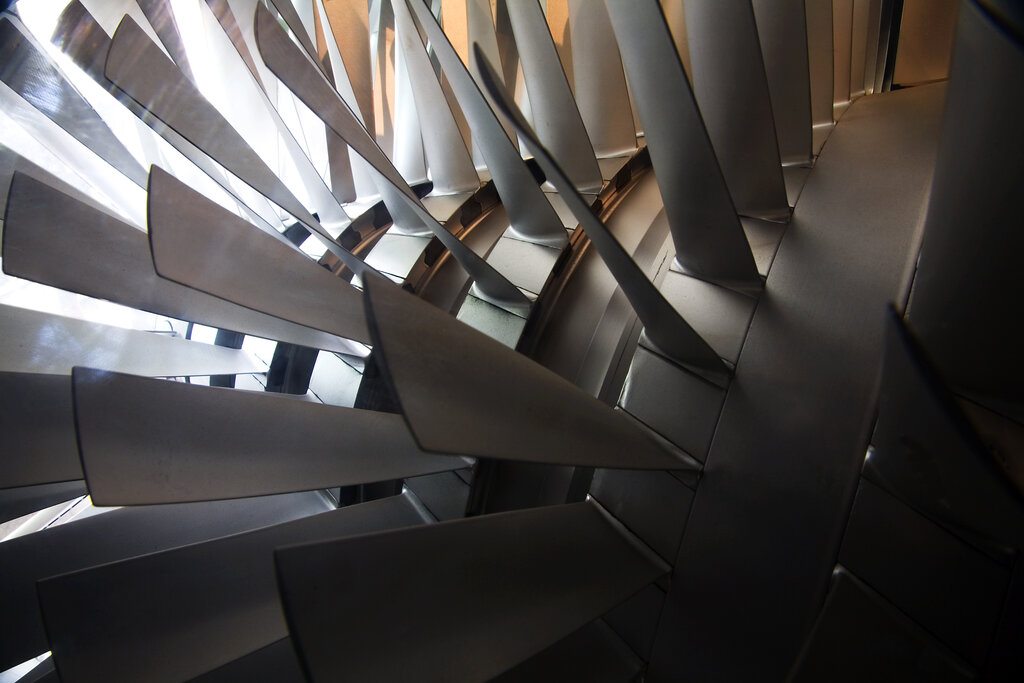
Compressor: The compressor is a series of rotating fan blades. Its job is to squeeze, or compress, the incoming air. Compressing the air increases its pressure and temperature, packing more oxygen into a smaller space and making the fuel burn more efficiently later on.
-
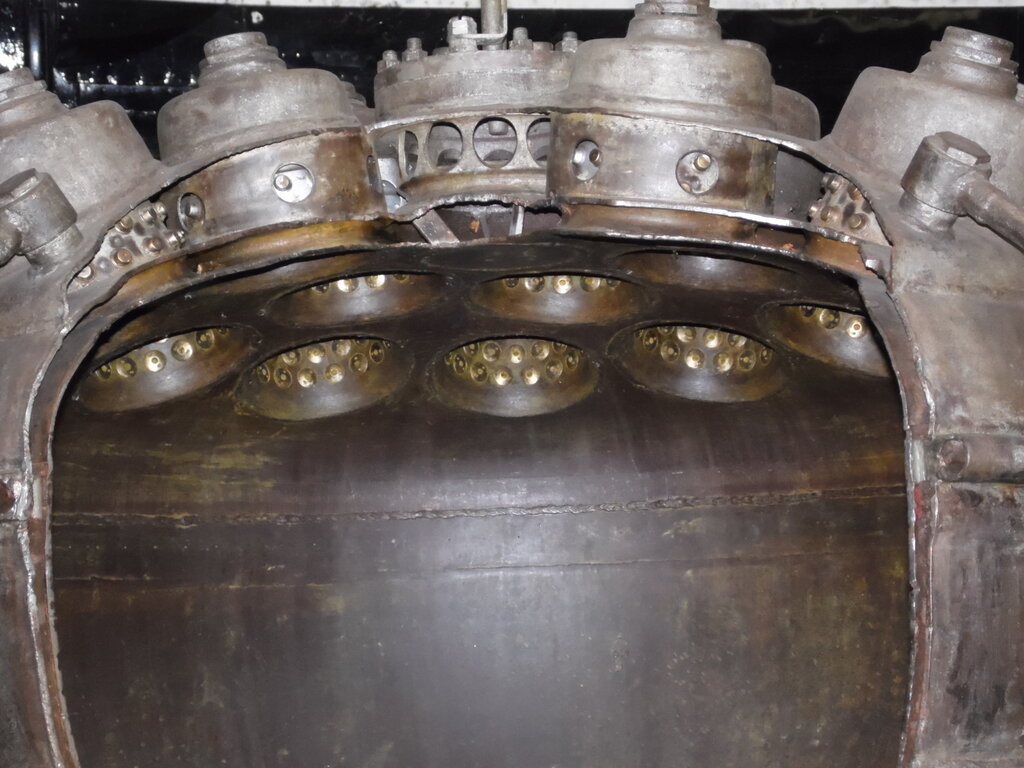
Combustion Chamber: In this chamber, the highly compressed air is mixed with a fine spray of jet fuel and ignited. This creates a controlled, continuous explosion, releasing a tremendous amount of energy and producing a high-temperature, high-pressure gas.
-
Turbine: The hot gas from the combustion chamber blasts through another set of fan-like blades called the turbine. The force of the gas spins the turbine at very high speeds. The turbine is connected by a shaft to the compressor at the front, so its rotation is what powers the compressor, keeping the whole engine cycle running.
-
Exhaust Nozzle: After passing through the turbine, the hot gas is forced out of the engine's rear through a narrow opening called a nozzle. This nozzle accelerates the gas to an extremely high velocity. This powerful backward blast of gas is what creates the forward thrust.
The Basic Cycle
This entire process is a continuous loop. The engine sucks air in, squeezes it, burns it with fuel to create hot gas, and then blows that gas out the back. The energy from the 'blow' stage is what powers the 'suck' and 'squeeze' stages, making the engine a self-sustaining system as long as it has fuel.
This cycle of intake, compression, combustion, and exhaust is the fundamental process that allows a jet engine to convert fuel into the massive force needed for flight.
A jet engine propels an airplane forward by pushing a massive amount of hot gas backward. Which scientific principle does this action demonstrate?
Which part of the jet engine is primarily responsible for squeezing incoming air to increase its pressure and temperature?
Now you know the basic principle and the key parts that make a jet engine work.