Jesus The Gospels And Politics
Roman Judea
A Province Under Rome
By the first century CE, Judea was a province on the eastern edge of the vast Roman Empire. This wasn't a partnership of equals. Rome held the ultimate power, a reality that shaped every aspect of life in the region. After a period of rule through local client kings, like Herod the Great, Rome began to exert more direct control.
To manage Judea, Rome appointed a governor, often with the title of prefect or later, procurator. This official was usually a man of equestrian rank, a step below the senatorial class. His primary jobs were to maintain peace, command the local auxiliary troops, and, most importantly, collect taxes. The governor had the power of life and death, known as ius gladii (the right of the sword), and was the final legal authority. Pontius Pilate, who served as prefect from 26 to 36 CE, is the most famous example.
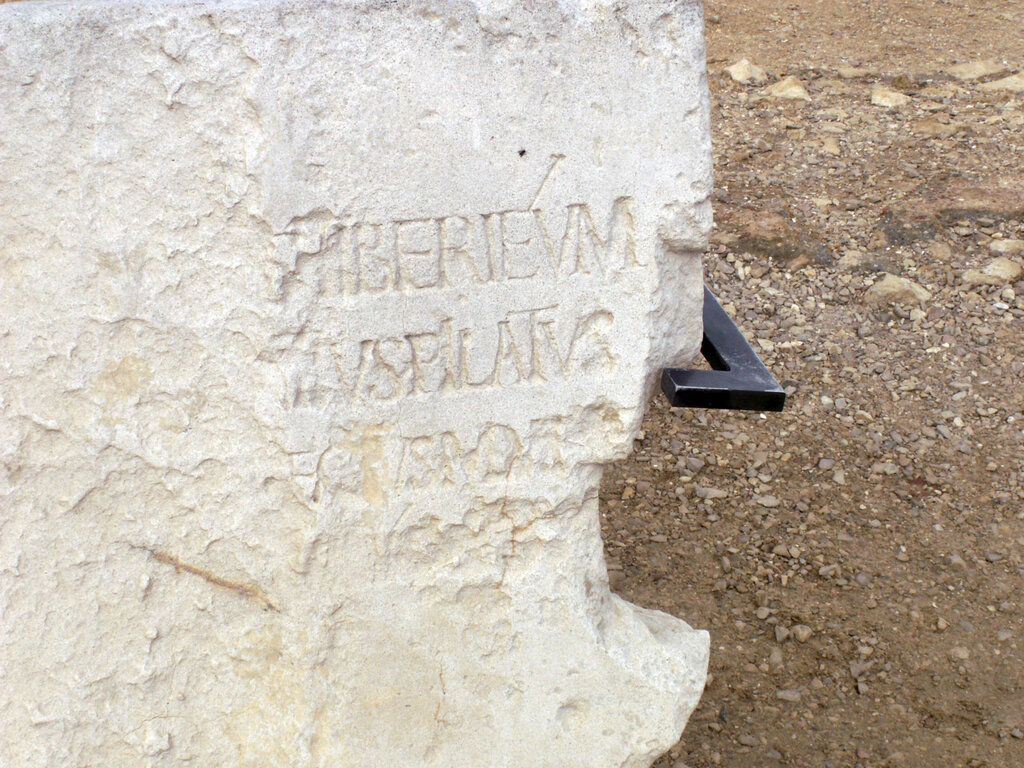
While the Roman governor held supreme authority, he didn't rule alone. The Romans were pragmatic administrators. They understood that managing a province with a unique and deeply-held religious culture required a lighter touch than brute force alone. So, they often governed indirectly, relying on existing local institutions to handle the day-to-day affairs of the Jewish population.
The Local Power Structure
The most important Jewish governing body was the Sanhedrin. Based in Jerusalem, this council functioned as a high court and legislative body for civil and religious matters. It was composed of 71 members drawn from the Jewish elite: chief priests, elders (heads of prominent families), and scribes (experts in Jewish law).
The High Priest served as the head of the Sanhedrin and was the most powerful Jewish figure in Judea. He was the chief religious authority, responsible for the Temple in Jerusalem, the center of Jewish worship. However, his appointment was not entirely independent. The Roman governor had the final say on who could serve as High Priest, ensuring that the holder of the office would be cooperative with Roman interests. This created a delicate and often tense balance of power. The Sanhedrin handled local disputes, enforced religious law, and managed the Temple, but always under the watchful eye of Rome.
This dual system of authority, with Roman power layered over traditional Jewish institutions, directly influenced the social fabric of Judea.
Life in a Divided Society
First-century Judean society was sharply stratified. At the very top were the Roman officials and military commanders. Just below them was the Jewish aristocracy, which included the high priestly families and wealthy landowners. This elite group often collaborated with the Romans to maintain their own power and privilege.
Further down the ladder were merchants, skilled artisans, and small landowners. The vast majority of the population, however, consisted of tenant farmers, day laborers, and the poor. Life for them was a constant struggle, made harder by the heavy burden of taxation. Everyone had to pay taxes to Rome, including a poll tax and taxes on land and produce. On top of that, they were expected to pay religious tithes to the Temple in Jerusalem.
| Social Class | Key Characteristics |
|---|---|
| Roman Officials | Held ultimate military and political power. |
| Jewish Aristocracy | High priests, wealthy families; often cooperated with Rome. |
| Middle Class | Merchants, artisans, scribes; a small segment of society. |
| Common People | Farmers, laborers, the poor; formed the vast majority. |
| The Marginalized | Included widows, orphans, and the sick. |
This social and economic pressure existed alongside significant cultural tension. The presence of Roman legions, the use of coins bearing the emperor's image, and the display of Roman standards were seen by many Jews as violations of their monotheistic faith, which forbade graven images. This constant friction between Roman authority and Jewish tradition created a volatile environment, where daily life was lived under a shadow of occupation and simmering resentment.
Now, let's test your understanding of the political and social landscape of first-century Judea.
What was the Roman governor's ultimate legal authority in Judea, granting them the power of life and death?
The Sanhedrin, the main Jewish governing body, handled daily civil and religious affairs, but its leader, the High Priest, was ultimately subject to the approval of the Roman governor.
Understanding this complex environment is key to grasping the world of the first century in the Eastern Mediterranean. It was a place defined by the clash of empires and traditions, where questions of power, faith, and identity were part of everyday life.