Jazz Piano Chord Progressions
Jazz Shell Voicings
The Essence of Jazz Chords
In classical piano, harmony is often built with full, rich chords. Triads, sevenths, and their inversions create a dense harmonic texture. Jazz harmony, however, often takes a different approach. It's about efficiency and clarity, stripping chords down to their most essential elements. This is where shell voicings come in.
Jazz voicings are the textures that paint the scenario — the way notes are arranged, spaced, and colorized to express mood and intention.
A shell voicing contains only the crucial notes that define a chord's identity: the root, the 3rd, and the 7th. By omitting the 5th, which is often harmonically stable and less defining, you create a clear, open sound that leaves space for other instruments and melodic improvisation. These essential notes, the 3rd and 7th, are known as guide tones because they guide the listener's ear through a chord progression.
voicing
noun
The specific arrangement and spacing of the notes in a chord on the piano or other instrument.
The 3rd tells us if the chord is major or minor. The 7th tells us if the chord is a major 7th, minor 7th, or a dominant 7th. Together, they create the fundamental color and tension of the harmony.
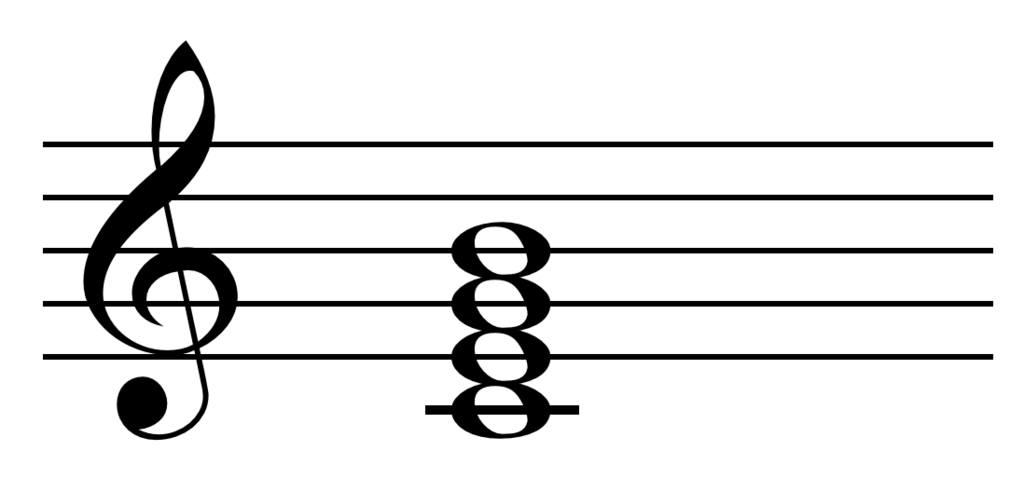
Let's look at a C Major 7th chord (C-E-G-B). Its shell voicing consists of just C, E, and B. Notice how the G is left out.
Building Shell Voicings
There are two primary forms for any shell voicing, often called "A" and "B" voicings. They simply invert the 3rd and 7th.
- A Voicing: Root - 3rd - 7th
- B Voicing: Root - 7th - 3rd
For a C Major 7th chord:
- A Voicing: C - E - B
- B Voicing: C - B - E
For a G Dominant 7th chord (G-B-D-F):
- A Voicing: G - B - F
- B Voicing: G - F - B
Playing these in your left hand provides a solid harmonic foundation while freeing up your right hand for melody. This economy is a cornerstone of jazz comping.
Alternating between these A and B forms allows you to move between chords with minimal hand movement, creating smooth voice leading. This is especially powerful in common jazz progressions like the ii-V-I
Shells in Action
Let’s apply this to the most common progression in jazz: the ii-V-I. In the key of C major, this progression is Dm7 - G7 - Cmaj7.
Notice how efficiently you can move from one chord to the next by simply alternating between A and B voicings. Your hand stays in a relatively stable position, allowing the harmony to flow logically. This technique is fundamental for 'comping,' the jazz term for accompanying a soloist.
| Chord | Role | A Voicing (R-3-7) | B Voicing (R-7-3) |
|---|---|---|---|
| Dm7 | ii | D - F - C | D - C - F |
| G7 | V | G - B - F | G - F - B |
| Cmaj7 | I | C - E - B | C - B - E |
Try playing the ii-V-I using these shells. Start with the Dm7 A voicing (D-F-C). To move to G7, you can switch to the B voicing (G-F-B). Notice how the F and C in the Dm7 voicing are close to the F and B in the G7 voicing. This is smooth voice leading in action. From there, resolve to the Cmaj7 A voicing (C-E-B).
This minimalist approach provides all the necessary harmonic information without cluttering the sound. It's the perfect foundation for building more complex jazz vocabulary.
Ready to test your understanding of these foundational voicings?
What are the three essential notes that make up a shell voicing?
In a shell voicing, the 3rd and 7th are known as 'guide tones' because they guide the listener's ear through a chord progression.
Mastering shell voicings is a crucial step in moving from a classical to a jazz mindset. They teach you to hear the essential elements of chords and provide a flexible framework for both accompaniment and soloing.