Jazz Guitar Improvisation
Jazz Guitar Basics
The Foundation of Jazz Guitar
Jazz might seem complex, but its language is built on a few core ideas. We'll start with the building blocks of harmony and melody: seventh chords and scales. Mastering these will give you the foundation to play countless jazz standards and improvise with confidence.
Forget standard major and minor triads for a moment. Jazz harmony is richer, relying on four-note chords called seventh chords. These add a layer of complexity and color that is characteristic of the genre. The three most important seventh chords to learn are the major 7th, minor 7th, and dominant 7th.
Think of these three chords as the primary colors of jazz harmony. Nearly every sound you'll create will be a mix of these foundational voicings.
Each seventh chord is built from a scale. The formula is simple: take the 1st, 3rd, 5th, and 7th notes of a scale. The type of scale determines the quality of the chord.
| Chord Type | Formula | Sound |
|---|---|---|
| Major 7th (maj7) | 1, 3, 5, 7 | Bright, relaxed, dreamy |
| Dominant 7th (7) | 1, 3, 5, b7 | Tense, bluesy, wants to resolve |
| Minor 7th (m7) | 1, b3, 5, b7 | Melancholy, smooth, soulful |
Let's look at a common way to play a C major 7th chord. This voicing is a great starting point because it's comfortable to play and sounds great.
Now, let's look at a dominant 7th. Notice how just one note changes from the major 7th. The 7th becomes a flat 7th (b7). This one small change creates a huge amount of harmonic tension. For a G7 chord, that means the F# becomes an F natural.
Finally, the minor 7th chord. This chord is essential for the famous ii-V-I progression, the most common chord sequence in jazz.
Scales Are Your Vocabulary
If chords are the grammar of jazz, scales are the vocabulary. They provide the notes you'll use to build melodies and improvise solos. The most important scale to know is the major scale. From this one scale, we can derive seven different modes, each with its own unique sound.
mode
noun
A type of musical scale created by starting a familiar scale on a different note. For example, starting the C major scale on D creates the Dorian mode.
Each mode of the major scale corresponds to a chord. When you see a Dm7 chord in the key of C, you can use the D Dorian mode to improvise over it. This connection between chords and scales is the key to unlocking jazz improvisation.
The simplest starting point for a good-sounding jazz solo is to make sure the notes you choose follow the changes – meaning they match up with the chords in the progression you are playing over.
Here are the first three modes of the C major scale and the chords they pair with:
- C Ionian (the major scale itself): C-D-E-F-G-A-B. Pairs with Cmaj7.
- D Dorian: D-E-F-G-A-B-C. Pairs with Dm7.
- E Phrygian: E-F-G-A-B-C-D. Pairs with Em7.
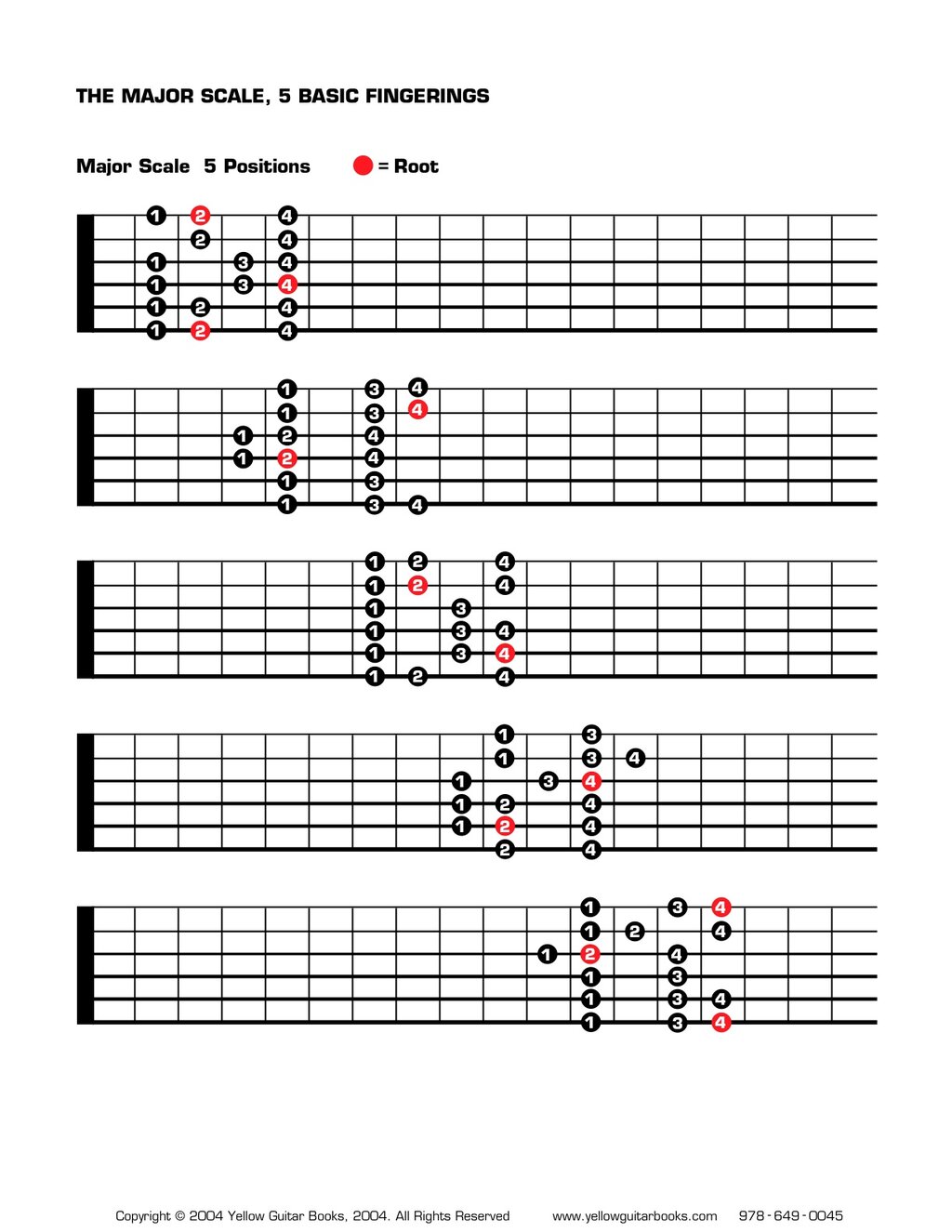
Practice playing the C major scale all over the neck. Once you know its shape, you can start it from any note to create the corresponding mode. Knowing your scales makes the fretboard feel less like a series of random notes and more like a map.
Finding the Swing
Jazz isn't just about notes, it's about feel. The rhythmic foundation of most traditional jazz is swing. Swing rhythm transforms straight eighth notes into a long-short, lilting pattern. Instead of an even "one and two and," it feels more like "one-a-two-a-three-a-four."
Listening is the best way to internalize this feel. Put on records by jazz greats like Count Basie or Duke Ellington and tap your foot. Feel how the rhythm propels the music forward.
As a guitarist, you'll often be playing rhythm, a role called "comping." Comping means accompanying, or playing chords to support a soloist or singer. The goal is to provide harmonic context and rhythmic energy without getting in the way.
Good comping is a conversation. You listen to the soloist and respond with chords that complement their ideas.
A simple and effective comping pattern is the "Freddie Green" style, named after the legendary rhythm guitarist for the Count Basie Orchestra. It involves playing simple, three or four-note chord voicings squarely on each beat. This creates a powerful, driving pulse.
Try it with a Cmaj7 to G7 progression. Strum a simple voicing of each chord on every beat: 1, 2, 3, 4. Focus on keeping a steady, relaxed rhythm. This is the bedrock of jazz guitar rhythm.
Let's see what you've learned.
What scale degrees are used to build a basic seventh chord?
What is the primary difference between a major 7th chord and a dominant 7th chord when built on the same root note?
These concepts are the start of a long and rewarding journey. Practice them slowly, listen intently, and you'll build a solid foundation for playing jazz.