JavaScript DOM Manipulation
Introduction to the DOM
The Web Page Blueprint
When your browser loads a webpage, it doesn't just display the raw HTML file. Instead, it creates a live, structured representation of the page in its memory. This model is called the Document Object Model, or DOM for short.
Think of the DOM as a blueprint for a webpage. Just as a blueprint shows an architect how a building is constructed, the DOM shows the browser how the HTML document is put together. It's an organized map of all the elements, text, and attributes on the page.
The DOM is a programming interface for web documents. It represents the page so that programs can change the document structure, style, and content. The DOM represents the document as nodes and objects; that way, programming languages can interact with the page.
This model is crucial because it allows languages like JavaScript to interact with the page. Without the DOM, a script would have no way to find an <h1> heading, change the text in a <p> paragraph, or react when a user clicks a button. The DOM turns a static document into a dynamic, interactive experience.
A Tree of Nodes
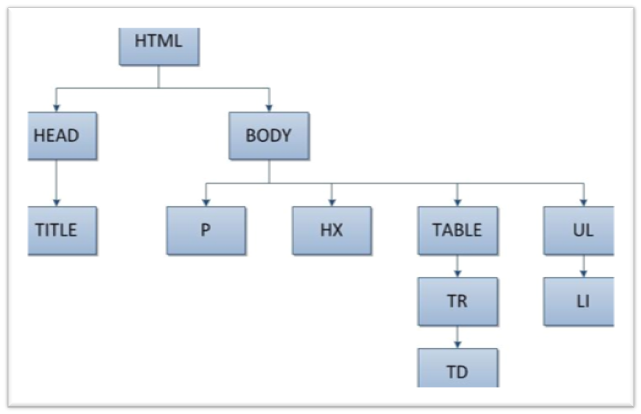
The DOM organizes a webpage into a logical, tree-like structure. Imagine a family tree. The <html> element is the root of the tree, the ultimate ancestor of everything on the page. It has children, like <head> and <body>.
Each of those children can have its own children. The <body> element might contain an <h1> heading and a <p> paragraph. In this case, the <h1> and <p> are children of <body> and siblings to each other. Every single item in this tree is called a node.
This parent-child-sibling relationship defines the entire structure of the document. Understanding this hierarchy is the key to navigating and manipulating the page.
Types of Nodes
While everything in the DOM is a node, there are different types of nodes that represent different parts of the document. The three most common types are element nodes, text nodes, and attribute nodes.
Element Nodes: These represent the HTML elements themselves, like
<html>,<body>,<p>, or<div>. They are the structural foundation of the page.
Text Nodes: These represent the actual text content inside an element. In the line <p>Hello World</p>, the words "Hello World" form a text node. This text node is a child of the <p> element node. It's important to remember that the text is not part of the element itself, but a separate node within it.
Attribute Nodes: These represent the attributes of an element, such as
hrefin<a href="#">orclassin<div class="container">. Attribute nodes describe the element nodes but aren't considered direct children in the tree structure; they are properties of the element.
By understanding these different node types and how they fit into the DOM tree, you gain the power to access and change any part of a webpage.
What is the primary purpose of the Document Object Model (DOM)?
The DOM organizes an HTML document into a logical, hierarchical model. What is this structure most commonly compared to?