Japan's Muromachi and Azuchi-Momoyama Eras
Muromachi Period Overview
A New Shogunate Rises
After the fall of the Kamakura shogunate, Emperor Go-Daigo attempted to restore direct imperial rule in an event known as the Kenmu Restoration. It was short-lived. A powerful samurai general, Ashikaga Takauji, turned against the emperor and drove him from the capital, Kyoto.
In 1338, Takauji installed a rival emperor and established his own military government, the Ashikaga shogunate. Its headquarters in the Muromachi district of Kyoto gave the period its name. This move fractured the imperial line, leading to nearly 60 years of conflict between a Northern Court in Kyoto (backed by the Ashikaga) and a Southern Court in exile (led by Go-Daigo and his successors). The shogunate finally unified the courts in 1392, but its authority was never absolute.
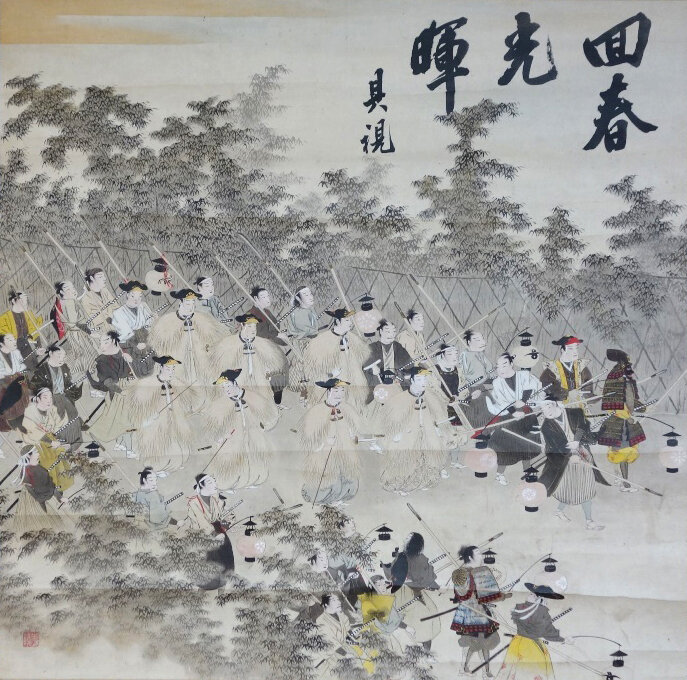
Unlike the previous shogunate in Kamakura, the Ashikaga based themselves in Kyoto, right alongside the imperial court. This proximity created a complex political dance. The shogun held the real military and administrative power, but the emperor remained the ultimate source of legitimacy and prestige. The shogunate's control, however, was much looser than its predecessor's. This decentralization set the stage for powerful new players to emerge.
daimyō
noun
Powerful Japanese magnates, feudal lords who, from the 10th century to the early Meiji period in the middle 19th century, were subordinate only to the shōgun.
Provincial governors, known as shugo, were appointed by the shogun to oversee various regions. Over time, these figures accumulated vast landholdings and private armies, transforming into the daimyō. They became the true rulers of their domains, often ignoring decrees from Kyoto. The Ashikaga shoguns struggled to control these ambitious lords, who constantly vied with one another for land and influence.
The Seeds of Chaos
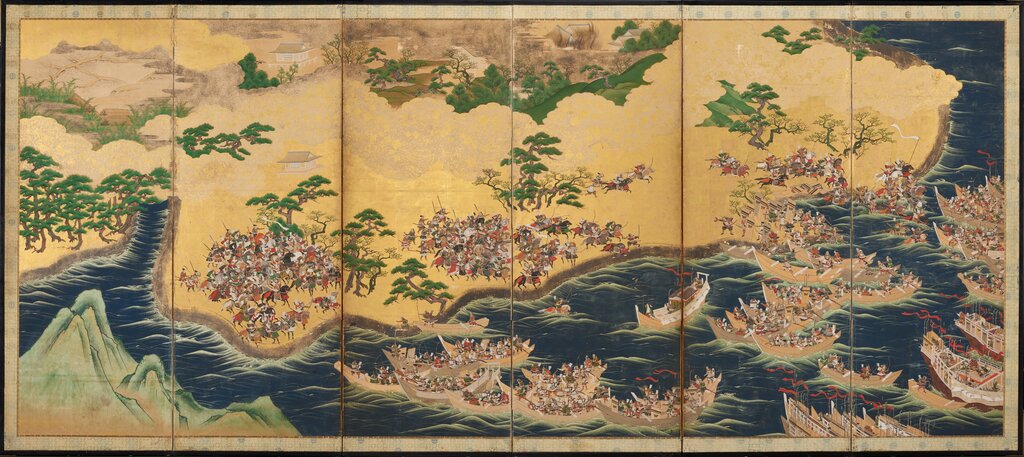
The fragile balance of power finally shattered in the late 15th century. A succession dispute within the Ashikaga clan spiraled into a devastating conflict known as the Ōnin War (1467–1477). Major daimyō families took sides, turning the streets of Kyoto into a battlefield for over a decade. The war ended without a clear victor, but its consequences were profound.
The Ōnin War burned the capital to the ground and with it, the last vestiges of the shogun's real power.
The Ashikaga shogunate was left powerless, reduced to a ceremonial role. The emperor's authority remained symbolic. With no central power to keep them in check, the daimyō were unleashed. This marked the beginning of the Sengoku period, or the "Warring States" period, a century of near-constant civil war where daimyō fought to survive and conquer their rivals.
A Cultural Renaissance
Despite the political turmoil, the Muromachi period was a time of remarkable cultural flowering, heavily influenced by Zen Buddhism. The Ashikaga shoguns were lavish patrons of the arts, and their support helped shape aesthetics that are still central to Japanese culture.
This era saw the codification of the Japanese tea ceremony (chanoyu), which evolved from a simple monastic ritual into a highly refined practice emphasizing harmony, respect, purity, and tranquility. Noh theater, a slow, stylized form of musical drama, was perfected under the patronage of shogun Ashikaga Yoshimitsu. Ink wash painting (sumi-e), with its minimalist and evocative landscapes, also reached its zenith.
The economy also grew, driven in part by trade. The shogunate re-established formal trade relations with Ming Dynasty China. Japan exported raw materials like copper and sulfur, as well as manufactured goods like swords and folding fans. In return, it imported Chinese silks, porcelain, and, most importantly, copper coins, which became the standard currency in Japan. This trade enriched the daimyō in western Japan and fostered the growth of port cities like Sakai and Hakata.
What major conflict marked the collapse of the Ashikaga shogunate's central authority and directly ushered in the Sengoku or "Warring States" period?
How did the daimyō of the Muromachi period evolve from the earlier provincial governors known as shugo?
The Muromachi period stands as a paradox: an era of political breakdown and incessant warfare that also produced some of Japan’s most enduring cultural treasures. The collapse of central authority paved the way for a century of conflict, but the artistic and philosophical currents of the time left a legacy of refined beauty.